Pathfinder Player’s Guides help players build campaign-ready characters
Player’s Guides keep you from building the wrong hero for the wrong AP. Curtain Call, Blood Lords, and Stolen Fate show how early campaign clues change class, ancestry, and background choices.
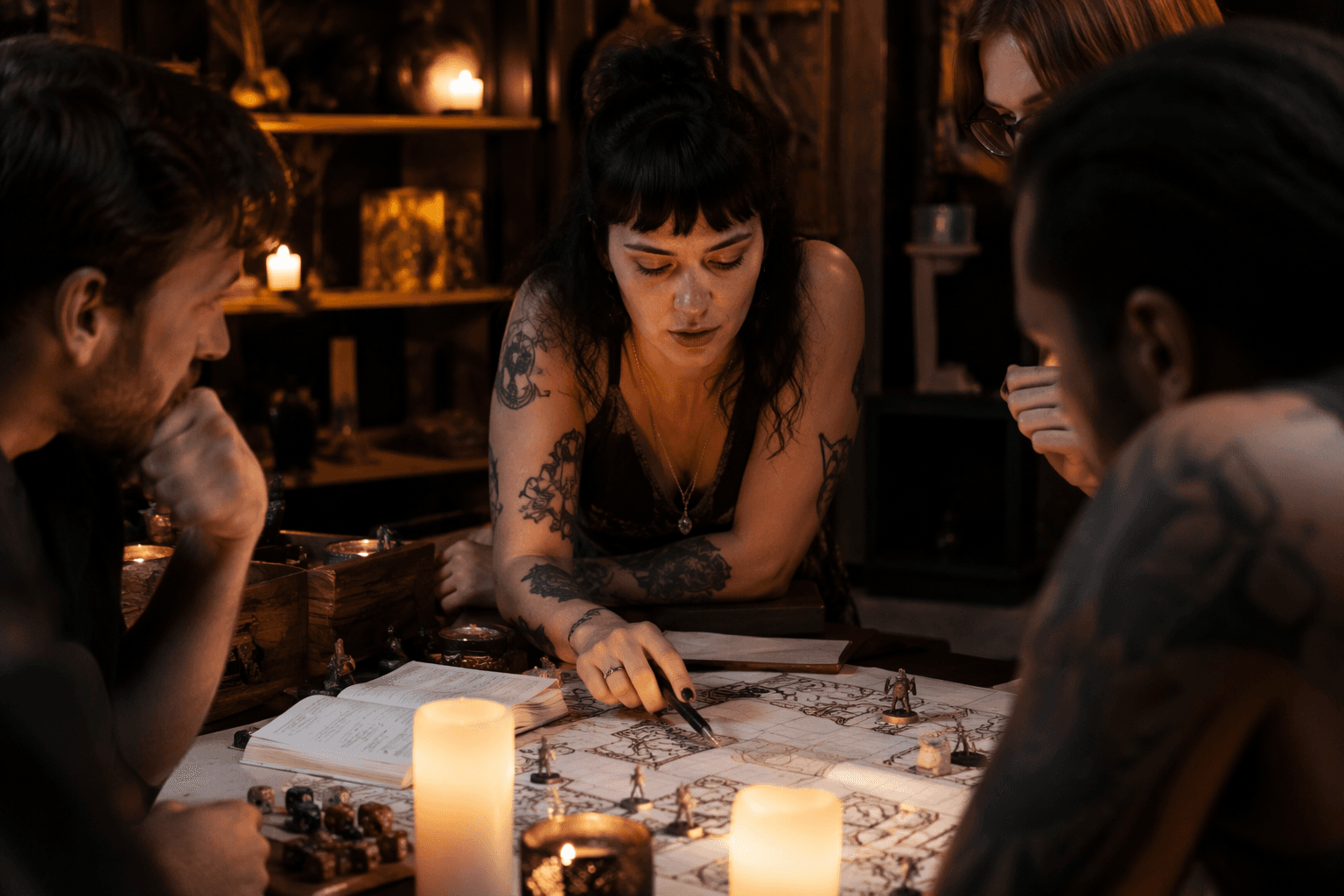
James Jacobs’ Curtain Call guide tells players to think about edicts and anathemas, faiths, persona traits, and backgrounds before the campaign starts. Player’s Guides fix character mismatch before session zero by spelling out what an Adventure Path actually wants from your class, ancestry, background, and party role, so you do not spend the first meeting trying to retrofit a concept that never belonged there in the first place.
What these guides solve before the first die roll
A good Player’s Guide takes the guesswork out of campaign start. Instead of handing you a generic hero and hoping the adventure bends around it, it tells you where the pressure points are: what the story cares about, what sort of problem-solving the AP rewards, and which character choices will feel like they belong in the room.
Curtain Call is the clearest example of how broad that help can be. James Jacobs’ guide does not stop at “pick a class and go,” but lays out How to Use This Guide, Character Suggestions, Edicts and Anathemas, Ancestries, Classes, Faiths, Languages, Skills and Feats, Pets, Spells, Archetypes, Gear, Persona Traits, and Backgrounds.
Curtain Call shows how deep the guidance goes
Curtain Call is the kind of guide that quietly prevents the most common table problems. If the AP is telling you to think about edicts and anathemas, faiths, persona traits, and backgrounds, then the game is clearly asking for more than combat math.
That breadth also helps with immediate class and party-role decisions. A guide that talks about ancestries, classes, skills and feats, pets, spells, archetypes, and gear is telling you which parts of your build will matter in play, not just in a character builder.
Different Adventure Paths point characters in different directions
The real value of Player’s Guides shows up when you compare them across APs. Each one takes the same job and solves it in a different way, because each campaign is asking for a different kind of hero.
- Stolen Fate centers on Drawing from a Harrow Deck, A Harrowing Vision, Choosing Your Card, and Investing Your Card. That is an immediate signal that fate, symbols, and card-driven story logic matter, so your concept should be built around the deck instead of treating it like scenery.
- Blood Lords includes a section on Playing as Undead. That one heading tells you almost everything you need to know about the campaign’s mechanical and roleplaying assumptions, and it makes ancestry and class selection a very different exercise than in a standard living-party AP.
- Strength of Thousands ties its guidance to the Magaambya, its branches, and its ranks. That pushes your thinking toward school structure, magical education, and standing within the institution, which is very different from building a lone wanderer or a mercenary with a spellbook.
- Kingmaker Second Edition has its own downloadable Player’s Guide, and the campaign is built around exploration and kingdom play. If you read it with that in mind, you build for travel, leadership, and a longer strategic arc instead of just the next fight.
- Gatewalkers uses The Missing Moment and Lost Time as guide sections, which is a very direct invitation to build around memory gaps, lost history, and the campaign’s central mystery.
- Extinction Curse brings in Circus Tricks and geography like the Aeon Towers, Isle of Erran, and Isle of Kortos. That means your character is not just adventuring near a circus, they are part of a campaign where showmanship and travel space matter to the whole structure.
- Seven Dooms for Sandpoint opens with What Came Before and Character Suggestions. That combination tells you the campaign wants you thinking about hometown history and personal fit from the outset, not after the first encounter.
Why GMs should hand them out early
Paizo’s sanctioning documents say Adventure Paths can be run or played for Pathfinder Society benefits, but they have variable playtimes and are not designed for characters over a wide range of levels.
Those same documents also note that Adventure Paths sometimes include pregenerated characters tailored and themed to the adventure, and recommend using them because they strengthen immersion.
Paizo has been doing this for a long time
This is not a one-off polish pass for a few recent books. The Pathfinder Advanced Player’s Guide PDF carries a Jul. 26, 2010 metadata date. The company has been building the habit across Pathfinder Adventure Paths for years, from older campaigns like Rise of the Runelords and Council of Thieves to the modern Second Edition lineup.
This article was produced by Prism’s automated news system from verified source data, official records, and press releases, then run through automated quality and moderation checks before publishing. The system is built and supervised by the people who set the standards it runs under. Read our full AI policy.
Did this article answer your question?