Alfie Boxx reimagines film photography, developing prints inside the camera
Alfie Boxx pushes film beyond nostalgia, folding exposure, development, and printing into one compact camera.
Alfie Boxx turns film into a one-box workflow
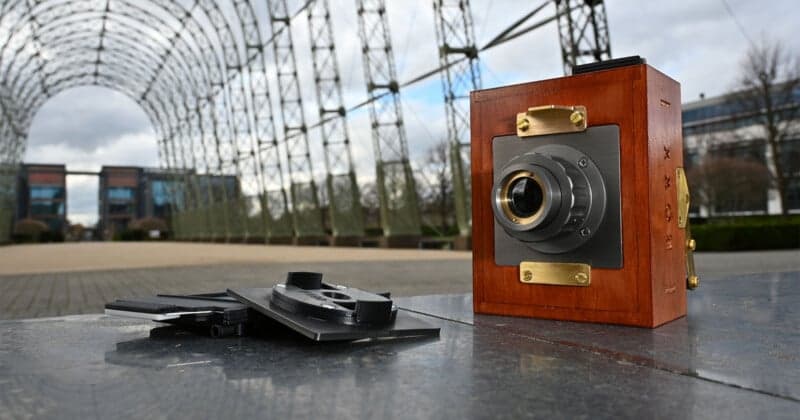
Alfie Cameras is taking film in a direction that feels less like a retro costume and more like workflow design. The company’s Boxx is set up as an all-in-one analog camera experience, one that captures and develops the image inside the camera instead of scattering the process across a loader, a darkroom, a scanner, and a desk full of patience. That is the real story here: not just another film camera, but a rethink of what shooting film can feel like when the whole chain is collapsed into a single object.
The timing matters too. Alfie says the BOXX is launching on Kickstarter on May 17, 2026, and the company plans to show it at Photographica in London the same day. That puts the camera squarely in the middle of the current film revival, but with a twist that goes beyond nostalgia. It is aimed at the photographer who wants the analog experience without pretending the old workflow friction does not exist.
What the Boxx actually does
The Boxx is built around black-and-white reversal film and photographic paper loaded into a film holder. According to PetaPixel’s March coverage, you focus using a ground-glass screen, then inject chemicals into the holder with a syringe to develop the image inside the camera. The result is a 6×9 cm print made right there in the body of the camera.
That setup tells you almost everything about the product’s personality. This is not trying to behave like a digital compact with vintage styling. It is deliberately tactile, slow, and physical, with an effective ISO of 3 that makes exposure a serious part of the process rather than a background setting you ignore. In practice, that means the Boxx is less about speed and more about seeing how every step of image-making affects the final print.
Alfie’s own language gets the point across cleanly. The company describes the Boxx as a camera that takes you “from picture-taking to printmaking,” and says it offers the “bare bones of photography.” That is not marketing fluff so much as a warning label. If you want instant convenience, this is not it. If you want to understand the mechanics of image-making with your hands as much as your eyes, the concept makes a lot of sense.
Why this is different from the usual film pain points
Anyone who shoots film knows the recurring friction points. Loading a roll can be fiddly. Exposure is less forgiving. Scanning can become its own hobby. Output requires more time, more gear, or more money than the shooting itself. Even when the result is worth it, the workflow can be enough to keep people from shooting as often as they want.
The Boxx is trying to attack those pain points from a different angle. It does not make film behave like digital. Instead, it compresses the whole chain so the image is captured, developed, and printed in one place. That means no separate darkroom session and no scanning step just to see the photograph. The payoff is immediate, physical, and portable in a way that a conventional analog setup rarely is.
There is still a tradeoff, and that tradeoff is the point. The Boxx makes film feel more approachable by bringing the process under one roof, but it does not remove the discipline film demands. An ISO of 3 is brutally low. A ground-glass focusing screen and chemical syringe are not beginner-friendly shortcuts in the usual sense. What Alfie appears to be offering is not an easier version of digital convenience, but a more contained version of analog practice.
Who this is really for
The Boxx seems aimed at two overlapping groups. First are people who are curious about film but wary of the traditional darkroom pipeline. For them, the appeal is that the camera teaches the process as it goes. You are not just taking a picture, you are watching how the materials, timing, and development shape the final print.
Second are experienced film users who want a new kind of object to play with. For that crowd, the Boxx is compelling because it makes the act of making a photograph more self-contained and more ritualized. It turns a process that is often spread across multiple machines and locations into something you can carry, load, expose, and print in one go.
That educational angle fits the way Alfie has approached film before. The company previously released the TYCH, a 35mm half-frame film camera, and says the TYCH+ can produce over 72 images from a standard 35mm roll. That tells you Alfie already understands how to make film feel experimental and efficient at the same time. The Boxx pushes that idea much further by changing not just how many frames you get, but what happens after the shutter click.
A sign that the film revival is changing shape
The Boxx lands in a moment when analog demand is clearly not just about old cameras getting another turn. PetaPixel reported that in Fukuoka City, Kitamura Camera’s used-camera section grew to about 4,000 items, and that location could sell as many as 100 film cameras a day. The same reporting said used-camera sales there had doubled in each of the previous three years. It also noted that the Pentax 17 was so popular some stores could not keep it in stock.
That matters because it shows the market is hungry not only for film itself, but for fresh reasons to keep using it. Some products lean on convenience. Some lean on price. The Boxx leans on experience, and that may be the more interesting direction. It is part of a broader shift where film hardware is being designed to change the workflow, not merely recreate the look.
There is precedent for that idea, too. PetaPixel previously covered the Pinsta Instant Camera, a compact analog setup that shot directly onto 4×5 photographic paper and developed internally without a darkroom. The Boxx belongs to that same family of machines: cameras that are also miniature labs, designed to shrink the distance between seeing, exposing, and holding a finished print.
The practical verdict
So does the Boxx actually make film easier? Yes, but only in a very specific sense. It simplifies the path from exposure to print by keeping the whole process in one camera, and it removes some of the usual off-camera friction that makes film feel like a multi-step project. But it does not make film casual, and it does not pretend to. The ISO 3 sensitivity, the ground-glass focus, and the syringe-based chemical workflow all keep the experience firmly on the hands-on end of the spectrum.
That is what makes the Boxx interesting. It is not clever retro branding pasted onto a modern shell. It is a serious attempt to redesign analog photography around immediacy, teaching, and portability. If it works as promised, the Boxx will not just be another object for film fans to admire. It will be a sign that film’s next chapter is about reinventing the workflow, not just reviving the aesthetic.
This article was produced by Prism’s automated news system from verified source data, official records, and press releases, then run through automated quality and moderation checks before publishing. The system is built and supervised by the people who set the standards it runs under. Read our full AI policy.
Did this article answer your question?