Hasselblad 500 EL/M commemorates two decades of photography in space
A silver-gray Hasselblad built to mark 20 years in space still pulls real money, with one recent sale at $3,785. Its NASA pedigree explains why.
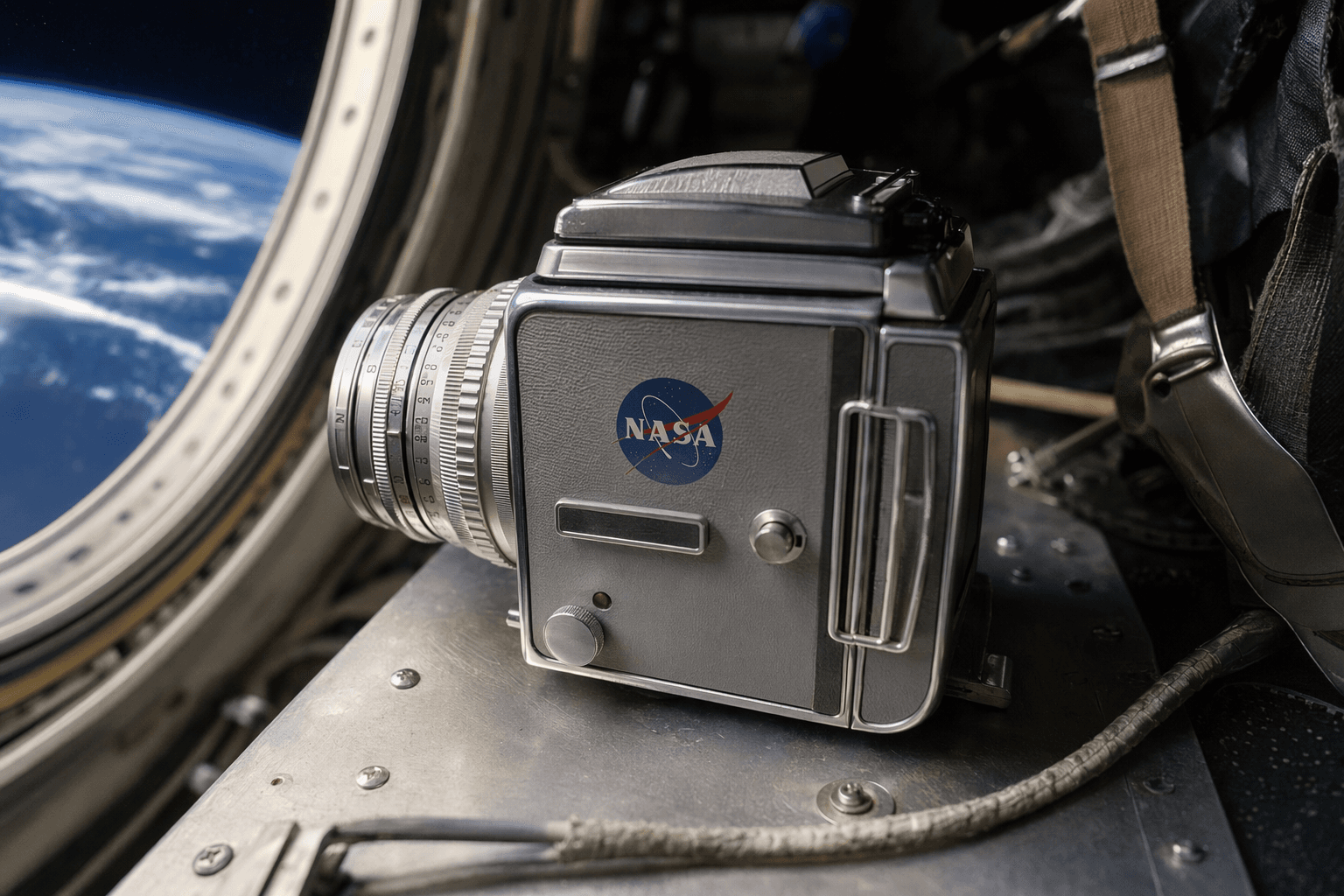
The Hasselblad 500 EL/M 20 Years in Space is the rare collector body that still feels like a piece of working history, not just a display queen. Released in 1982 to mark 20 years of Hasselblad cameras in space, it was limited to 1,500 units worldwide and finished in a silver-gray, lunar-gray style with a silver plaque or engraved identification that made it stand out even in a cabinet full of Swedish icons.
Its value starts long before the commemorative badge. Hasselblad says the partnership with NASA began in 1962 during the Mercury program, when Walter Schirra brought a Hasselblad 500C into space. That camera was stripped down for the job, with the leather covering, auxiliary shutter, reflex mirror and viewfinder removed, then paired with a special film magazine that pushed capacity to 70 exposures instead of the usual 12. Hasselblad describes that 500C as the first camera to properly document space, and that is not marketing fluff. It is the foundation of the brand’s place in photographic history.
The 500 EL/M memorializes that run of images with one of the most famous frames ever made: Earthrise. Bill Anders shot the photograph aboard Apollo 8 on December 24, 1968, during the first crewed spacecraft circumnavigation of the Moon. NASA’s technical metadata identifies the image as having been made with a Hasselblad 500 EL in 70-mm configuration, an 80mm Zeiss Planar lens and Kodak SO-368 Ektachrome film. That combination matters because it shows how a brutally practical medium-format camera became the machine that recorded one of the defining images of the 20th century.

Apollo 11 deepened that legacy. NASA says the mission carried three Hasselblad 500EL cameras, and its lunar photographs included images made with a 70mm Hasselblad lunar surface camera. By then, the system was no longer just part of the story. It was the story.
That is why the 500 EL/M keeps surfacing on the secondary market with real money attached. Recent sales have ranged from just over $2,000 to around $4,000, and one example sold for $3,785. For a camera that is half industrial design object, half space-program artifact, that pricing makes sense. The body is desirable because it looks great, yes, but also because it sits at the intersection of engineering, exploration and photographic mythology. In a market that rewards disposable upgrade cycles, the 500 EL/M reminds you that mechanical cameras still command attention when they are tied to images people never stop remembering.
This article was produced by Prism’s automated news system from verified source data, official records, and press releases, then run through automated quality and moderation checks before publishing. The system is built and supervised by the people who set the standards it runs under. Read our full AI policy.
Did this article answer your question?