ETTU Webinar Guides Over 80 Officials on Social Media Best Practices
More than 80 umpires and referees joined an ETTU webinar on April 3, learning to stay off social media entirely during active tournament commitments.

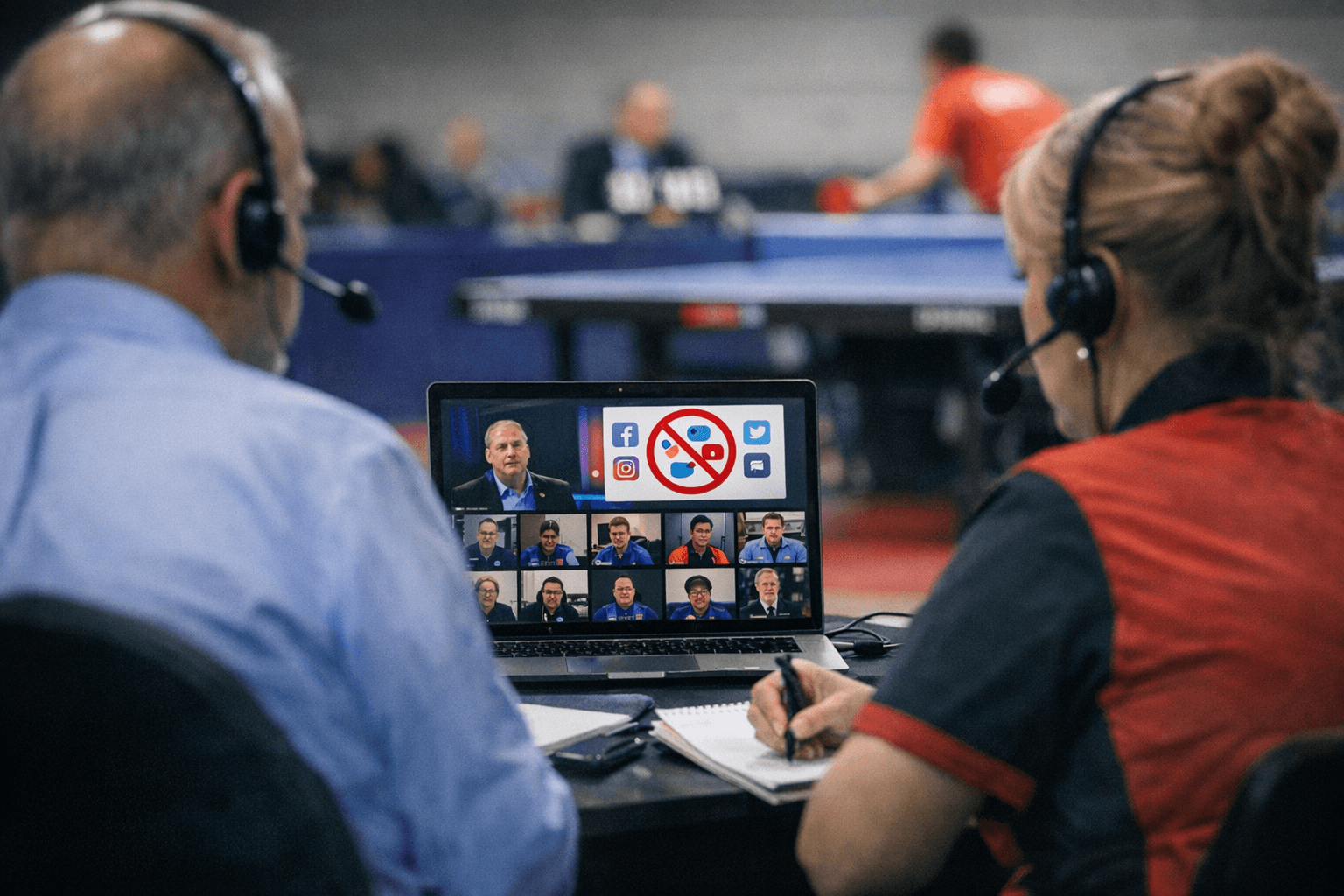
The ETTU's Umpires & Referees Committee pulled more than 80 officials into a webinar on April 3 that treated social media conduct as a professional development topic rather than a regulatory lecture. Kerstin Duchatz, Mark Beckmann and Mircea Steff led the session, walking umpires and referees through real-world scenarios, a structured Q&A, and a concrete set of dos and don'ts built around the pressures officials actually face online.
The core guidance was direct. Presenters urged officials to avoid engaging with posts tied to matches they officiate: no comments, no likes, no shares, no amplification of any kind. Going further, the webinar recommended refraining from social media activity altogether during active tournament commitments, framing the blackout period as a safeguard for impartiality and a way to eliminate a creeping source of distraction.
The session also covered the more serious end of the spectrum. Officials learned how to document incidents involving targeted criticism or threatening behavior, and when to escalate those situations to federation security teams. Maintaining a single public profile that reflects official status and professional boundaries was presented as a baseline standard, not an optional extra.
The turnout alone tells a story. Officiating in table tennis has historically operated below the public radar, but live streaming has changed the math quickly. A disputed call can circulate as a clip within minutes of a match, reaching audiences far larger than whoever was in the hall. For referees managing events with real broadcast reach, that level of online scrutiny is no longer a hypothetical.
ETTU's decision to frame the issue as professional development rather than a compliance exercise matters. Burnout from online vitriol is a documented retention problem in officiating communities across multiple sports. Addressing it through scenario drills and peer learning gives officials practical tools that rulebook study never provides. The format Duchatz, Beckmann and Steff delivered in April now stands as a replicable model for national associations looking to prepare their officiating cohorts before the next wave of high-visibility events hits.
Know something we missed? Have a correction or additional information?
Submit a Tip