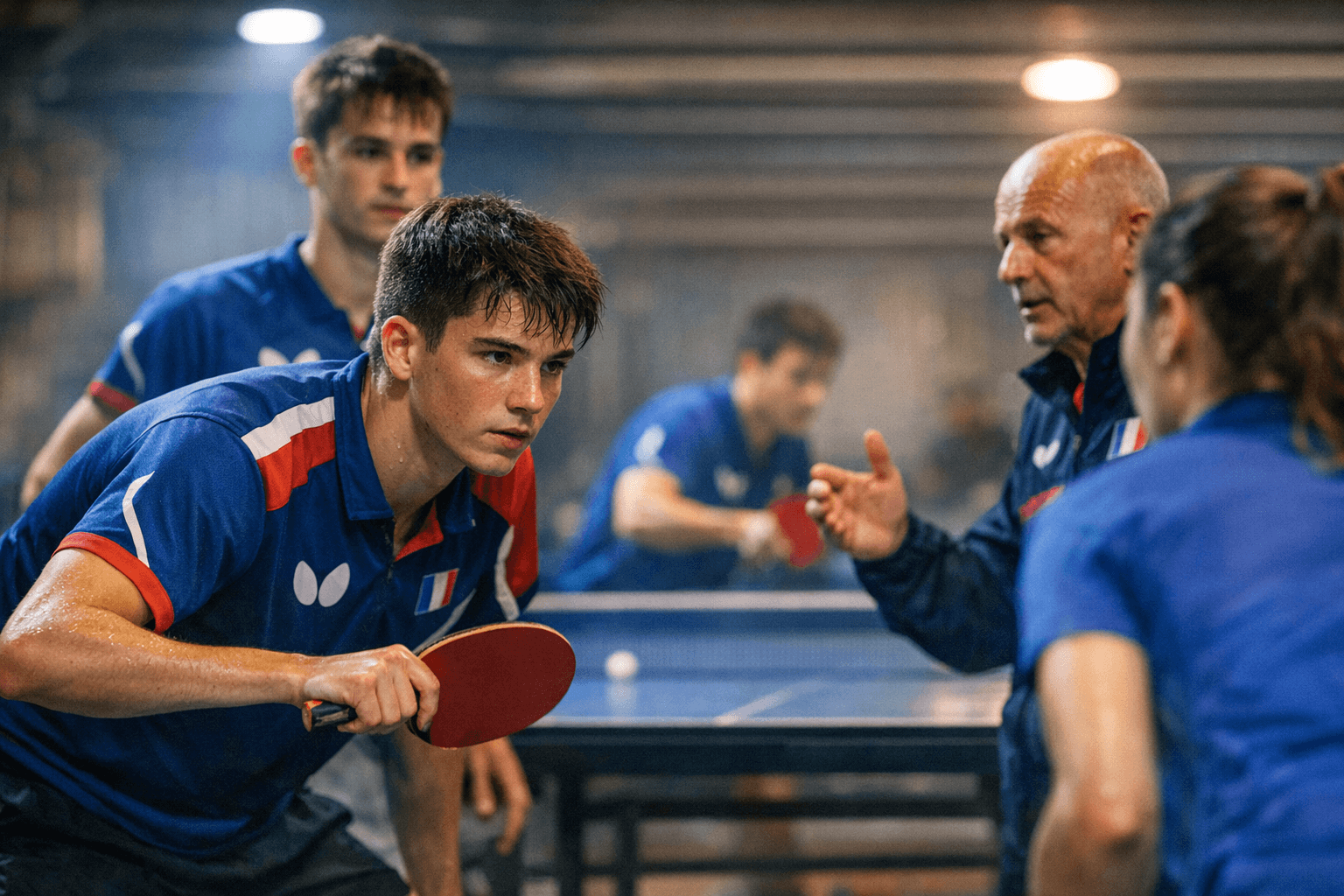
World Table Tennis Day Film Debates Century of Greats
A 40-minute centenary film turns the GOAT argument into a guide to table tennis history, and it lands just as London 2026 resets the sport's story.

Released on World Table Tennis Day, this film does more than revisit a century of clip-worthy points. It uses the oldest argument in the sport, who is the greatest table tennis player of all time, as a way to explain why the game still matters now.
A centenary film with a real point of view
The timing is the story. World Table Tennis Day is celebrated every 23 April, and the ITTF says 2026 marks 100 years since both the federation was founded and the first World Table Tennis Championships were staged in London in 1926. That makes the film feel less like a nostalgia reel and more like part of a larger centenary campaign, with London 2026 positioned as a homecoming for the sport.
At 40 minutes, the documentary is long enough to breathe and short enough to be shared. It sweeps from the earliest days of the game into the modern era, but the real value is in how it frames greatness. Titles matter, sure, but the film pushes the argument toward unforgettable moments, fierce rivalries, and the athletes who defined their generation. That is the right move, because table tennis has never been a sport you can understand from a medal table alone.
A GOAT framework that actually works
If you want a serious all-time debate, you need better filters than highlight reels. The cleanest way to compare eras is to separate greatness into five buckets: titles, longevity, peak dominance, era strength, and innovation.
- Titles tell you who actually finished the job, especially across the biggest events.
- Longevity shows who stayed elite while the sport changed around them.
- Peak dominance measures how hard a player was to beat when they were at their absolute best.
- Era strength matters because the field was not the same in 1926, 1988, and today.
- Innovation rewards the players who changed the sport, not just won in it.
The fun starts when you change the weighting. If you lean heavily on titles and longevity, you end up favoring the most decorated and durable champions. If you give more weight to peak dominance and innovation, the answer can shift toward players who bent the game in their direction even if their hardware count is not the biggest. That is why the GOAT debate in table tennis works better as a framework than as a verdict. You are not just asking who won most. You are asking who changed the sport most, who survived the deepest fields, and who still looks impossible when you replay the best of them.
Why the debate hits harder in London 2026
This documentary lands inside a much bigger year. The ITTF World Team Table Tennis Championships Finals London 2026 are scheduled from 28 April to 10 May 2026, with opening play at Copper Box Arena and later stages at Wembley Arena. The event is being sold as a centenary homecoming, which gives the film a perfect backdrop: a century of history pointing back to the city where the World Championships began.
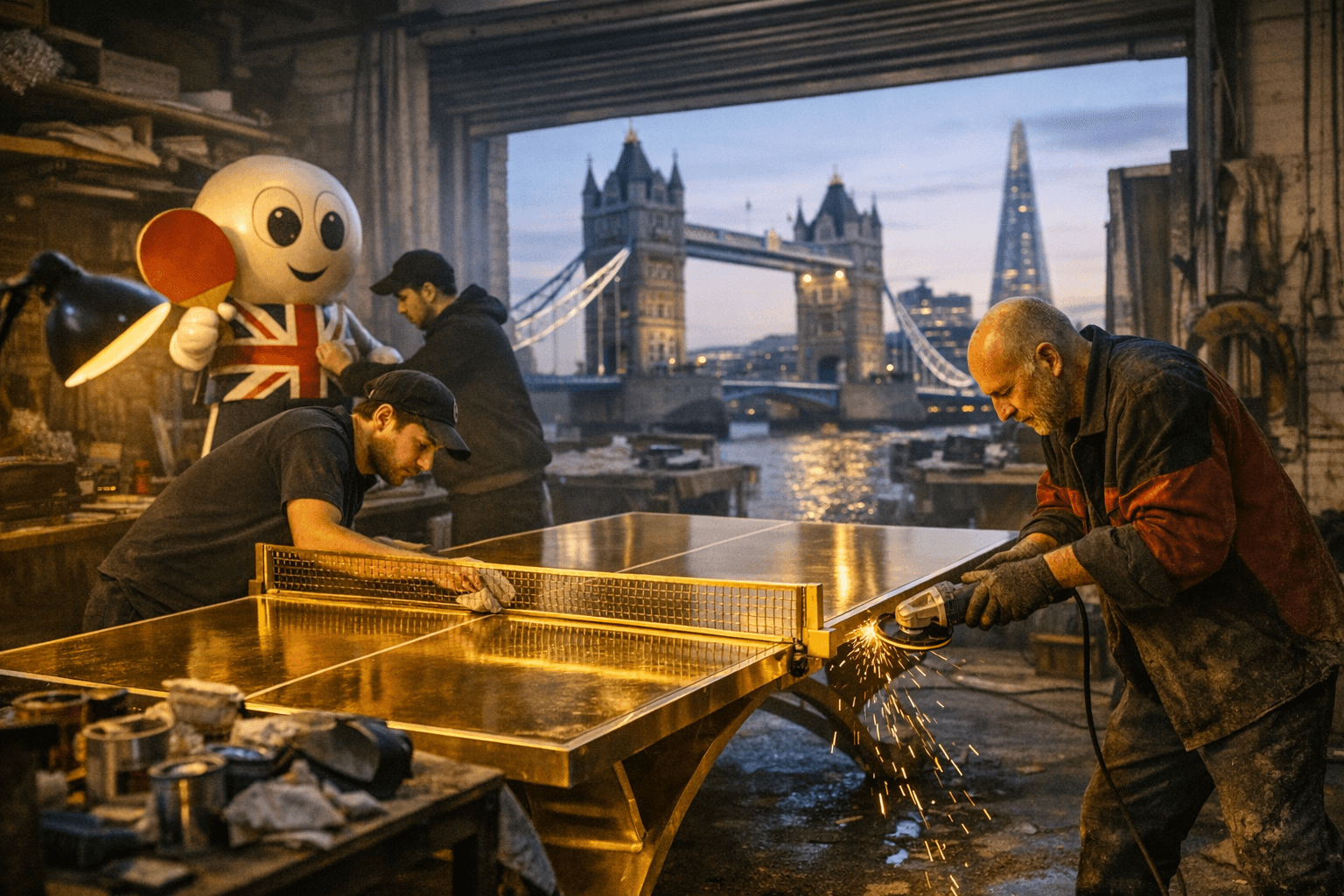
The federation has also leaned into the symbolism. The official mascot is Ping, and a centenary table program is part of the broader celebration. Add the gold tables installed across central London through June 2026, and you get a year of visible reminders that this is not just another tournament cycle. It is heritage turned into public space, which is exactly why the documentary matters. It gives fans a story they can carry from a screen into the street, and from the street back to the arena.
World Table Tennis Day is bigger than a calendar date
World Table Tennis Day was first organized in 2015, and the ITTF Foundation now uses it as a global showcase for diversity, inclusion and unity through the sport. The 2026 edition is being framed as a movement that connects people of all backgrounds, ages and abilities, which is not just branding. It reflects how table tennis actually lives in clubs, schools, community centers, and elite arenas at the same time.
That is why the film has value beyond debate culture. Clubs can use it as an explainer for new members. Federations can use it as a celebration piece. Fans can use it to start an argument that is grounded in history rather than hot takes. The best storytelling assets in table tennis do one thing well: they make the sport feel bigger without making it feel distant.
A sport whose scale makes the centenary argument impossible to ignore
The numbers explain why the centenary story resonates. Olympics.com estimates there are 40 million competitive table tennis players worldwide, plus countless millions more who play recreationally. Table tennis also made its Olympic debut at Seoul 1988, while para table tennis has been part of the Paralympic program since Rome 1960. The Paralympic movement says the sport is practiced in more than 100 countries and is the third-largest Paralympic sport by athlete numbers.
That reach changes the way you read a GOAT debate. This is not a niche argument about a niche game. It is a conversation about one of the most widely played sports on the planet, across Olympic and Paralympic pathways, from grassroots hall floors to world-class stages. The documentary understands that. It treats greatness as something that shaped the sport’s identity, not just its trophy case.
The centenary is already traveling well
London is only the center of the celebration, not the whole thing. The ITTF says India hosted a flagship World Table Tennis Day 2026 event in Kapadwanj, Gujarat, the first time the country staged the global celebration in that form. China marked the day too, with nationwide events and a main gathering in Guiyang. Those activations matter because they show the centenary is not locked inside one venue or one federation office. It is moving through the sport’s actual audience.
That is the strongest case for the film. It gives the table tennis world a shared reference point at a time when the sport is everywhere at once: in London for the championships, in community events across continents, and in the constant online debate over who sits at the top of the all-time list. The documentary does not try to end that argument. It does something smarter. It gives the sport a more rigorous way to have it, and in a centenary year, that is exactly the right kind of celebration.
Know something we missed? Have a correction or additional information?
Submit a Tip