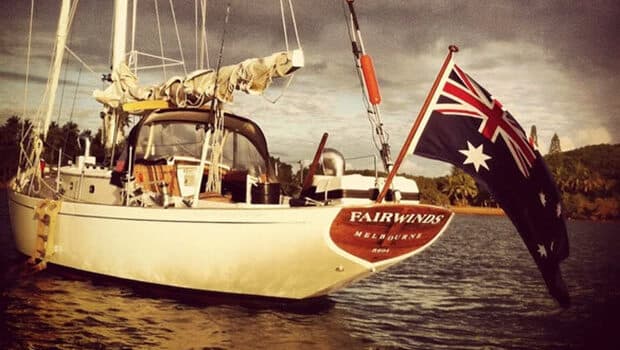
Beta diesel repower transforms engineless Cape Dory 36 from scratch
A Beta diesel repower on a Cape Dory 36 shows where the real money goes, into fiberglass, alignment, and access work, not just the engine.
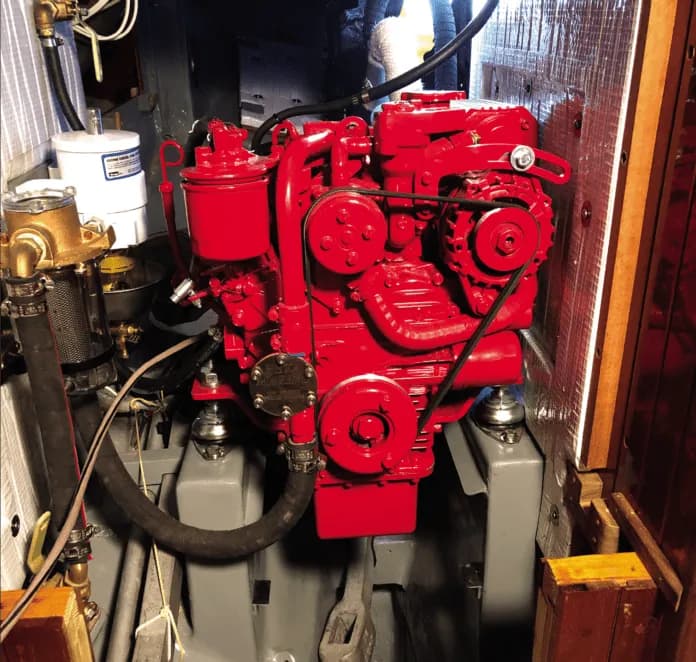
The expensive part of a repower is not the diesel on the pallet, it is everything you have to build around it. John Stone’s Cape Dory 36, Far Reach, proves that point hard. After roughly 8,000 nautical miles without an inboard, including two round-trip offshore passages between North Carolina and the Virgin Islands, he turned a previously engineless cutter into a Beta diesel boat from scratch. That is the kind of project that can save serious money, but only if you are ready for the hidden fabrication that comes with it.
Why this repower mattered
Far Reach is not a lightweight day sailor. It is a Carl Alberg-designed Cape Dory 36 with about 36.1 feet of LOA, 27 feet of LWL, 10.67 feet of beam, and roughly 16,100 pounds of displacement. On a boat like that, propulsion geometry is not a side issue, it drives the whole layout. Stone had already lived with a 9.9 hp gasoline engine on the quarter, hung on a Cape Horn Marine pivoting mount, and that arrangement got the boat moving. It also left him with the usual problems of stern-mounted power: awkward handling in crowded water, limited usefulness for rivers and canals, a visual nuisance hanging off the back, and cockpit-sole storage that never quite felt available.
That is why the shift to a compact offset-shaft inboard made sense. It was not about chasing horsepower for its own sake. It was about getting better maneuvering, better resale appeal, and a more integrated cruising setup that matched the way the boat was actually being used.
The shaft log is where the repower turns into boatbuilding
Once you decide to put a diesel into a boat that never had one, the engine itself becomes almost the easy part. The real challenge is creating a shaft log, lining it up, and making sure the hull structure can carry the load without turning into a compromise. Stone’s project picked up after the exploratory shaft-log hole was drilled, and from there the work became a lesson in measurement and adaptation.
He used a G10 tube for the stern tube and a Johnson cutlass bearing, then drilled an oblique hole so there would be room for thickened epoxy while still positioning the tube correctly in the hull. That detail matters because it shows how much a clean-looking installation depends on ugly, careful prep behind the scenes. If you get the angle wrong, or you cheap out on the bedding, you do not end up with a bargain. You end up with a vibration problem or a structural headache.
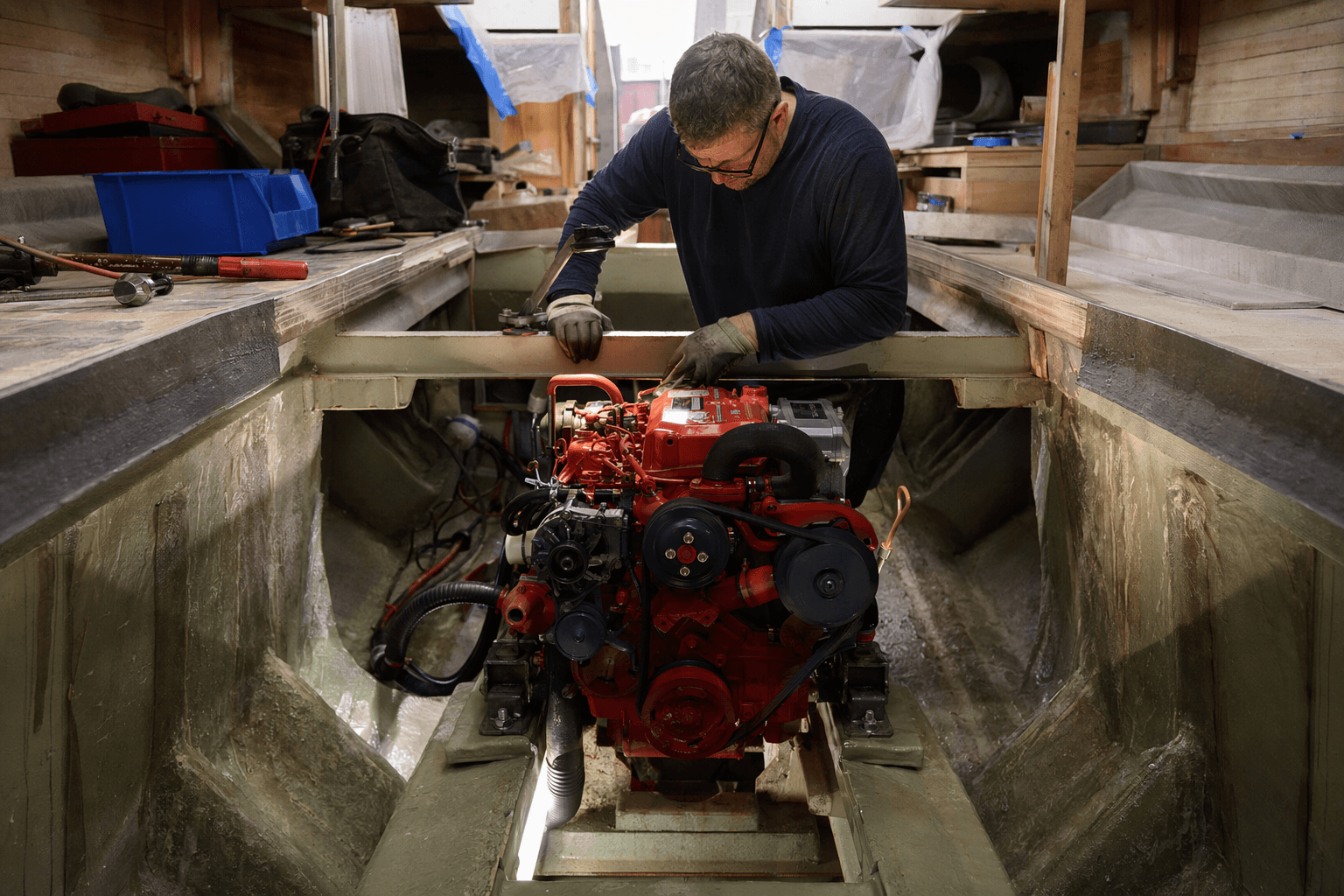
The forward end of the shaft log also had to respect the boat’s existing interior. Stone could not move it too far forward because that would have affected the engine box and the ladder arrangement. That is the kind of constraint DIY sailors run into all the time: the best mechanical location may collide with everyday living space, and then you have to solve both problems at once.
Cutting the rudder and extending the skeg is not optional clean-up work
The most instructive part of the project is the geometry change around the rudder and skeg. To make the shaft log sit where it needed to sit, Stone cut the rudder, fabricated a skeg extension, and then used fiberglass and epoxy to rebuild and support the new shape. This is not decorative work. It is the structural part of the repower, the bit that keeps the system aligned and strong after the hull has been altered to accept a new propulsion path.
That is where a lot of repower budgets get blindsided. People budget for the Beta diesel, the transmission, and maybe the shaft. Then they discover the project also needs fiberglass fabrication, custom supports, permanent bonding, fairing, and a lot more time with grinders, clamps, and epoxy than they expected. If you are trying to “save thousands,” this is the place where the promise can hold up, but only if you can do the labor yourself and accept that the boat will be under surgery longer than you first imagined.
The hidden systems work is the real job
Practical Sailor’s earlier coverage of the same repower path makes clear that the shaft log is only one piece of the installation. The project also involved engine-bed design, electrical changes, engine alignment, exhaust plumbing, and the kind of permanent bonding work that turns a mock-up into a working propulsion system. That is the key takeaway for any DIY sailor looking at an empty engine space and thinking the hard part is over once the motor fits through the companionway.
A successful repower is a systems project. It touches structure, shaft alignment, exhaust routing, access, and accommodation all at once. On Far Reach, the engine is not just bolted in and forgotten. It sits inside a package built around the boat’s geometry, the ladder, the engine box, the skeg, the rudder, and the shaft line. That is why the job feels more like a custom rebuild than a parts swap.

The sea-trial lesson is in the propeller, not just the engine
The final test of any repower is whether the boat can actually use the power you installed. In the later sea-trial work, Far Reach was launched on June 9, 2021, after being on the hard for 22 months. The tuning lesson there was straightforward and important: a smaller-diameter propeller with less pitch let the engine reach its maximum rated RPM. That is exactly the kind of detail that separates a repower that merely runs from one that performs properly under sailboat loads.
For a heavy cruiser like this, the prop is not an afterthought. It has to match the engine, the shaft line, the hull, and the way the boat is sailed. Get it wrong and you lose efficiency, throttle response, and confidence. Get it right and the whole repower finally feels like one coherent system.
What this project teaches before you spend a dollar
The Far Reach repower is compelling because it is brutally honest about the work involved. A used engine would not have solved the real problem. The boat needed a carefully built shaft log, structural changes around the rudder and skeg, a sound engine installation, and propeller tuning that matched the finished installation. That is the true cost of turning an engineless cruiser into a cruising-ready machine.
If you are planning your own repower, this is the lesson to keep in front of you: the engine is the visible purchase, but the hull work is the project. On a Cape Dory 36, that distinction is the difference between a clever upgrade and a boat that finally moves the way it should.
This article was produced by Prism’s automated news system from verified source data, official records, and press releases, then run through automated quality and moderation checks before publishing. The system is built and supervised by the people who set the standards it runs under. Read our full AI policy.
Did this article answer your question?