Hanse 430e review highlights practical ownership in a 43-foot cruiser
The Hanse 430e looks slick, but the real buy-or-bail questions are access, rig tuning, and whether its epoxy build matches your DIY limits.
A 43-footer that looks modern, but lives or dies on ownership details
The Hanse 430e is easy to admire from the dock and much harder to judge honestly until you think like an owner. Practical Sailor puts it squarely in the 40-ish-foot production-cruiser crowd, which is exactly why it matters: this is the boat for sailors comparing Beneteaus, Jeanneaus, Catalinas, Hunters, and the rest of the mainstream 40-footer universe, not a boutique one-off. The 430e first appeared in 2006, and at least 161 boats were built through 2010, so you are not dealing with a unicorn. You are dealing with a used cruiser that has already lived enough dockside and offshore hours to show its weak points.
That scale changes the whole buying conversation. A boat this size is not just about pretty lines and a big saloon, it is about whether you can keep up with the systems, the rig, the deck gear, and the inevitable refit list without turning every repair into a yard invoice. The Hanse 430e is the kind of boat that can reward a hands-on sailor, but only if you look past the styling and inspect it as a working machine.
What the numbers tell you before you step aboard
The basic dimensions explain why the 430e feels like a serious cruising platform. Cruising World listed the boat at 43 feet 7 inches overall, with a waterline of 39 feet 4 inches, a beam of 13 feet 9 inches, and a sail area of 1,022 square feet. It also put displacement at 22,958 pounds and specified a 40-horsepower Yanmar. Sailboatdata lists the broader Hanse 430 family as first built in 2005, also with a standard 40-horsepower Yanmar diesel and a shoal-draft version, which helps place the 430e as part of a larger model family rather than a one-off experiment.
Those numbers matter in real life because they define the maintenance load. A 40-horsepower diesel is familiar territory for many owners, but the sail plan, displacement, and beam all point to a boat that needs disciplined systems checks, not casual weekend attention. The water capacity of 85 gallons and fuel capacity of 58 gallons, also listed by Cruising World, are useful cruising numbers, but they also remind you that plumbing, tanks, hoses, and access matter just as much as the glossy interior.
The design cues are the easy part
The 430e’s styling set it apart when it was new. Cruising World noted larger cabin-trunk windows, more chiselled deck lines, a dark stripe along the coachroof, tinted deadlights, and flush hatches, all of which gave the boat a cleaner, more contemporary look than many of its rivals. Practical Sailor also highlights two calling cards that still define the boat today: epoxy construction and a self-tacking jib.
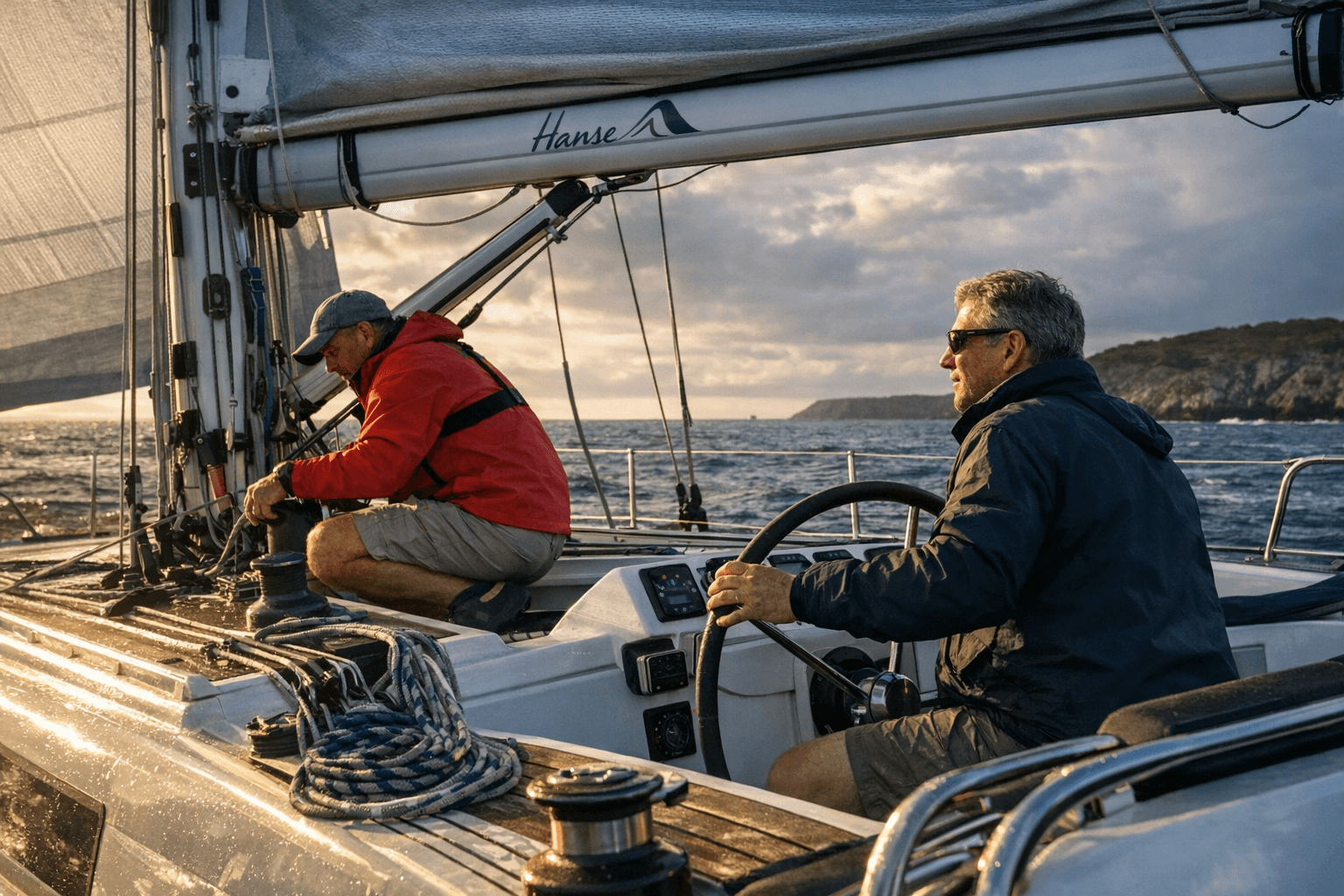
That self-tacking jib is a real ownership clue, not just a brochure feature. It makes short-handed sailing easier and simplifies tacking in tight channels, but it also changes what you expect from the boat upwind. If you like to fine-tune headsail shape with more moving parts, the 430e will feel more restrained, especially since a 2008 owner on myHanse noted that his boat was not equipped with an adjustable backstay. That kind of detail tells you plenty about how much tuning flexibility you actually get before you start spending money on upgrades.
The deck tells you whether this is a sailor’s boat or a service headache
When the boat was newer, Sailing Magazine praised the 430e for easy deck maneuvering, stout handrails, top-quality deck hardware, and a fresh, nontraditional interior. Those are exactly the features that still tempt used-boat shoppers, because they suggest a boat designed to be used, not just admired. The problem with a used cruiser is that praise from the launch period can hide how much wear has built up around the hardware and the loads.
This is where a serious inspection starts paying for itself. Look hard at stanchion bases, lifeline attachment points, chainplates, deck fittings, and every place that loads are transferred into the structure. Owner forums have raised concerns about stanchion attachment strength and other build-quality issues across Hanse boats, and you should treat that as a prompt to inspect, not proof of a universal flaw. A clean-looking deck can still hide bedding failure, crushed core, or attachment damage that turns a simple rebedding job into a yard repair.
Epoxy construction is a strength, but it is not a free pass
The 430e’s epoxy construction is one of the things that makes it interesting to DIY-minded buyers, but it can also seduce people into thinking the boat is more forgiving than it really is. Epoxy construction changes the maintenance conversation: it can be a smart, durable structure, yet repairs still need the right materials, the right prep, and the right sequence. If you have dealt with WEST SYSTEM, epoxy fillers, fairing, and proper surface prep before, you will understand why a bad patch can create a bigger problem than the original damage.
That is the key ownership lesson here: do not mistake a cosmetic-looking blemish for a cosmetic problem. Any suspicious crack, soft spot, or impact area deserves a proper inspection, and if the issue involves structure, core, or attachment points, that is the moment to call in a yard or a specialist. Small cosmetic jobs are owner territory. Anything that compromises the laminate, the deck structure, or a load-bearing fitting is where DIY confidence should stop and judgment should start.
What you can handle yourself, and where the yard earns its keep
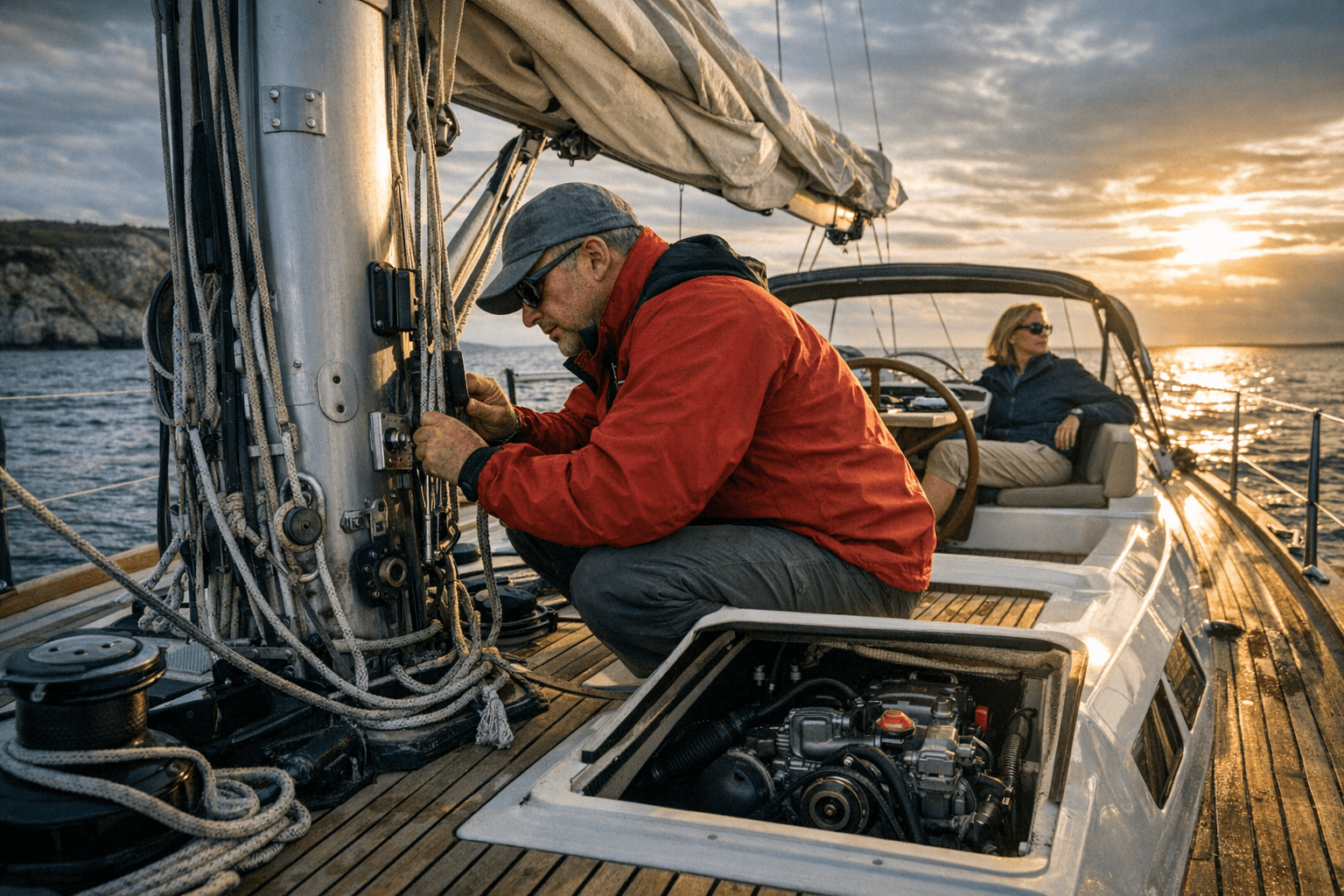
If you buy a 430e, the owner-manageable jobs are the ones that make a boat feel yours: routine Yanmar service, hose and clamp replacements, rebedding deck hardware, cleaning up tired electronics, replacing lines, and refreshing interior finishes. Those are the jobs that reward patience and good access. They are also the jobs that keep a used cruiser affordable over the long haul.
The yard-only or at least yard-assisted jobs are the ones that can spiral fast: rig replacement, structural deck repairs, major laminate work, or anything involving questionable stanchion backing and chainplate structure. The absence of an adjustable backstay on at least one 2008 boat also matters here, because if you want more tuning control, you may be looking at changes that go beyond simple bolt-on convenience. At that point, when to call a rigger is not a theoretical question. It is the difference between a workable cruising boat and a rig that only feels right in a perfect breeze.
The 430e still makes sense, if you buy it with open eyes
Hanse’s own history helps explain why the 430e lands where it does. The company’s first series-manufactured boat was the Hanse 291 in 1993, and by 2005 the brand had already broadened to six models, so the 430e sits inside a long-running production strategy, not a side project. That matters because the boat was built to appeal to real buyers who wanted a modern cruising platform without stepping into the extreme end of the market.
That is still the 430e’s appeal today. It is big enough to offer serious cruising comfort, modern enough to feel current, and common enough that its strengths and weak spots are already part of the used-boat conversation. If you want a 43-footer that can be lived with, maintained, and improved by an owner who knows where the hard jobs begin, the 430e remains a sensible buy. If you want a boat that hides its upkeep, this is not the one to fall for on looks alone.
This article was produced by Prism’s automated news system from verified source data, official records, and press releases, then run through automated quality and moderation checks before publishing. The system is built and supervised by the people who set the standards it runs under. Read our full AI policy.
Did this article answer your question?