How the Mechanical Wand System Keeps Foiling Moths Flying Stable
A carbon rod with zero electronics keeps foiling Moths airborne at racing speeds through pure mechanical feedback — here's exactly how it works.
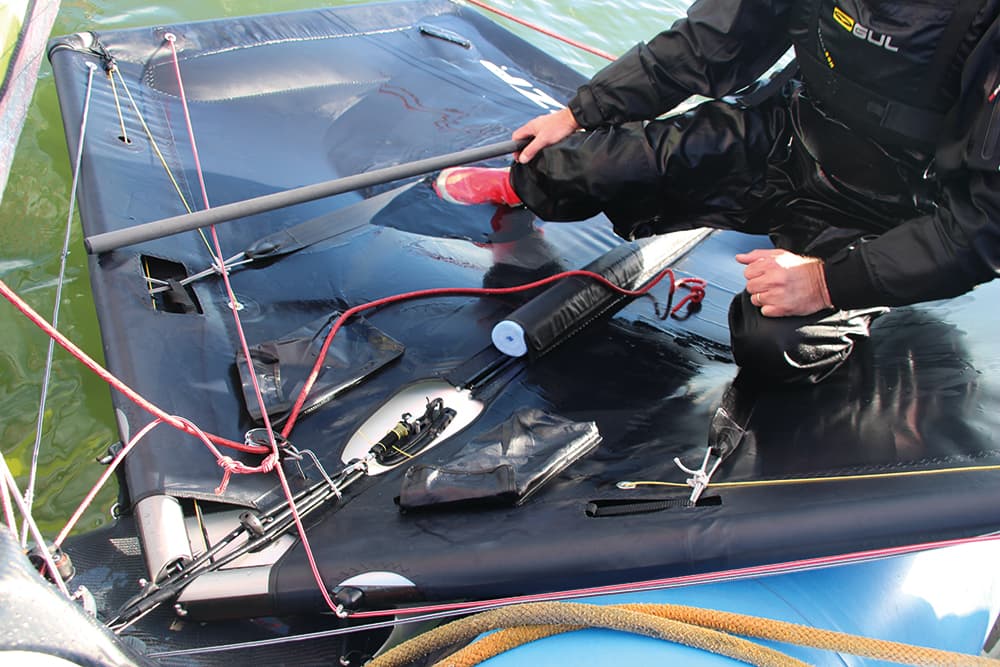
The foiling Moth is one of the most technically demanding one-design classes in sailing, and a viral video circulating right now is giving the DIY community its clearest look yet at the mechanical heart of the whole system: the wand.
The wand is a carbon rod mounted at the bow, skimming the water surface as the boat flies. When the hull rises too high, the wand angle changes, and through a direct mechanical linkage it adjusts the flap on the main foil to reduce lift and bring the boat back down. When the hull drops, the opposite happens. The feedback loop is continuous, instantaneous, and completely analog. No sensors, no microcontrollers, no actuators drawing power from a battery. Just geometry and physics doing the work at speeds that can push past 30 knots.
What makes this genuinely impressive from a build standpoint is the tolerance required in that linkage. The connection between the wand and the foil flap has to transfer precise, proportional movement without slop or flex introducing lag. Carbon construction keeps the rod stiff enough to avoid bending under load, which would corrupt the signal before it ever reached the flap. Any compliance in the system and you get oscillation rather than stability, the foil overcorrecting and hunting through a height range instead of locking in.

The elegance of the design is that it self-tunes to speed to some degree. At higher boat speeds the foil generates more lift per degree of flap movement, so the system becomes more responsive naturally, which is exactly when you need fine control most.
For anyone in the DIY high-performance sailing space thinking about foil builds, the Moth wand is worth studying closely. The principle scales. Outrigger foilers, small skiff conversions, even experimental platforms have borrowed the mechanical wand concept precisely because it sidesteps the weight, complexity, and failure modes of electronic flight control entirely. Getting the geometry right, specifically the pivot point, the lever arm ratio, and the wand contact angle at design flying height, is where the real engineering work lives. The viral video walks through the system visually, and for a first look at why foiling Moths fly as locked-in as they do, it's as good a primer as you'll find.
This article was produced by Prism’s automated news system from verified source data, official records, and press releases, then run through automated quality and moderation checks before publishing. The system is built and supervised by the people who set the standards it runs under. Read our full AI policy.
Did this article answer your question?