How to Choose Deck Hardware for Safer, Easier Sail Handling
Pick the right blocks, clutches, and winches and sail handling gets lighter, faster, and safer. Pick the wrong lead and small loads can turn brutal in a hurry.

Deck hardware is load control, not decoration
The fastest way to make a sailboat harder to handle is to let the lines fight the boat. A bad lead, a cheap block, or an undersized clutch turns reefing and hoisting into a grind, while the right hardware keeps loads moving cleanly and predictably. That is why deck gear has to be treated as a performance-and-safety system, not a shopping list.
Deck hardware covers more than the obvious shiny parts. Cleats, rope clutches, organizers, padeyes, deck fillers, fasteners, and winches all have one job in common: control lines, distribute load, and keep the boat manageable under sail. Once you start looking at it that way, the question changes from what looks good on deck to what actually handles the load without wasting effort or creating trouble.
Start with the boat, not the brochure
Lewmar’s specification logic gets this right: sail area, rig type, displacement, and whether the boat is a monohull or multihull all affect hardware selection. The loadings should be matched to the safe working load of the gear, which is the part many DIY refits gloss over until something starts slipping, flexing, or wearing too fast.
That matters because a racing setup and a cruising setup do not want the same answer. Performance-focused gear usually aims for low friction and quick response, while cruising gear puts a heavier premium on durability, strength, and safety. A feather-light component that feels great in the dockside test may be the wrong choice when the boat is loaded up and the weather turns ugly.
The practical move is simple: size the hardware to the real loads, the actual boat size, and the way you sail. Then check compatibility with what is already on deck before you buy. A line can only run as well as the whole system allows, and a mismatched piece can sabotage an otherwise sensible upgrade.
Friction is where deck gear earns or loses its keep
Harken’s advice on turning blocks is blunt and useful: use the minimum number of large, high-quality, strategically placed blocks to reduce friction. That sounds like a small detail, but friction is often what makes a line feel heavy, jerky, or slow to release when you need a smooth adjustment.
The load penalty from bad angles is not theoretical. Practical Sailor has noted that a 90-degree turn on a sheave can increase load to about 150 percent of the original straight-pull load. A 180-degree turn can raise it to about 240 percent. In other words, sloppy lead routing can make a line behave like it is carrying far more weight than you think.

That is why turning blocks, organizers, and padeyes deserve real attention during a refit. Cruising World has pointed to floating jib leads, low-friction rings, and padeyes as lighter-weight, lower-cost ways to deal with high loads in the right places. The trick is not buying the cheapest part on the shelf, but choosing the part that gives the line the cleanest path with the fewest losses.
Winches and clutches are the control center
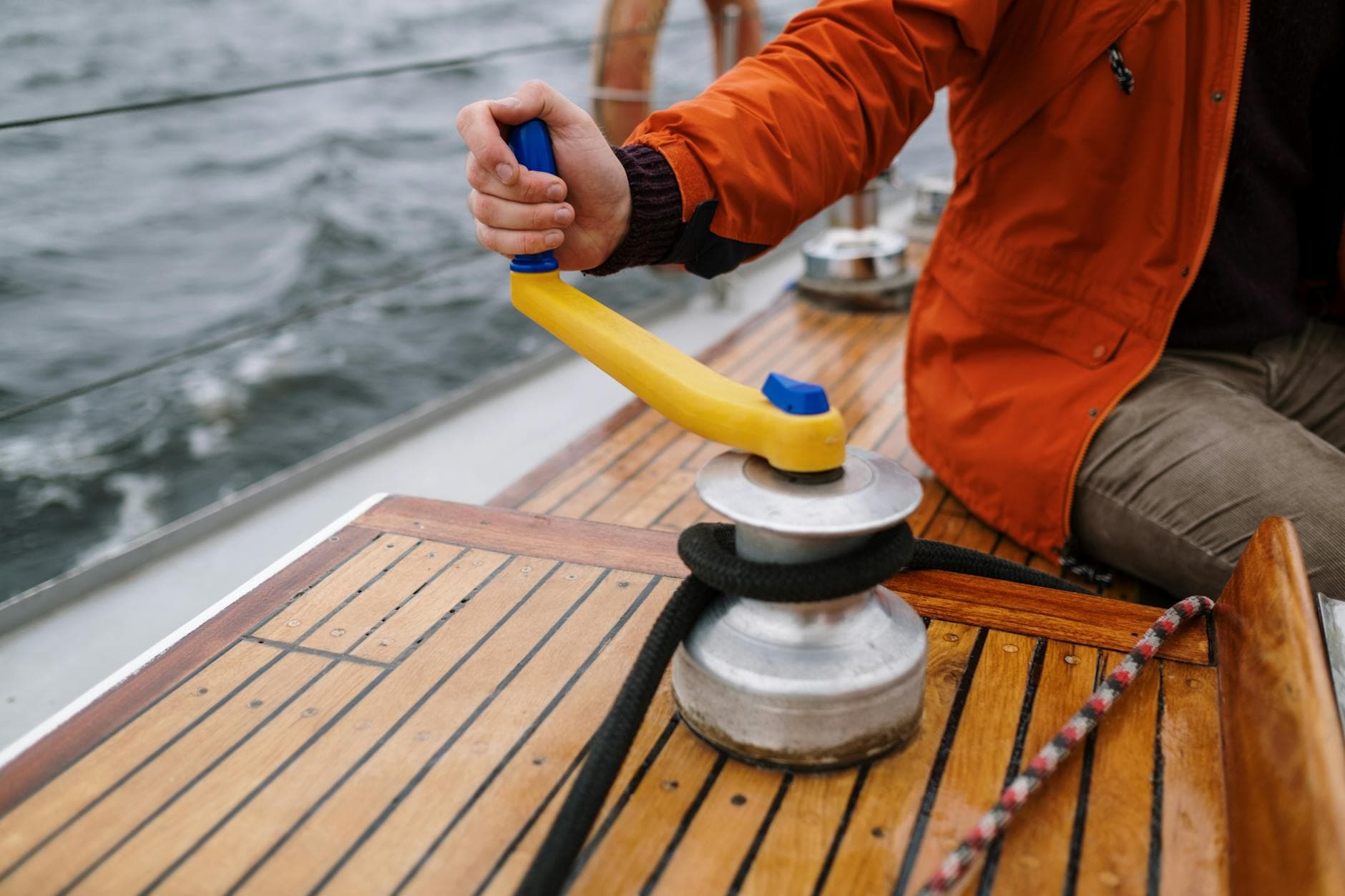
If there is one place where deck hardware changes the whole feel of a boat, it is the winch-clutch system. Harken notes that winches add power, letting you raise sails faster and with less effort. It also points out that winches are generally durable, and that a refit may be the right moment to add another winch for a new function or electrify a manual one.
Practical Sailor’s history lesson explains why this matters so much now. Just over a decade ago, halyards, sheets, and reefing lines often had their own dedicated winches. Modern boats often expect one winch to do multiple jobs, and rope clutches are what make that cockpit-capture model workable. That shift has changed the whole logic of sail handling: instead of moving from winch to winch, you often lock a line with a clutch and let one primary winch do more than one task.
This is why rope clutches and winches usually deserve the first serious upgrade dollars. They affect the jobs you do most often, they shape how short-handed control works, and they determine whether a line can be set, held, and released without a wrestling match. If you want the biggest gain for the money, this is usually where it starts.
Do not ignore the structure under the hardware
A better clutch or a stronger winch is only an upgrade if the deck beneath it can handle the load. Cruising World is explicit about this: if winches and clutches are part of the redo, the deck structure must be able to handle the load. That is the part that separates a smart refit from a cosmetic one.
This is especially important when you are replacing older hardware with more powerful gear or changing line routes to a cockpit-led arrangement. A winch that can generate more force is useful only if the mounting area, backing, and surrounding structure are ready for it. The same goes for padeyes and other attachment points that see real strain when the boat is pressed.
Think of the deck as part of the machine, not just the surface the hardware sits on. If the structure is weak, the best block or clutch in the catalog will still put the load in the wrong place.
Safety is part of the spec
The U.S. Coast Guard has warned that unsafe line-handling arrangements, including cleat placement and failures in risk assessment, can contribute to serious injuries. OSHA adds that injuries and fatalities still occur during routine mooring and unmooring line-handling operations. That is the hard reminder that deck gear is not just about comfort or speed.
Poorly placed cleats can make a line harder to secure or release under strain. Badly thought-out routing can force people into awkward positions right when the load is highest. In a crowded cockpit, that is when a small ergonomic mistake becomes a real deck-level hazard.
This is why the safest gear is often the gear that reduces the number of awkward moves. Cleaner leads, reachable controls, and hardware sized for the expected load all reduce the chance that someone has to wrestle a line at the worst possible moment. Safer handling is not an abstract benefit. It is what you get when the hardware stops demanding extra muscle and extra improvisation.
The smartest upgrades are the ones that change daily handling
A useful way to choose deck hardware is to ask what will change the boat’s daily routine. A well-placed rope clutch can make a reefing line easier to capture and release. A properly sized winch can turn a hard hoist into a controlled one. A better block arrangement can remove friction that has been stealing efficiency from every sail set and trim.
The biggest mistake is spending on parts that look upgraded but do not change the work. The better move is to spend on the pieces that directly affect load handling, reefing ease, and short-handed control. That usually means clutches, winches, blocks, and the structure that supports them, with cleats, padeyes, organizers, and fasteners chosen to match the system around them.
Yachting World once pointed out that even a modest 50:1 winch can output about 1,250 kg to the line when only 25 kg of force is applied. That number should get your attention. It shows why a small change in hardware can have a huge effect on how much leverage you have, and why the wrong setup can become dangerous fast.
Choose the gear like the load is real, because it is. Match the safe working load, keep the line path as clean as possible, and make sure the deck can carry what the hardware can produce. That is how a refit stops being a catalog exercise and starts making the boat easier, safer, and far more manageable every time you haul, reef, or release.
This article was produced by Prism’s automated news system from verified source data, official records, and press releases, then run through automated quality and moderation checks before publishing. The system is built and supervised by the people who set the standards it runs under. Read our full AI policy.
Did this article answer your question?