Marine Surveyor Shares Electrical Safety Advice and Lithium Upgrade Warnings for DIY Sailors
A marine surveyor with 25 years of experience warns that fitting a lithium battery without upgrading your fusing, cabling, and charger is a fire risk hiding in plain sight.
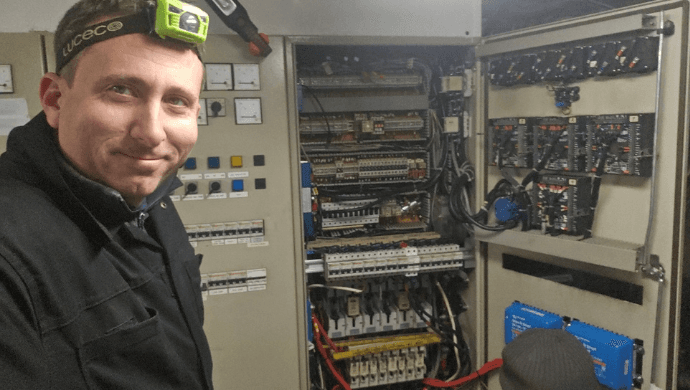
You can ignore a lot on a boat and get away with it for years. Ignore the electrics, and the consequences tend to be faster and far less forgiving. That's the core message from Cameron, a West-Coast Scotland-based captain, marine surveyor, and marine electrician who has spent more than 25 years working on vessels ranging from Mediterranean superyachts to small commercial and private yachts closer to home. His advice is simple and unambiguous: "Don't treat boat electrics like a black box."
Cameron shared his insights in a recent interview, covering common electrical mistakes, the real-world complications of lithium upgrades, and why documentation habits that feel bureaucratic on the hard can save lives at sea.
Why Electrical Systems Matter on a Survey
When Cameron carries out a pre-purchase or insurance survey, electrical systems aren't an afterthought. Dodgy wiring, missing fuses, or a mismatched charging setup can disqualify a boat from coverage or signal structural risk that goes well beyond the battery compartment. The failure modes aren't always dramatic; plenty of dangerous installations look fine on a casual inspection. What Cameron looks for is evidence of clear labelling, proper testing, and installations that someone actually understood before they completed them. He's direct about what he finds and what it costs owners who skipped those steps.
The broader point, and the one that shapes everything else in his practical advice, is that "clear labelling and proper testing can save lives." That's not hyperbole from someone trying to sell a service; it's a pattern observation from a surveyor who has seen what goes wrong when the next owner can't trace a circuit or identify which fuse protects which load.
The Lithium Upgrade Trap
The most urgent section of Cameron's advice concerns the rush to swap out lead-acid banks for lithium, specifically LiFePO4 chemistry. The appetite for lithium upgrades among DIY sailors has grown quickly, driven by the genuine advantages: higher usable capacity, lower weight, and faster charge acceptance. Cameron doesn't dispute any of that. "Lithium batteries are a fantastic upgrade," he says. The warning follows immediately: "but don't be fooled: they are never a direct replacement for lead-acid."
That word "never" deserves attention. It's not a hedge. A lithium bank wired into a system designed around lead-acid is not just suboptimal; it is a compatibility problem with real risk attached. Cameron spells out exactly what changes: "You'll likely need to improve your fusing, alter your charging systems, and upgrade your cabling to handle the different demands."
Each of those three items represents a category of work that catches DIYers off guard:
- Fusing: Lead-acid and LiFePO4 batteries have very different fault characteristics. Lithium systems can deliver enormous current surges almost instantaneously, and standard fusing isn't rated or designed to interrupt those faults cleanly.
- Charging systems: Alternators, shore chargers, and solar charge controllers designed for lead-acid use charging profiles (voltage curves, absorption stages, float voltages) that do not match what a lithium bank needs. Running the wrong profile degrades cells and, in some configurations, creates safety hazards.
- Cabling: The current-handling demands of a lithium system, particularly during high charge acceptance or during a fault, can exceed what was adequately sized for a lead-acid bank. Undersized cable is a heat source.
None of this means the upgrade isn't worth doing. It means the upgrade requires planning proportional to its complexity.
When to Call a Marine Electrician
Cameron draws a clear line on DIY threshold. "Unless you are prepared to spend significant time researching and planning, speak to a marine electrician." That's not a dismissal of capable DIYers; it's an honest assessment of what the job actually requires. If you're the kind of person who works through technical documentation methodically and tests as you go, the path is open. If you're planning to order a lithium battery, disconnect the old one, and connect the new one in an afternoon, you're in the category Cameron is warning about.
The investment in getting it right matters beyond your own boat. An uninsured, incorrectly wired lithium installation is a liability problem and, in a marina context, a risk to everyone around you.

The Class T Fuse: The One Component Cameron Calls Non-Negotiable
For anyone going the DIY route, Cameron is emphatic about one specific component: "Most importantly, if you're going the DIY route, ensure you fit Class T fuses." This isn't a general recommendation to use appropriate fusing; it's a named specification with a technical reason behind it. "Unlike regular Mega fuses, Class T are designed to handle the rapid, high-intensity current surges associated with lithium systems."
Mega fuses are common on marine DC installations and they work well in lead-acid applications. The problem is their interrupt capacity and time-current characteristics. A Mega fuse under a genuine lithium fault condition may not clear the fault cleanly before damage occurs. Class T fuses are purpose-rated for the fault current profiles that lithium chemistry produces. Fitting one is, relative to the cost of a lithium bank and the risk of getting it wrong, an inexpensive and non-negotiable step.
If you're pricing up a lithium retrofit and your parts list doesn't include Class T fuses, the list isn't complete.
What a Well-Executed Install Looks Like
Cameron shared details of a recent install using Fogstar LiFePO4 batteries, specifically calling out the redundancy built into the system. Redundancy in a lithium install typically means designing against single points of failure: independent battery management, multiple protection layers, isolation capability. Cameron's reference to "great redundancy built in" signals an install that doesn't rely on everything going right; it's designed to contain what happens when something doesn't.
Fogstar has become a recognized name among UK-based DIY marine electricians for LiFePO4 batteries, and Cameron's choice to reference that specific install as an example of good practice is worth noting. The photo he shared of the installation isn't just documentation; it's a reference point for what considered, well-protected lithium work actually looks like in practice on a real boat.
A Practical Pre-Installation Checklist
Before any lithium swap, Cameron's advice resolves into a clear set of actions:
- Audit your existing fusing and replace with Class T fuses rated for your lithium bank.
- Verify charger compatibility; confirm your alternator, shore power charger, and any solar controller support a lithium charging profile.
- Check cable sizing against the charge and discharge current requirements of the new bank; upsize where necessary.
- Label every circuit clearly, at both ends of every run where practical.
- Test circuits after installation, not just at first power-up but under load.
- If any of the above is unclear, engage a marine electrician before purchasing the batteries, not after.
Beyond the Survey: King's Fleet and Maritime Service
Cameron's work extends beyond commercial and private survey work. He is involved with King's Fleet, described as a global network using boats to serve communities and share faith. The organisation represents the kind of maritime engagement where electrical reliability isn't just a comfort question; vessels operating in service contexts in remote or challenging environments carry real operational stakes when systems fail. Cameron's perspective on safety is shaped by both the professional survey context and the practical reality of boats used purposefully at sea.
The electrical system on your boat is not a peripheral concern. It is, as Cameron puts it, something you need to understand, document, and maintain with intention. Treat it as a black box, and eventually the box opens on its own terms.
This article was produced by Prism’s automated news system from verified source data, official records, and press releases, then run through automated quality and moderation checks before publishing. The system is built and supervised by the people who set the standards it runs under. Read our full AI policy.
Did this article answer your question?


