Practical Sailor details LiFePO4 battery claims, specs for small boats
Swap to LiFePO4 for smaller, lighter batteries and true 1C charging, but verify BMS, charger compatibility, and warranty before you commit.
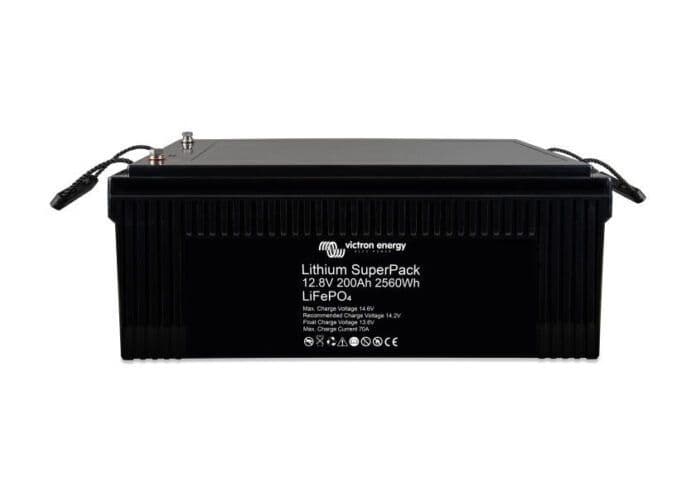
If you want more usable energy, faster charging and a lighter bank for a small boat, Practical Sailor’s new buyer’s guide and recent product excerpts lay out exactly what manufacturers are claiming and what you must verify. Practical Sailor published a comprehensive buyer’s guide on March 3, 2026 aimed squarely at small‑boat owners thinking about switching to LiFePO4 (lithium iron phosphate) house batteries. The guide’s audience line is truncated in the supplied excerpt, reading: “The piece is written for hands‑on cruisers and trailer‑boat owners who are evalua”
What manufacturers are claiming, in plain numbers Manufacturers and retail writeups in the supplied material make concrete performance claims that matter at the dock and on the trailer. Battle Born’s 100Ah LiFePO4 is presented as a true drop-in: “A well-known brand of LFP from the USA, Battle Born’s ‘drop-in’ 100Ah LiFePo4 batteries can accept a 1C charge and take a 100A discharge current (peaking at 200A for 20s only) without damage.” The same copy notes these cells “also include a comprehensive, built‑in BMS that manages voltage thresholds, temperatures, cell balancing and provides short circuit protection.” The product blurb even includes the buy note: “Buy it now from eBay (US).”
Lifos sells a similar message but with additional marketing about compatibility and cycle life. The supplied text says: “Lifos LiFePO4 batteries are advertised as ideal ‘drop-in’ replacements for lead acid house batteries without the need for additional charging equipment.” It continues, “Said to be compatible with every lead-acid charger and DC to DC converter currently on the market, they feature a built-in BMS that monitors and controls its charging and discharging functions to ensure maximum safety, reliability and a long life.” Lifos also claims weight and size reductions: “Weighing 25% less than the equivalent lead acid battery and being 30% smaller, Lifos claim high discharge capability (<1kW/120A), a 1C charge rate and the ability to provide up to 2,750 cycles at 90% DoD, or up to 5,000 cycles at 50% DoD.” The supplied material also lists a five year warranty: “Warranty is five years.” The supplied notes include an image caption: “A LiFOS lithium-ion battery” and the clear marketing line “LiFOS batteries don’t need additional charging equipment.”
Victron appears in the product list as an option under the name “Victron Smart LFP,” but the supplied excerpt contains no specifications for it. Treat it as a named alternative with no data in the supplied text.
Lead‑acid alternatives and Firefly carbon foam If you are still weighing lead‑acid tech, the supplied excerpt highlights Oasis/Firefly carbon foam as a development in lead chemistry: “Firefly’s proprietary technology comprises a carbon-based porous foam with thousands of open cells that distribute the sulphuric acid electrolyte over a wider area to increase the efficiency of the lead-acid chemistry.” The same copy warns on pricing and value with the editorial aside “[...] As with all things these days, you get what you pay for.”

Safety: the specific warning you cannot ignore The supplied material contains a blunt safety callout: “But much worse, in the case of Lithium-ion installations, using cheap, badly made components can not only waste a great deal of money in the long run, but also create a major fire risk onboard.” That sentence must guide every decision you make: confirm BMS capabilities, fusing, and installation practices before you install any LiFePO4 cells.
How the claims line up and where they diverge Several direct reconciliations emerge from the supplied text. Both Battle Born and Lifos explicitly state a 1C charge capability. Both are described as “drop‑in” options. Continuous discharge numbers sit in the same ballpark: Battle Born specifies a 100A continuous discharge with a 200A 20‑second peak, while Lifos states high discharge capability “(<1kW/120A).” Both brands claim built‑in BMS functionality, but Battle Born’s excerpt lists specific BMS functions, and Lifos’s copy remains more general about monitoring and control. Warranty information is explicit only for Lifos in the supplied material: “Warranty is five years.” Battle Born’s warranty and weight/dimension figures are not supplied.
- Ask the manufacturer for a detailed datasheet showing charge voltage profiles, recommended charger settings and the BMS trip thresholds.
- Confirm whether 1C charging is continuous or conditional, and whether the stated discharge ratings are continuous at nominal voltage.
- Request weight and dimension specifications to verify the “25% less” and “30% smaller” Lifos claims against the exact lead‑acid model you would replace.
- Obtain warranty terms in writing and ask what actions void coverage.
- Check for third‑party certifications and any independent cycle testing that backs claims of “2,750 cycles at 90% DoD” or “5,000 cycles at 50% DoD.”
What to verify before you buy or install
Treat the supplied marketing lines as claims to be validated. Practical steps to take before swapping to LiFePO4 on a small boat include:
- Confirm BMS functions and protective limits, especially overcurrent and temperature protections, since Battle Born’s listing specifies “manages voltage thresholds, temperatures, cell balancing and provides short circuit protection.”
- Verify charger compatibility; despite Lifos claims it is “Said to be compatible with every lead-acid charger and DC to DC converter currently on the market,” get a written confirmation and recommended charger profiles.
- Fuse and cable everything to marine standards and size fuses to the BMS and cell rating, not merely the alternator output.
- If you are carrying a spare bank or mounting in a locker, confirm ventilation and placement guidance from the manufacturer.
Installation checklist for small boats
The supplied excerpts stress BMS and safety, so use this practical checklist and confirm each item with the vendor:
Where the supplied material leaves gaps and the questions to ask next The research notes explicitly flag follow‑ups you should pursue with vendors and Practical Sailor. You need Battle Born warranty details, weight and dimensions, and cell/BMS technical specifications. Ask Lifos for test reports that substantiate the cycle life claims and for clarification whether their “<1kW/120A” is a continuous rating at 12V or a peak. Obtain Victron Smart LFP datasheets since no specs appear in the supplied excerpt. For Firefly/Oasis, request comparative cycle and price data versus AGM and flooded batteries.
Purchase and disclosure notes from the source material The supplied product writeups include a shopping callout for Battle Born: “Buy it now from eBay (US).” If you link to products or accept affiliate revenue, reproduce the supplied disclosure verbatim: “Note: We may earn a commission when you buy through links on our site, at no extra cost to you. This doesn’t affect our editorial independence.”
Bottom line and a practical verdict The supplied material shows the upside: smaller, lighter banks, true 1C charging on multiple marketed models, and long claimed cycle life if the vendor figures are accurate. The supplied safety line is your dealbreaker: “using cheap, badly made components can not only waste a great deal of money in the long run, but also create a major fire risk onboard.” If you plan to swap to LiFePO4 on a trailer boat or cruiser, do the verification work listed above, get datasheets, confirm charger profiles and warranties in writing, and treat BMS behavior as the critical spec, not price alone. If you do that, you will gain faster charging, reduced weight and likely much longer usable life from your house bank.
This article was produced by Prism’s automated news system from verified source data, official records, and press releases, then run through automated quality and moderation checks before publishing. The system is built and supervised by the people who set the standards it runs under. Read our full AI policy.
Did this article answer your question?