Restoring Worn Winch Drums with a Simple, Low-Cost DIY Fix
Slipping winch drums cost you control when it matters most — a strip of 3M Safety-Walk tape may be the cheapest, most effective fix you haven't tried yet.
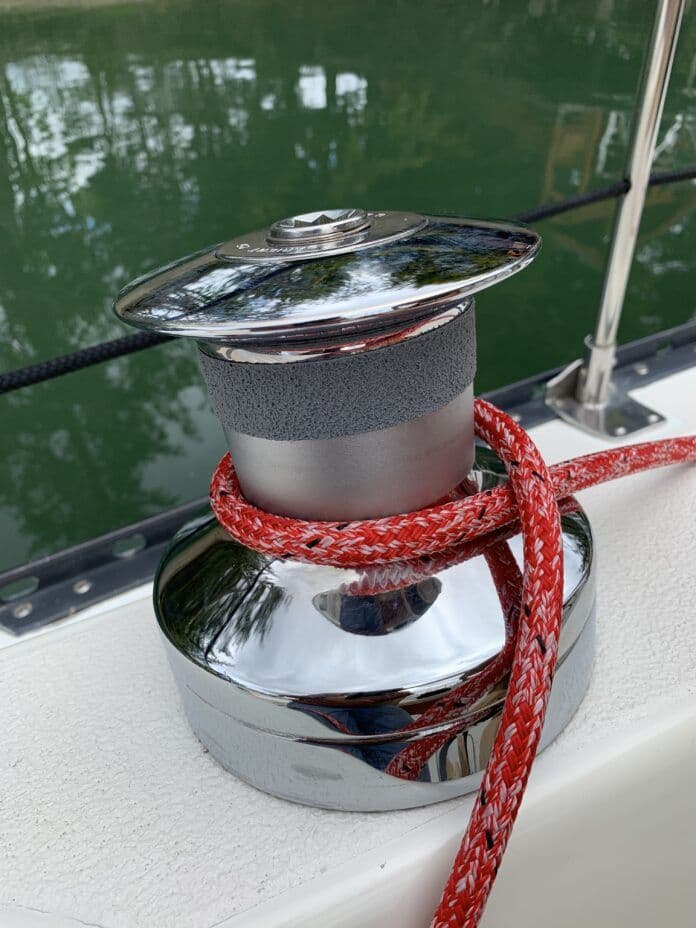
A slipping winch drum isn't just annoying; it's a control problem that compounds the moment the breeze fills in and the genoa sheet loads up. That's exactly the situation Practical Sailor contributor Bert Vermeer found himself dealing with aboard *Natasha*, his 1978 Islander Bahama 30, and the fix he landed on costs a fraction of what most sailors assume they'll need to spend.
The Problem: When Chrome Wears to Glass
On *Natasha*, the Barient two-speed sheet winches were showing their age, with a dull chrome surface and the drum worn quite smooth, making it increasingly difficult to get a good grip on the genoa sheet when the winds picked up. Anyone who has sailed a vintage cruiser with original hardware knows the feeling: the sheet creeps under load, you add another wrap, and still the drum gives way under pressure. It's the kind of incremental failure that's easy to ignore until it isn't.
Barient winches are typically found on boats under 40 feet and have withstood the test of time, which is precisely why so many 1970s and early-1980s production boats still carry them. The trade-off is that decades of genoa sheets grinding across those drums eventually flatten out whatever texture the manufacturer built into the chrome surface.
The First Attempt: Re-Chroming and Why It Fell Short
Vermeer's initial response was a proper one, at least on paper. He decided to re-chrome the winches, a process that included etching the drum to provide the necessary grip. However, the etching turned out too fine and didn't really solve the line-slip problem.
This is a well-documented pitfall in the sailing community. The re-chroming process can leave the drum pretty slippery, so the jib sheet will not hold as well as it did before. The challenge is that winch drums have a very fine non-skid pattern, and the prep and plating can fill these in, leaving less grip, which can be problematic on bigger boats or on a winch that has been in need of rechroming for so long that the non-skid pattern has worn through. In Vermeer's case, the etching step was meant to compensate for exactly this, but the texture it produced wasn't coarse enough to restore meaningful bite under load.
Re-chroming is also not an inexpensive path. The cost for rechroming winches at a specialist plating shop can run around $400 per job, and that's before accounting for turnaround time and the risk of ending up with a drum that's cosmetically restored but functionally still slick.
The Fix: 3M Safety-Walk Tape
Rather than accept a still-slipping drum or write a check for new self-tailers, Vermeer went a different direction entirely. A strip of 3M Safety-Walk tape on the drum gave these tired Barient winches fresh bite without the cost of new self-tailers.
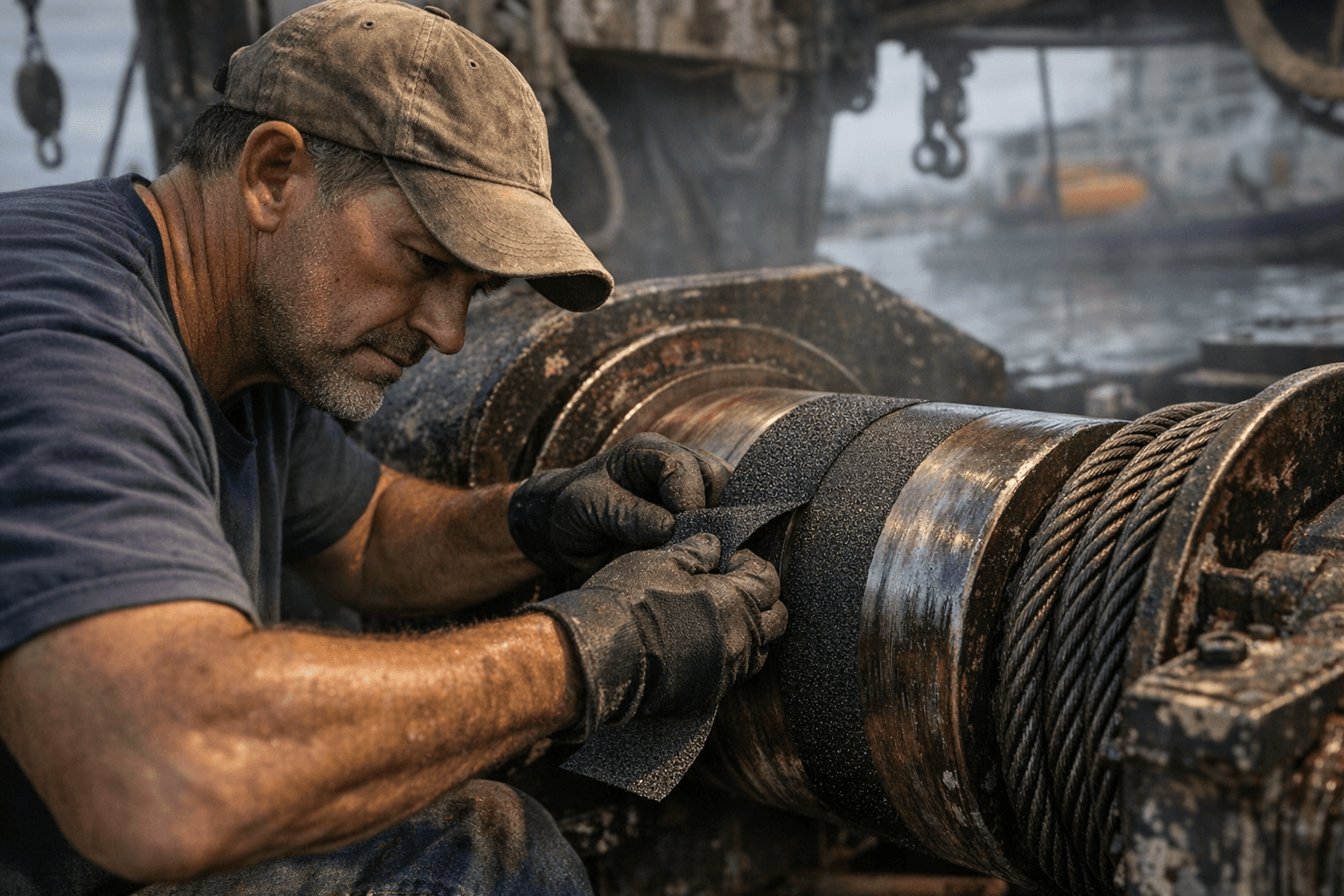
The choice of product is well-suited to the task. 3M Safety-Walk is an extremely grippy non-slip tape with a very sticky self-adhesive back. The mineral-coated, slip-resistant material features a highly durable surface, which is why it's trusted in industrial and marine step applications. That same mineral grit that keeps feet from sliding on a wet cockpit step creates consistent, high-friction contact between a loaded sheet and a winch drum.
The self-adhesive backing means application requires no special tools, no shop time, and no waiting for parts. A strip cut to width and wrapped around the drum barrel is, functionally, all there is to it. The tape is widely available in narrow widths, which makes it straightforward to fit the cylindrical drum surface without bunching or overlap causing uneven contact.
Why This Matters Beyond One Boat
The deeper lesson here isn't really about tape. It's about recognizing that worn drum surfaces are a common failure mode on any vintage winch, and that the instinct to reach for an expensive solution, whether a full re-chrome or a new set of self-tailers, often skips past a far simpler intervention. Older winches can have their life extended by addressing worn components, and while Barient as a manufacturer is no longer in business, the hardware itself remains serviceable.
For boats like *Natasha*, a 1978 hull that's still actively sailing nearly five decades after she was built, the economics of keeping original hardware functional are real. New self-tailers represent a significant cost and often require deck hardware modifications. A re-chrome, done correctly by a shop familiar with marine winches, is itself a multi-hundred-dollar commitment with no guarantee the surface texture will hold a sheet better than it did before.
The Safety-Walk approach sidesteps both. It's reversible, repeatable, and costs as much as a decent roll of tape.
What Vermeer's Fix Doesn't Cover
It's worth being clear about the limits of what's documented here. No specific tape width, drum measurements, or step-by-step application method were recorded beyond the core fact of a strip applied to the drum barrel. No long-term wear data or load testing under sail was reported. If you're considering this on your own winches, the tape choice (coarser series for higher-load drums, finer for lighter sheet winches) and the fit to your specific drum diameter are decisions you'll need to work through on the water.
What the fix does confirm is the principle: grip is the variable, and grip is what the tape restores. On a 48-year-old boat with original Barient hardware that had already been through a re-chrome attempt, that's not a small thing.
This article was produced by Prism’s automated news system from verified source data, official records, and press releases, then run through automated quality and moderation checks before publishing. The system is built and supervised by the people who set the standards it runs under. Read our full AI policy.
Did this article answer your question?