Sail-repair essentials, building the right shop for durable fixes
A blown seam offshore can cost you a passage and a sailmaker bill. The right machine, thread, and training turn sail repair from panic into a durable fix.
Sail-repair essentials, building the right shop for durable fixes
A blown seam offshore can turn a good passage into a ruined one fast, and the repair bill can climb into four figures just as quickly. The smarter move is not a bigger emergency kit but a better sail-repair shop: the right machine, the right thread, the right needle, and enough skill to make the fix hold when the sail is loaded again.
Leslie Linkkila and Philip Dinuovo make the point plainly in Good Old Boat’s sail-repair guide. This is not about casually mending a torn panel after the cruise is over. It is about building the capability to keep sailing when a seam opens, a corner chafes, or a panel starts to give way. That change in mindset matters, because sail repair is a structural job, not a craft project.
Build the shop around the machine, not the patch
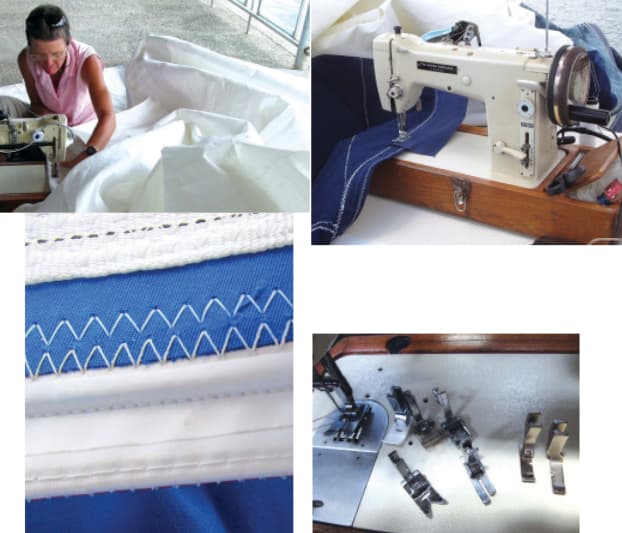
Most serious sail repair starts with a heavy-duty industrial sewing machine, not a household machine parked on a desk. The machine needs to handle heavy-gauge round needles and the strain of V92 or V138 bonded polyester UV thread, which is a very different workload from hemming curtains or fixing a tote bag. Good sail-repair machines are often mostly metal, can be fitted with a portable motor, may use a large cogged wheel, and can even be hand-cranked. Some live in a sturdy wooden case, which is a reminder that portability and durability matter when the machine belongs in a boatwork shop.
That hardware choice is not just about convenience. Sail cloth, UV-damaged canvas, and heavy thread demand consistent power and stable feeding. If the machine cannot drive a proper stitch through loaded cloth, the repair may look neat but fail the first time the sail is sheeted hard. In other words, the machine is part of the repair, not merely the platform for it.
Match the thread to the job, or the repair will fail for the wrong reason
The backbone of most sail work is heavy-duty bonded polyester thread, especially V92 or V138. Sailrite describes its V-92 polyester thread as high-performance and perfect for sail and canvas work. Its V-138 polyester thread is also suited to sail and canvas work and adds resistance to UV, abrasion, saltwater, and mildew, which is exactly the kind of abuse sail repairs face underway and at anchor.
That strength is useful, but overbuilding can be its own mistake. Not every sail panel deserves the same treatment. A load-bearing seam on a cruising main or genoa is one thing; a light-air sail such as a spinnaker is another. Good Old Boat’s guidance is clear that spinnakers can be handled with smaller needles and thinner thread. The real skill is knowing when to stay stout and when a lighter setup makes a cleaner, safer repair.
Needle size matters more than most sailors think
Thread choice is only half the equation. Sailrite’s thread-and-needle guidance offers a simple rule that is easy to remember and hard to ignore: choose a needle whose eye is about 40 percent larger than the thread thickness. That extra room helps the thread pass smoothly and reduces friction that can turn a repair into a frustration.
For sail work, that detail matters because the sewing conditions are unforgiving. Heavy thread through a too-small eye can create bad tension, ragged stitches, and a repair that looks acceptable until the sail loads up. Pairing the right needle with the right thread is one of those unglamorous decisions that decides whether the fix lasts a season or a squall.
Know when lighter gear belongs in the kit
There is a temptation to standardize everything around the beefiest thread and biggest needle you own. That is the wrong instinct for lighter-air sails. Spinnakers, for example, can be repaired with smaller needles and thinner thread because the cloth and the loads are different. If you treat a delicate panel like a heavily loaded seam, you can create unnecessary stiffness, ugly stitching, or even more damage than you started with.
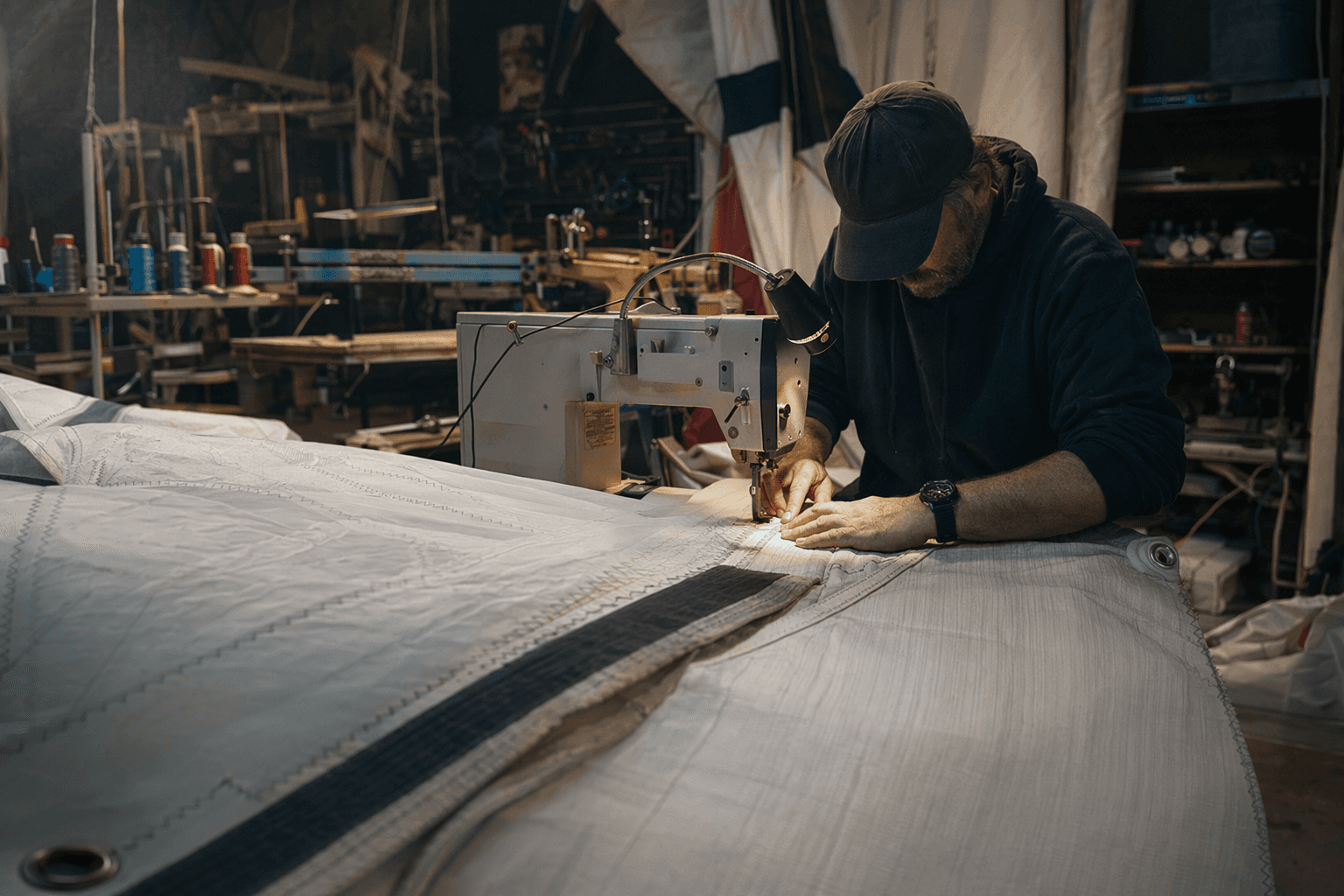
A smart sail-repair shop is therefore not a one-size-fits-all collection of supplies. It is a matched system. Heavy-duty industrial machine for the big structural work. Finer thread and smaller needles for lighter sails. The discipline is in choosing the right level of reinforcement for the exact failure in front of you.
The real value is self-sufficiency underway
Sail repair is not only a dockside skill. Sailrite’s Sail Repair Manual, by Jim Grant, is aimed at helping sailors be self-sufficient by repairing sails at sea or at home. That distinction matters for offshore cruising, where the nearest sailmaker may be days away, or for any passage where a damaged sail can decide whether the boat keeps moving or starts drifting into inconvenience.
Good Old Boat has also pointed to real-world cases where cruisers had to improvise repairs when no sailmaker was available. That is the practical backdrop for all the machine talk, thread talk, and needle talk. A sail failure is not just maintenance. It can become a routing problem, a safety problem, and a schedule-killer all at once.
Learn the craft before the seam splits open
The best gear in the world does not help if you cannot use it under pressure. Good Old Boat’s guidance points readers toward two practical ways to build confidence: attend a workshop or apprentice with a sailmaker willing to mentor you. That is the right order of operations. Learn how cloth behaves, how seams lay, how tension changes the stitch, and how a repair should be built before you trust yourself with an actual cruising sail.
This is where a lot of home repair setups fall apart. The tools are bought first, the technique is guessed at later, and the first real failure becomes the teacher. A better path is to treat sail repair like seamanship: learn the system, then stock the shop around what the system actually needs.
How to think about coastal versus offshore setup
The difference between a coastal kit and an offshore setup is not just quantity. Coastal sailing may justify a leaner shop focused on smaller fixes and simpler reinforcement, especially if you can get to a sailmaker quickly. Offshore sailing changes the stakes. If a seam opens or a panel starts to shred, you may need to make a durable repair yourself and keep trusting it in weather, salt, and motion.
- An industrial sewing machine that can handle heavy-gauge round needles.
- Bonded polyester thread in V92 or V138 for serious sail and canvas work.
- Smaller needles and thinner thread for lighter sails like spinnakers.
- A needle sized so its eye is about 40 percent larger than the thread thickness.
- Training from a workshop, a sailmaker, or a manual built for self-sufficiency.
That is why the essentials that earn space are the ones that solve real underway failures:
A coastal sailor can get by with less, but offshore demands more resilience from both the gear and the person running it. The point is not to carry every possible item. The point is to carry the right capability for the kind of failure you are most likely to face.
A durable sail repair is never just a patch. It is a decision chain that starts with the machine, continues through thread and needle, and ends with enough skill to trust the result when the sail loads up again. Build the shop with that in mind, and a torn seam becomes a manageable job instead of the thing that ends your passage.
This article was produced by Prism’s automated news system from verified source data, official records, and press releases, then run through automated quality and moderation checks before publishing. The system is built and supervised by the people who set the standards it runs under. Read our full AI policy.
Did this article answer your question?