Simple Deck-Level Wind Indicator Solves Hidden Masthead Fly Problem
A cheap deck-level indicator keeps apparent wind in view when the masthead fly is hidden. Built from tent poles and tubing, it shrugs off sheets, sails, and rough handling.
Why this little fix matters
A masthead fly is still the truest quick read on apparent wind, but it has two classic sailboat problems: it disappears behind the bimini or the sails, and it forces you to crane your neck every time you want a look. That is fine when you are trimming hard and living aloft with the rig. It is much less fine when you are on deck, hoisting, anchoring, or trying to keep non-sailing crew calm and useful instead of confused.
Drew Frye’s solution in Good Old Boat is exactly the kind of shop-built upgrade that earns its keep fast. It takes a nuisance that most sailors just tolerate and turns it into a deck-level cue you can see without staring straight up. The best part is that it does the job with parts that are cheap, familiar, and hard to destroy.
Why the usual answers fall short
If you have ever tried to solve this with yarn in the rigging, you already know the catch. The yarn may show wind, but it sits too close to the sails, where the whole picture gets muddied. Bow-mounted vanes can work, but they introduce the opposite problem: more complexity, more breakable bits, and more money tied to a device that lives in a rough part of the boat.
That is where the design principle matters more than the gadget. A good sailboat fix does not just report information. It survives the reality of sheets crossing, sails flogging, and crew moving around the cockpit. Frye’s indicator is built around that idea. It is meant to be visible at deck level and nearly impossible to break, even when the boat is being handled less delicately than a catalog photo would suggest.
What the indicator is made from
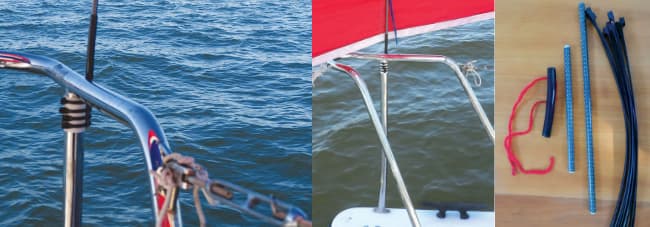
The parts list is wonderfully plain. The core materials are fiberglass tent poles, a short section of polyethylene airline tubing, and a doubled length of yarn. You are not building an instrument; you are building a resilient visual cue that can be knocked around and keep working.
The lower fiberglass tube is kept flush with the top of the rail so sheets do not catch on a hard edge. That detail is the whole game. If you leave a snag point sticking up, the first sloppy gybe or hurried tack will remind you why marine hardware so often breaks in the same places it was supposed to be “protected.” With this setup, the indicator is low enough to stay out of trouble and durable enough to take abuse.

How the build comes together
Start with the support, not the yarn
The tube and pole assembly is the structure. Cut the polyethylene tubing, insert the fiberglass poles, and treat the tubing as both connector and buffer. The goal is a simple upright that can flex instead of snapping when a sheet brushes it.
Lash it where the boat can live with it
Secure the lower end to a rail or support with a durable lashing. Athletic tape helps keep the assembly tidy and stable, and cable ties or a similar fastening method keep the yarn and connections from wandering. You want enough security that the indicator stays put, but not so much rigidity that it becomes a brittle obstacle.
Place it where it can be seen and ignored
The sweet spot is deck level, where you can catch the wind direction at a glance while still letting the boat be a boat. Position it so sheets can pass by it or even rake across it without damage. That is the real selling point: instead of designing around perfect conditions, you design for the messier moments when the crew is busy and the rig is moving.
Who benefits most from it
This is especially useful for non-sailing crew, and that matters more than a lot of old hands like to admit. When somebody is asked to turn the boat into or away from the wind while hoisting or dousing sail, they need a cue they can read instantly. The same goes for anchoring and for those small course changes at the wheel when you are trying to hold a feel for the wind without squinting up at the masthead.
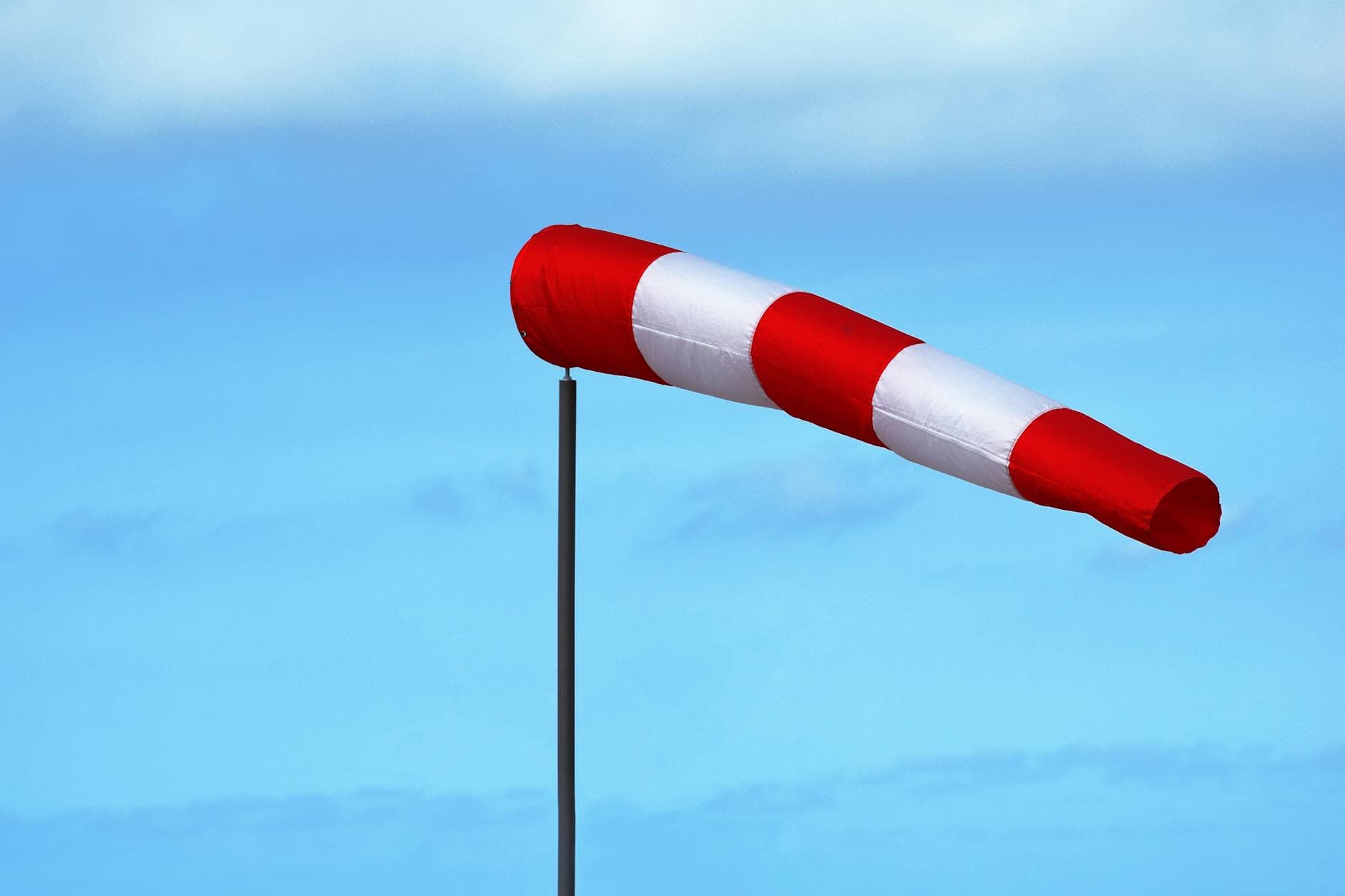
Practical Sailor makes the same point in a broader way: a masthead indicator may be the norm, but a deck-level indicator has real advantages when the bimini blocks the view or when you simply do not want to look straight up. That is not a minor convenience. It reduces strain, improves situational awareness, and makes the boat easier to handle for everyone aboard, not just the person who already knows what the telltales are saying.
Why apparent wind still deserves a proper read
UK Sailmakers’ explanation of apparent wind is the reason this little project works so well. Apparent wind is not just the breeze outside the boat. It is the wind you feel after the boat’s own motion changes the picture, which means both boat speed and course affect what you see and feel on deck. That is why a quick, visible indicator near where you work can be so helpful.
The point is not to replace your understanding of trim, sail shape, or the masthead fly. The point is to make the boat’s changing wind picture visible in a place where your hands already are. That is a smarter everyday tool than a fussy gadget you have to baby.
A small build with a large payoff
Davis Instruments describes a masthead fly as a sailboat wind indicator or wind vane mounted at the top of the mast, which is exactly why so many sailors treat it as the reference point. But reference does not always mean practical. When the fly is hidden by sails or a bimini, the best solution may be the one at deck level, where you can see it while handling the boat.
That is the beauty of Frye’s version in Good Old Boat, issue 107 from Mar/Apr 2016. It is the sort of modification that feels almost too simple until you live with it. The indicator survives flapping sails, shrugs off flailing sheets, and keeps working with almost no maintenance beyond replacing the yarn and cable ties when they wear out.
For catamaran and monohull sailors alike, that is the sort of low-cost, high-value upgrade worth copying. It is not fancy. It is not fragile. And in a world full of overbuilt marine accessories, that is exactly why it works.
This article was produced by Prism’s automated news system from verified source data, official records, and press releases, then run through automated quality and moderation checks before publishing. The system is built and supervised by the people who set the standards it runs under. Read our full AI policy.
Did this article answer your question?