Spring boating checklist helps crews avoid first-outing mistakes
The first outing fails where dock checks get skipped. A one-hour reset on batteries, fuel, seacocks, rigging and lifejackets keeps launch day from turning expensive.
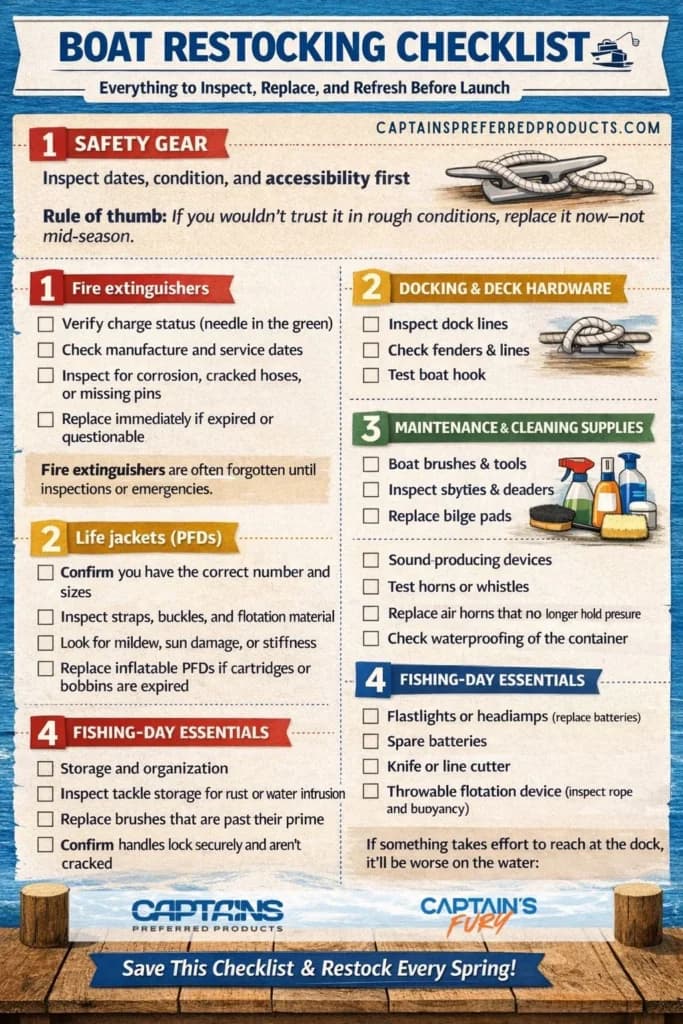
Start with the failure that costs the most
A dead battery at the dock is embarrassing. A dead battery after you have shoved off, cleared the harbor, and realized the nav lights are dim and the engine will not crank is how a casual first sail becomes a tow bill, a lost afternoon, and a crew that no longer trusts the boat. That is the real value of a spring boating checklist: it catches the small, boring misses before they become the kind of problem that makes everyone remember the day for the wrong reason.
Laura Hodgetts’ April 27, 2026 guide for Practical Boat Owner treats the start of season as a confidence test, not a box-ticking exercise. Her point is simple and smart: even if you have already de-winterised the engine and given the rigging a glance, a structured aide-mémoire still finds the stuff your brain skips when you are eager to get moving. That is especially true for the first weekend back on the water, when everything feels almost ready but not quite.
The dockside checks worth doing first
If you can still fix it at the dock in under an hour, fix it there. That is the right order for spring prep because it keeps you from burning the day on problems that were always visible if you had slowed down long enough to look.
Start with the battery and charging system. A tired battery will expose every lazy connection on the boat, so check the terminals, make sure the charge is healthy, and confirm the engine turns over strongly before you rely on it. A spring start is also the time to verify that anything winterized and disconnected has been put back into service properly, not merely bolted in place.
Fuel comes next, along with the filters. RNLI guidance specifically calls out fuel and filters as part of pre-season engine checks, and that makes sense because spring is when stale fuel, clogged filters, and air in the line show up in the least convenient way. If the engine coughs at the dock, you still have a chance to sort it out. If it coughs in a crosswind at the end of the fairway, the whole outing gets harder fast.
Then move to the seacocks. Open and close them deliberately, and check for stiffness, leaks, and anything that feels wrong in the handle or the plumbing. A seacock that has sat all winter without being exercised can be the sort of silent issue that looks minor until it is not, and that is exactly why this belongs in the dockside hour, not the departure rush.
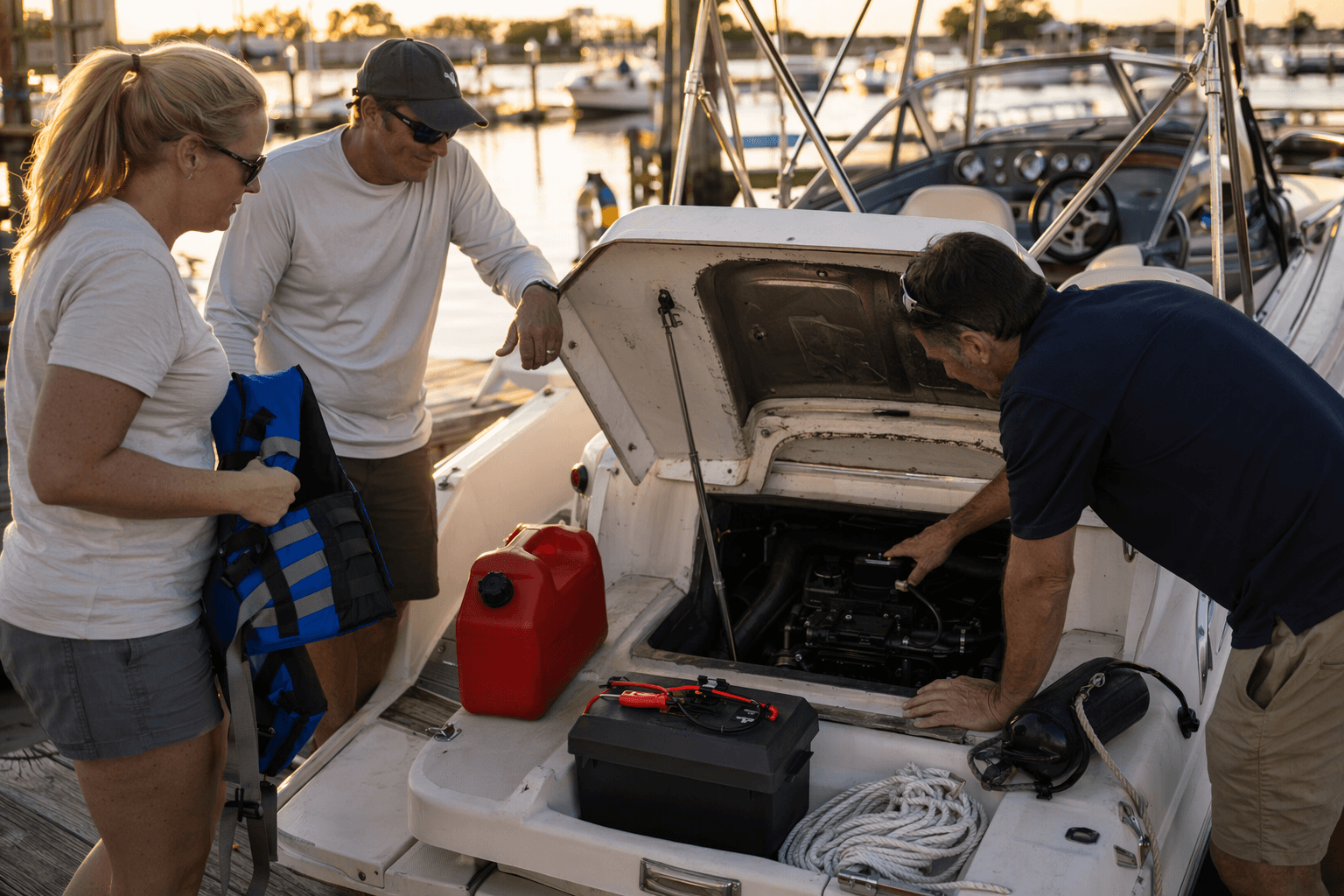
Do not trust the rig just because it survived winter
Rig tension deserves more than a cursory look. Check that everything is seated correctly, that the standing rigging still looks sound, and that tension is where you want it for the boat and the season ahead. Hodgetts’ checklist is aimed at the classic first-outing mistakes, and rigging problems are high on that list because they often hide in plain sight until the boat is loaded up and moving.
RNLI guidance backs that up by listing rigging and steering alongside hull and engine as core pre-season items. Steering, in particular, is worth treating as a dockside test rather than a someday concern. Turn the wheel, move the tiller, feel for play, and make sure the system responds cleanly before you leave the slip. A few minutes here can spare you the headache of discovering a binding cable or sloppy linkage while you are trying to make a confident first passage.
This is also the moment to look at the hull, the deck gear, and anything that was stored away over the layup. If a fitting was removed, serviced, or winterized, assume it deserves a second look. The best spring routine is not about adding more tasks; it is about catching the exact items that usually get missed because everyone is excited to sail.
Safety gear is not a formality
The most useful spring checklist is the one that treats safety gear as operational equipment, not decoration. Hodgetts’ article calls out lifejackets, emergency action plans, and crew briefings for good reason: spring boating is as much about people as hardware. A well-prepared boat still depends on a crew that knows what to do when something starts going wrong.
RNLI’s pre-season checklist says to service and check lifejackets, liferafts, and flares. It also says lifejackets need to fit correctly, which matters more than many crews admit. A lifejacket that is buried in a locker, has missing servicing records, or does not fit the person wearing it is not a spring safety plan. It is just clutter with straps.
The numbers make that point harder to ignore. RNLI and industry reporting cited 1,900 lifeboat launches in 2024 to assist powered boat users and sailors. In the United States, the National Safe Boating Council says 87% of drowning victims in 2024 recreational boating accidents, where the cause of death was known, were not wearing a life jacket. That statistic is the kind of thing sailors remember because it is blunt: the gear you check before casting off can decide whether a mistake stays small.

The crew briefing is part of the launch
The RNLI checklist goes beyond kit and into crew coordination, which is exactly where a lot of first-outing problems begin. Its crew briefing card prompts you to talk through the passage plan, expected weather, crew medical conditions, and whether lifejackets are fitted correctly. That is not paperwork theater. It is the short conversation that reveals who is uneasy, who is seasick-prone, who needs a specific medication handy, and who actually understands the plan.
The emergency action plan matters just as much. RNLI includes man-overboard steps, use of the MOB button, DSC distress alerting, and a nominated second-in-command if the skipper is incapacitated. That is the sort of preparation that seems obvious after the fact and overcautious before departure. In real life, it is what keeps one bad moment from becoming a confused one.
The wider safety campaign from RNLI, HM Coastguard, and the RYA carries the same message: “Reduce the risk, boost your skills.” It launched in March 2025 and was repeated again in March 2026 ahead of another busy boating season. That repetition says a lot. This is not a one-off reminder for nervous newcomers. It is a recurring seamanship habit for crews who want the season to start cleanly.
Make the checklist a routine, not a rescue mission
The biggest win in Hodgetts’ framing is that the checklist gets easier every year once it becomes a routine. That is the part DIY owners should care about most. A repeatable dockside reset means you stop discovering the same mistakes on the same first weekend and start launching with a boat that feels ready instead of merely hopeful.
For owners who like to do their own maintenance, that is the real spring advantage: one methodical hour at the dock can protect an entire weekend and save you from the usual cascade of missed details. Battery, fuel, seacocks, rig tension, and safety gear are not glamorous, but they are the checks that separate a smooth shakedown from an expensive lesson. The boat will always ask for more attention later. The trick is making sure the first answer comes before you cast off.
This article was produced by Prism’s automated news system from verified source data, official records, and press releases, then run through automated quality and moderation checks before publishing. The system is built and supervised by the people who set the standards it runs under. Read our full AI policy.
Did this article answer your question?