Top Marine Epoxy Fillers for Boat Repairs, Ranked and Reviewed
West System beat every competitor in lab testing at just $0.82 per ounce — but it's not the only epoxy worth knowing before your next repair.
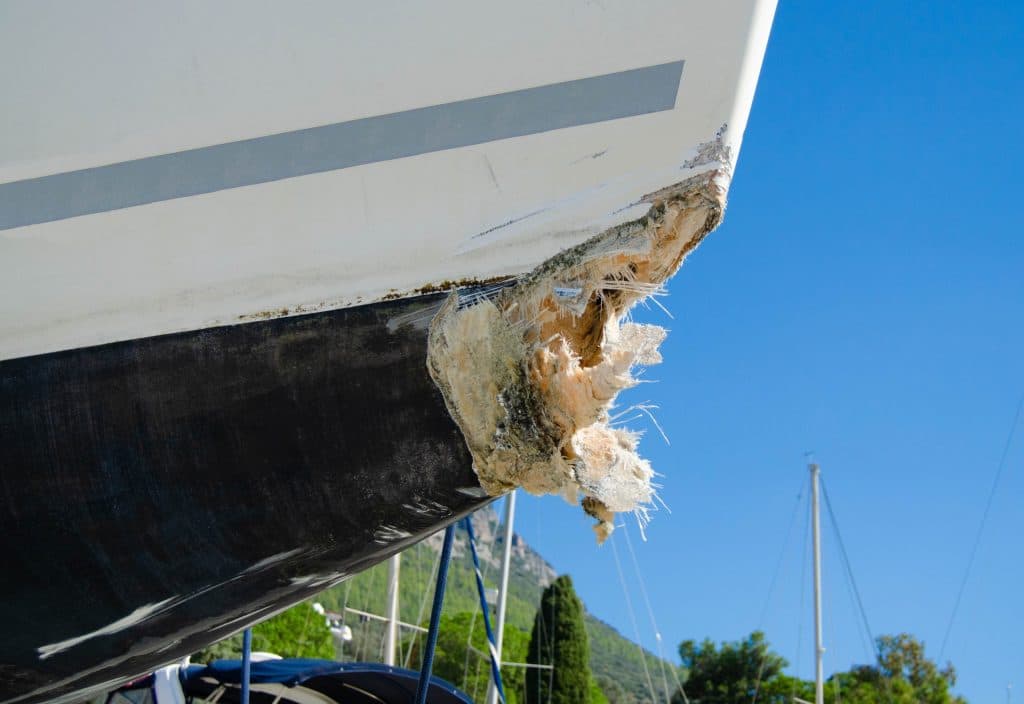
Most blown fiberglass repairs and failed fills come down to one decision made at the hardware store: which epoxy filler you grabbed off the shelf. Use the wrong one and you're looking at delamination, poor adhesion, or a finish that sands beautifully and then cracks after the first season. Use the right one and the repair disappears.
Practical Sailor ran the most rigorous independent test I've seen on this category, evaluating four marine epoxy resins across eight criteria: strength, adhesion, hardness, flexibility, wet-out, sag, curing, and overall handling. They also ran the numbers on cost per ounce using gallon-sized pricing from Jamestown Distributors. That cost-plus-performance combination produced a clear winner. Here's how the major players stack up.
1. West System
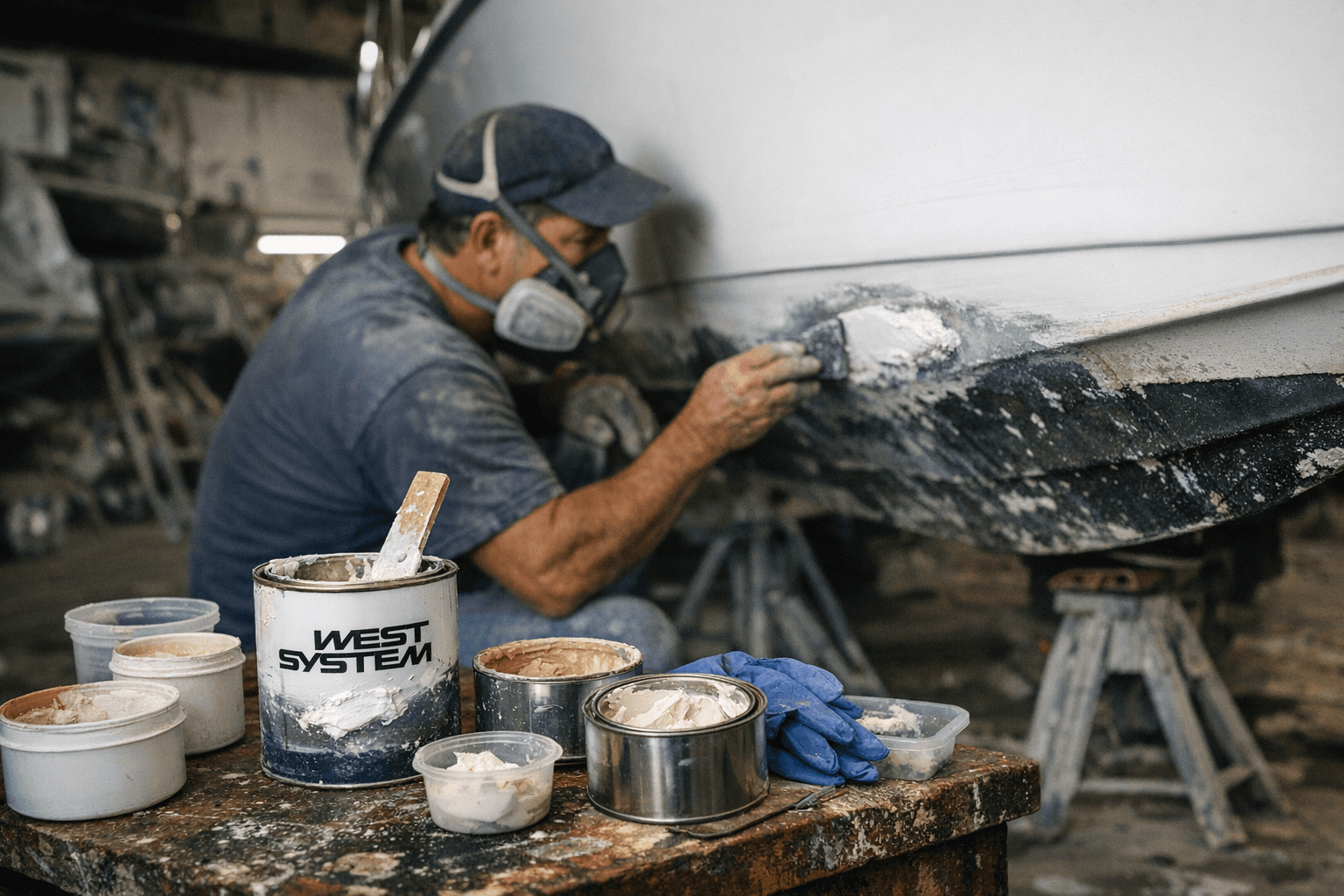
West System is the one product that shows up in both independent lab testing and practical field use, and it earned Practical Sailor's explicit "top choice" designation. Their cost calculation, using over-the-counter pricing at Jamestown Distributors, put West System at $0.82 per ounce of mixed resin and hardener, calculated from gallon-sized pricing. That's a competitive number when you're doing serious structural work and buying in volume. The "strong showing in all other aspects" of Practical Sailor's evaluation means this wasn't a price win with performance caveats. One practical caution worth knowing: West System is a two-part epoxy with an exothermic reaction on mixing, so use a container rated to handle heat, not a thin plastic cup that will soften mid-mix.
2. J-B Weld (including J-B Weld 8272)
J-B Weld is the other brand that appears consistently across multiple sources and use contexts. The specific product J-B Weld 8272 earned anecdotal praise for restoring a glossy finish, with one user noting "the glossy finish brought back the luster of the boat that was lost." That makes it a candidate for cosmetic repairs where appearance matters as much as structural integrity. The 8272 formula is also noted for adhesion across metal, concrete, wood, and fiberglass, which matters when you're filling a repair that crosses substrate boundaries. It's also been cited for encapsulation work and surface applications like tabletops and woodwork, so the use case extends beyond purely structural fills.
3. System Three (Cold Cure)
System Three's Cold Cure formulation appears specifically in Practical Sailor's pricing methodology as the reference product sourced through Jamestown Distributors for their cost-per-ounce calculation. That kind of inclusion in a rigorous cost comparison isn't incidental; it means Cold Cure is a legitimate contender for DIY work and was considered seriously enough to be priced head-to-head with West System. Cold Cure formulations are particularly relevant for anyone doing repairs in low-temperature conditions where standard epoxies cure slowly or incompletely. If you're doing off-season work in a cold boatyard, this is the formulation to research first.
4. TotalBoat
TotalBoat makes every credible brand list in this category. It's a marine-specific brand, which matters because their formulations are designed around the water-resistance and adhesion requirements you actually face on a boat rather than general-purpose construction. The brand's inclusion across consumer-facing review content alongside West System and J-B Weld reflects its standing as a mainstream choice for DIY boat repair.
5. Loctite
Loctite earns its place here on brand reputation and broad substrate compatibility. It's listed among the top marine epoxy makers and carries significant credibility in adhesive and filler applications. For quick spot repairs where you need a reliable bond on fiberglass or gelcoat, Loctite's formulations are widely available and well-documented. It's not the first name serious structural-repair builders reach for, but for accessible DIY fixes, it belongs on the shortlist.
6. PC-Products
PC-Products is specifically called out among the leading marine epoxy manufacturers, and the brand has a long track record in repair applications involving fiberglass, wood, and masonry. Their PC-11 marine epoxy is a two-part product known for above- and below-waterline repairs, which gives it a specific use case that overlaps directly with the kind of hull and fitting repairs most sailboat owners encounter.
7. Better Boat
Better Boat appears on the top-rated marine epoxy maker list and is positioned as a consumer-accessible brand. It's relevant for boat owners who want a purpose-built marine product without the learning curve of ratio-sensitive two-part systems. For straightforward surface repairs and protective coating applications, it fills a practical slot in the lineup.
8. Brampton
Brampton is included among the named marine epoxy manufacturers worth knowing. Like several others in this tier, it represents a regional or specialty option that DIY repairers may encounter depending on their supplier relationships and geographic market. It's worth checking availability through your chandlery before committing to a brand you'll need to order specifically.
9. Pro Marine Supplies
Pro Marine Supplies rounds out the list of named top marine epoxy makers. The brand is frequently associated with bar-top and encapsulation epoxy work, which overlaps with the kind of clear-coat and void-filling applications some boat owners encounter on interior woodwork, cockpit tables, and teak surfaces. If your repair involves a cosmetic clear finish rather than a structural fill, Pro Marine Supplies is worth comparing directly against J-B Weld 8272 for that application.
Premixed vs. mix-your-own: the decision that actually matters
Beyond brand choice, the bigger decision is format. Practical Sailor addressed this directly: "When comparing the two-part pre-mixed epoxy fairing putties in our previous test and the DIY epoxy fillers in this test, we feel that there's room for both in the DIY paint locker." Pre-mixed products like fairing putties offer batch consistency and repeatable density, but they require thorough mixing, possibly with a power tool, to achieve that consistency. Mix-your-own systems like West System give you more control over filler type, ratio, and working time, but demand careful measuring and an understanding of how the resin and hardener interact.
Epoxy across all these brands earns what Practical Sailor calls its "wonder resin status" for good reason: it's highly adhesive, water-resistant, and functions as the base chemistry behind fillers, fairing compounds, and structural adhesives simultaneously. Polyester resin is cheaper and still widely used, but it requires more careful hardener measurement and is generally considered less water-resistant over time for critical repairs.
The practical takeaway is this: for structural repairs and cost-efficient volume work, West System with the right filler additive is the tested benchmark. For cold-weather repairs, System Three Cold Cure is specifically engineered for that scenario. For cosmetic and surface restoration where gloss matters, J-B Weld 8272 has documented results. Know what your repair actually requires before you reach for the tube.
This article was produced by Prism’s automated news system from verified source data, official records, and press releases, then run through automated quality and moderation checks before publishing. The system is built and supervised by the people who set the standards it runs under. Read our full AI policy.
Did this article answer your question?