West Marine guide weighs electric and hybrid power for boats
West Marine treats electric power as a real option for some boats, but range, weight, and charging still decide who can actually use it.
West Marine’s electric and hybrid propulsion guide does not sell the idea that every boat needs a battery bank. It starts with the simplest, least dramatic upgrade path, moving from a two-stroke outboard to a modern four-stroke, then steps into propane, hybrid, and full electric systems where the boat, the mission, and the dock infrastructure actually fit. That practical framing matters for small-boat sailors and DIY owners: cleaner power only helps if it still lets you cruise, fish, and day-sail without turning every outing into a range calculation.
The easiest win is often a cleaner gasoline motor
The guide’s first move is almost conservative, and that is the point. A modern four-stroke is quieter, cleaner, and more fuel efficient than a two-stroke, which makes it an obvious stop before anyone starts ripping out mounts and wiring battery racks. West Marine also points to Mercury Marine propane outboards as another way to get rid of gasoline entirely, while also avoiding carburetors and oil mixing.
For a lot of sailors, that is the real-world fork in the road. If your auxiliary engine mostly shuttles you in and out of a slip, pushes a dinghy to anchor, or helps a light sailboat motor through a lull, a better combustion outboard can solve the worst of the mess without dragging the whole boat into an electric conversion.
Where electric outboards actually fit
West Marine’s electric outboard buying guide is blunt about what battery-powered propulsion changes: no gasoline, no oil changes, no exhaust, and no combustion components to maintain. That is a real appeal for small boats, especially dinghies, tenders, day-sailers, and light sailboat use, where short runs and modest power demands make the technology feel less like a compromise and more like the right tool.
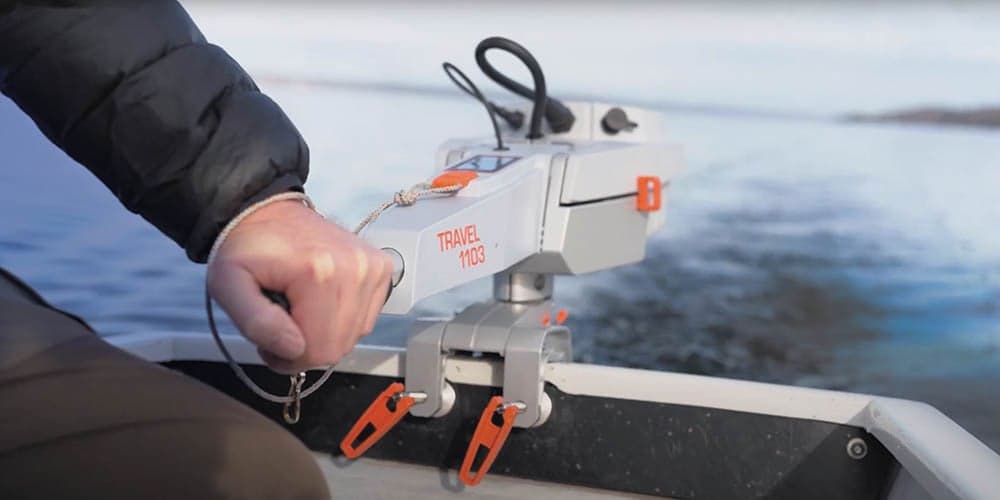
Torqeedo’s Travel motors show why these systems have caught on. The onboard computer continuously calculates remaining range by combining battery charge with GPS speed over ground, and the TorqTrac smartphone app can show that range on a map in real time. That is a far cry from guessing how far a tank will go, but it also underlines the new discipline electric propulsion demands: you are not just watching fuel burn, you are managing distance, speed, and battery state every time you leave the dock.
Sizing the drive is the whole game
West Marine’s guide does the useful, unglamorous work of walking readers through motor sizing and battery selection. That is where the hype meets the hull. Range, weight, and charging needs matter more than the shiny promise of zero emissions, because a drive that is technically electric but practically underpowered or too heavy for the boat is not a win.
The guide also calls out battery type and ventilation as part of the tradeoff. Flooded lead-acid batteries, in particular, are presented as less attractive for propulsion use, which should not surprise anyone who has ever tried to fit heavy, space-hungry batteries into a tight sailboat install. For DIY owners, that means the electric question is never just “what motor?” It is also “where does the battery go, how do I charge it, and what does that do to trim and usable space?”
Retrofitting a powerboat is not the same as repowering a sailboat
The guide’s inboard section makes a point that gets lost in a lot of electric boat talk: the most successful retrofits have generally been drop-in replacements for existing gasoline or diesel engines. That is a very different proposition from forcing electric into a hull that was never laid out for it. Cruising World has noted the reason many owners hit a wall here: diesel engines are generally lighter and more compact than electric conversions once battery mass is added.
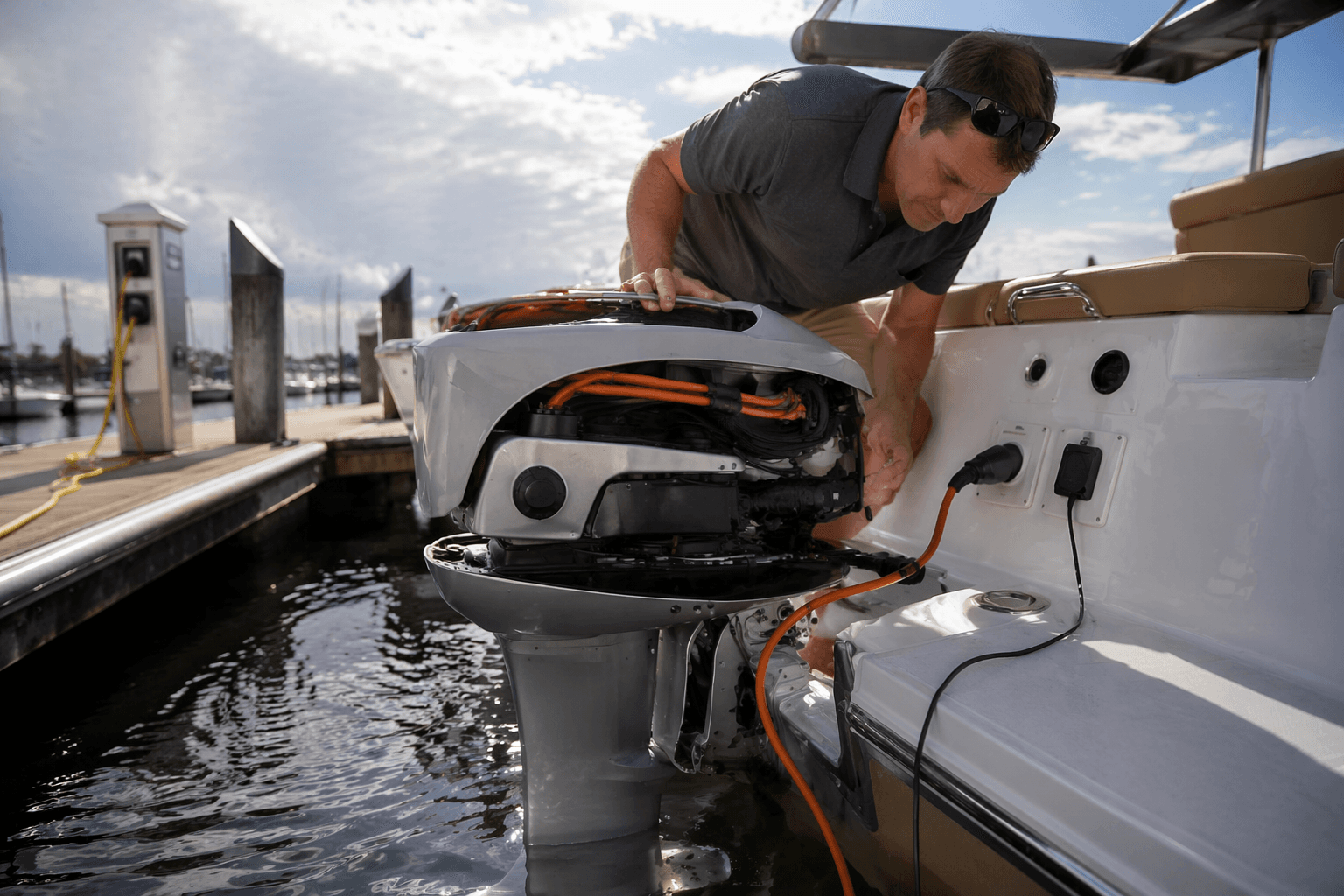
That weight penalty explains why so many successful electric projects show up on small boats or on carefully designed new builds, not as easy one-for-one diesel swaps. Cruising World’s coverage of the Arcona 435Z is a good example of what works when the whole boat is designed around the system: lithium-ion batteries, solar panels, and an Oceanvolt ServoProp drive leg working together as part of the boat’s architecture, not as an afterthought.
Electric can scale, but the bigger systems are a different class of problem
Torqeedo’s Deep Blue line shows that electric propulsion has moved beyond dinghies and marina toys. The Deep Blue 100i delivers 100 kW of continuous, emission-free power and is aimed at planing boats and commercial users. That is enough to make anyone who still thinks electric means “underpowered” take a second look.
Still, the lesson is not that every boat should jump to a high-output electric inboard. It is that electric can scale when the hull, the duty cycle, and the charging plan are all built around it. A high-power system for a commercial operator or a planing boat is a very different decision from a weekend sailor trying to replace an old auxiliary with something quieter.
Hybrids are really a whole-system decision
West Marine’s guide also digs into parallel versus serial hybrids, which is exactly the kind of detail that matters when you are trying to match propulsion to actual cruising habits. BoatUS Foundation for Boating Safety and Clean Water has made the same broader point: electric and hybrid propulsion are tied to the rest of the cruising system, including equipment choices, not just the engine itself.
That is the part owners sometimes skip. A hybrid or electric setup is not just a different motor bolted to the same boat. It changes charging strategy, battery placement, weight distribution, and the way you plan marinas, shore power, and time under way.
The rules and the reason behind them
There is also a larger regulatory backdrop here. The U.S. Environmental Protection Agency regulates emissions from marine spark-ignition gasoline engines and marine compression-ignition diesel engines, and its Clean Boating Act page says it must develop nationally applicable best management practices for discharges from recreational vessels. Cleaner propulsion is part of that same pressure on fuel spills, exhaust, and marina impacts.
That is why West Marine frames cleaner boating as more than an engineering trend. It is tied to preserving the places people boat and fish, which is the right lens for owners who care about both performance and the water they keep returning to.
For small-boat sailors and DIY repower projects, that leaves a clear answer. Electric and hybrid propulsion are credible today when the boat is light, the trips are short, the battery plan is realistic, and the installation is designed around the system. Outside those conditions, the old auxiliary may still be the better tool, and the smartest upgrade may be a cleaner four-stroke or propane outboard instead of a full leap to batteries.
This article was produced by Prism’s automated news system from verified source data, official records, and press releases, then run through automated quality and moderation checks before publishing. The system is built and supervised by the people who set the standards it runs under. Read our full AI policy.
Know something we missed? Have a correction or additional information?
Submit a Tip