Why epoxy sheathing beats canvas on aging plywood decks
Epoxy sheathing is the go/no-go fix when canvas starts to crack: done right, it stops water at the deck skin; done wrong, it traps trouble under a bigger patch.
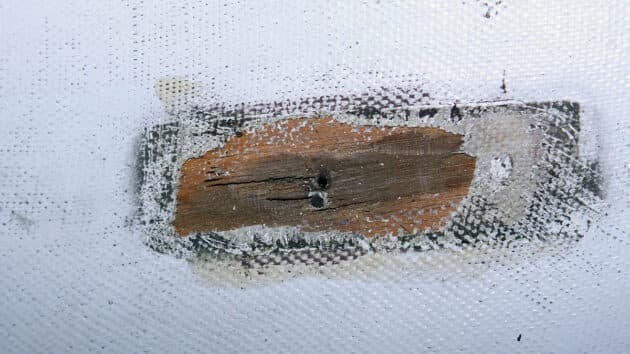
As the painted canvas on an aging plywood coachroof starts to crack, the real failure is usually already under way. Once water gets underneath, you are not looking at a paint problem anymore, you are looking at leaks, soft spots, and eventually rot.
Why epoxy sheathing is the right kind of fix
Richard Johnstone-Bryden’s June 10, 2026 guide makes the case clearly: epoxy sheathing is not a cosmetic refresh, it is a structural and maintenance decision. That matters on older plywood decks and coachroofs, where the goal is not to make the surface look tidy for a season, but to stop the cycle of water intrusion that keeps reopening the same area.
The appeal is straightforward. Compared with repainting tired canvas or replacing it like-for-like, epoxy sheathing can deliver a longer service life, better resistance to water ingress, and a more durable surface. If you own a plywood boat and the deck skin is already telling you it has had enough, epoxy sheathing is the more serious answer. It costs more in labor up front, but it is the kind of job that can buy years of protection instead of another round of patching next season.
The Powles 38 motor cruiser Broadstar gives the idea some real-world weight. This is not theory from a bench in a shed. It is a practical refit choice on an actual coachroof, where the consequences of getting the waterproofing wrong are measured in more than ugliness. A leaky plywood deck is a rot problem waiting for its chance.
The first checkpoint is the substrate, not the new skin
The biggest mistake is treating sheathing as a product swap. The article treats it as a system, and that is the right lens. Before any epoxy goes down, the existing plywood has to be protected from unnecessary damage, because the value of the whole job depends on preserving the substrate beneath the old covering.
If the canvas is still mostly bonded, the controlled-removal method is to cut it into strips so it can be lifted without tearing up the plywood below. That small detail is the difference between a controlled refit and a repair that creates more work than it solves. If you gouge the substrate while stripping, you have already stolen time and margin from the new sheathing before it even starts.
That is also why this is not a casual weekend touch-up. The work has to be timed, budgeted, and staged as a proper project. You are not just covering a surface. You are deciding how much of the old deck skin is worth saving and how much damage you can avoid before the new system goes on.
What epoxy gives you that canvas does not
Canvas can work for a while, but the failure mode is predictable. As it ages, it cracks, admits moisture, and starts the whole cycle again. Epoxy sheathing is attractive because it changes that equation: once the system is properly bonded and finished, the surface is better equipped to keep water out for the long haul.
That is why this repair keeps showing up in serious plywood refit work. PBO’s broader coverage links epoxy to plywood-epoxy construction, and the point is the same whether you are building, restoring, or re-skinning an old deck. Epoxy is being used because it supports a more durable, more water-resistant result than a quick cosmetic repair ever will.
WEST SYSTEM’s own materials line up with that logic. Its fiberglass cloth and tape are described as providing reinforcement, abrasion resistance, and help against grain checking. That matters on a deck or coachroof, where the surface sees knocks, wear, and weather long after the repair is finished. If you want the deck skin to do more than look fresh, reinforcement is not optional, it is part of the job.
Do not skip the finish system
One part of this people miss is UV protection. PBO notes that plywood-epoxy construction needs it because epoxy can break down and yellow over time. So the sheathing is not the whole story. The topcoat is part of the protection system, not just the color you choose to live with.
That is where a lot of supposedly “done” repairs start to go soft. If the epoxy is left exposed or the finish is treated as decoration only, you are inviting the same kind of long-term trouble you were trying to eliminate. The point is to build a protected skin, not a bare resin surface that is left to fend for itself.
WEST SYSTEM’s Wooden Boat Restoration & Repair manual frames the whole approach in practical terms. It is meant to restore structure, improve appearance, reduce maintenance, and prolong the life of wooden boats. That is the right checklist for a plywood deck decision too. If your proposed repair does not clearly do those four things, it is probably not the right repair.
How to decide before you commit
The go/no-go test is simple enough to apply before you start buying materials:
- If the old canvas is cracked and water has already started getting underneath, the deck is no longer in cosmetic territory.
- If the plywood beneath the covering can be exposed without major damage, controlled strip removal keeps the repair focused on the actual problem.
- If you need a longer service life and better water resistance than repainting can give you, epoxy sheathing is the stronger bet.
- If you are not prepared to handle prep, bonding, and UV-protected finishing as one system, stop before you start.
That last point is the one most likely to save money. A half-finished sheathing job can become a bigger problem than the old canvas because it looks permanent while still failing at the edges. The reason the June 10 guide lands with DIY owners is that it is not selling a fantasy of easy transformation. It is showing when the harder fix is the smarter one.
The broader lesson for aging plywood decks
The best comparison is not canvas versus epoxy in the abstract. It is recurring maintenance versus one properly executed structural skin. PBO’s February 5, 2026 plywood-deck repair piece, focused on stripping, filling, and fairing, sits in the same practical space: get the substrate right, then build the finish on top of that, not the other way around.
You can see that thinking again in the work on Lively Lady, where West System epoxy has been used under a new iroko deck. That is a useful reminder that epoxy-backed timber solutions are not fringe experimentation. They are part of real refit practice when owners want the deck to last.
WEST SYSTEM’s manuals are available as free downloads and are regularly updated to reflect new formulations and best practices, which is exactly the sort of reference material worth leaning on when the deck skin is too important to wing. Because once canvas starts cracking on an aging plywood deck, the expensive mistake is waiting until the leaks become the story. Epoxy sheathing, done with proper prep and a real finish system, is how you stop that story before the rot writes the next chapter.
This article was produced by Prism’s automated news system from verified source data, official records, and press releases, then run through automated quality and moderation checks before publishing. The system is built and supervised by the people who set the standards it runs under. Read our full AI policy.
Know something we missed? Have a correction or additional information?
Submit a Tip