Honey wheat sourdough discard bread delivers flavor without all-day fermentation
Honey wheat discard bread splits the difference: real sourdough flavor, a softer sandwich crumb, and a loaf you can finish on a weeknight.
Why this loaf hits the sweet spot
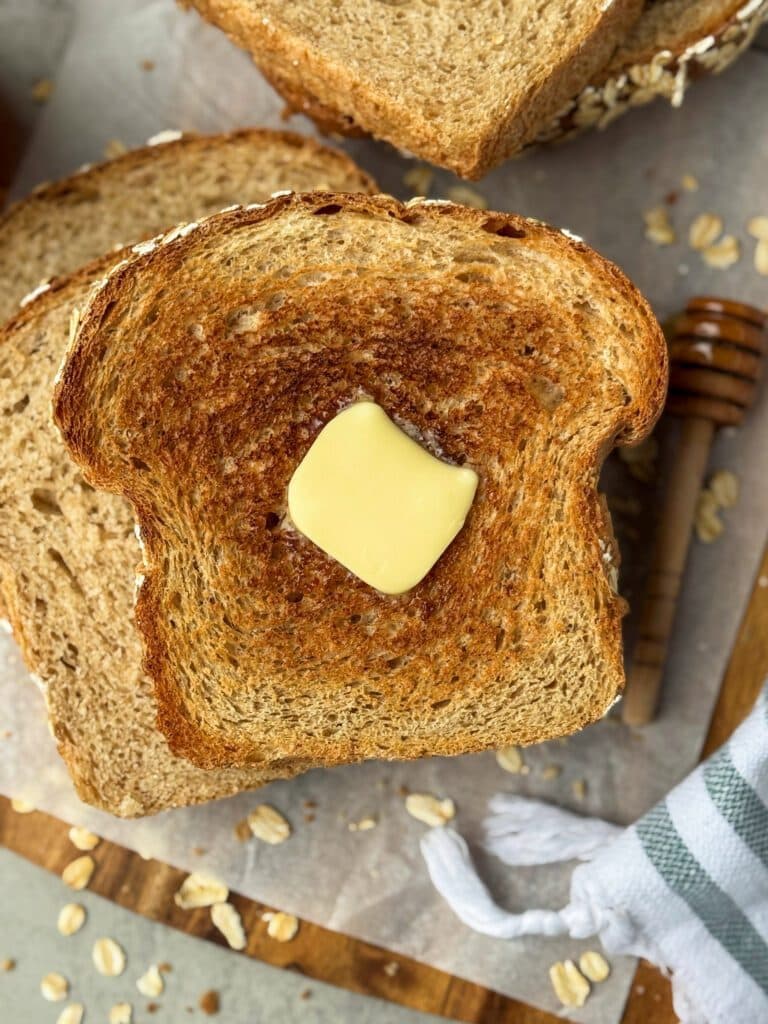
Honey wheat sourdough discard sandwich bread is the kind of recipe that quietly solves a real home-baking problem. It gives you the tang and depth people want from sourdough, but it skips the all-day fermentation schedule that turns a simple loaf into a production. The result is soft, lightly sweet, and built for sandwiches, toast, French toast, or a quick peanut butter and jelly, not just a dramatic artisan slice on a wooden board.
That makes it a bridge recipe in the best sense. It sits between full-fermentation sourdough, with its long timing and more technical rhythm, and ordinary sandwich bread, which is easy enough but usually lacks the flavor and character of a starter bake. Here, the loaf keeps the sourdough personality while staying practical enough for a weekday kitchen.
How discard and instant yeast change the workflow
The biggest shift is the use of sourdough discard instead of a freshly fed, fully active starter. King Arthur Baking defines discard as the portion removed during feeding, and it encourages bakers to use that portion in recipes calling for discard, unripe starter, or discard starter. In other words, discard is not waste, it is a usable ingredient with flavor and function.
Adding a little instant yeast changes the pace completely. In a full sourdough loaf, the starter has to do all the heavy lifting, which means more waiting and more attention to dough temperature, starter strength, and fermentation cues. In this loaf, the discard brings the sourdough flavor while the commercial yeast speeds the rise, so the bread moves like a conventional yeast loaf but tastes more complex than standard white sandwich bread.
That is the practical payoff. You are not chained to a starter timetable, and you do not need to wait for the dough to develop over many hours just to get bread on the table. The workflow is simpler, more forgiving, and much easier to fit around a normal day.
What discard is doing here
Discard-based baking has become its own lane because it solves two problems at once: it reduces waste and it turns a maintenance chore into an ingredient. King Arthur’s discard collections make this point repeatedly, showing how excess starter can be folded into breads, muffins, pancakes, and other recipes instead of being thrown away or composted. FoodPrint makes the same case, noting that starter can be stored in ways that reduce how often discard builds up, and that the excess can be used in a wide range of bakes.
In this bread, discard is doing more than avoiding waste. It adds the gentle tang and extra flavor that make the loaf taste like sourdough even though it is not being managed like a classic artisan boule. It also helps with moisture, which is one reason discard breads often feel softer and a little more tender than their fully fermented cousins.
Why the texture lands differently from artisan sourdough
If you are used to crusty country loaves, this bread will feel deliberately softer. King Arthur’s sourdough sandwich-bread recipes highlight exactly that idea: sourdough does not have to mean a hard crust and an open, irregular crumb. It can be shaped into a sliceable loaf with a tender interior, one that belongs in a lunchbox as much as on a cheese board.
That matters because the recipe is not trying to compete with a long-fermented boule. A full sourdough loaf usually gives you more chew, a deeper fermented note, and a more open crumb, but it also asks for more patience and more process. This honey wheat loaf trades some of that artisan drama for consistency, softness, and speed. For many home bakers, that is not a downgrade. It is the feature.
Why honey and whole wheat make sense together
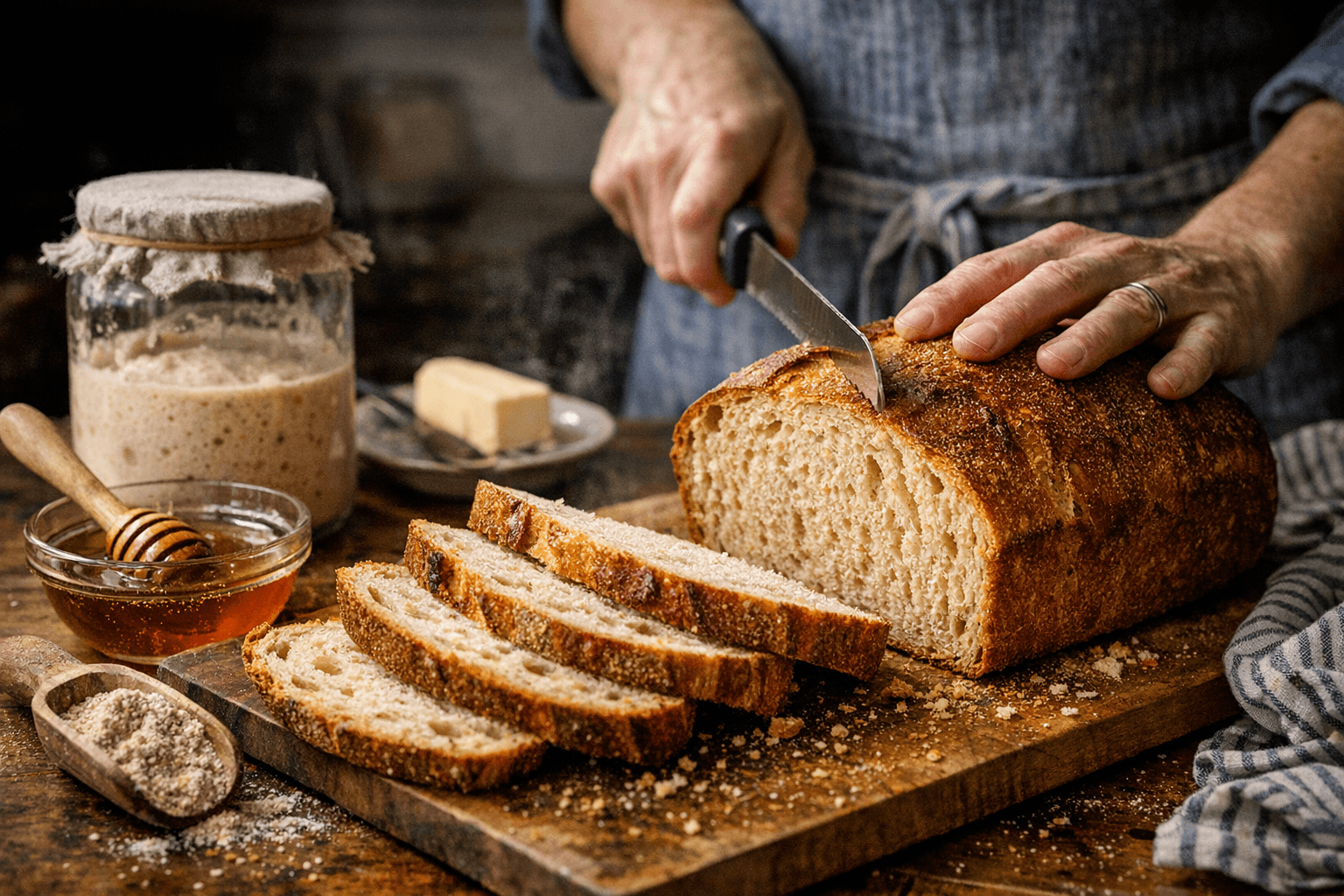
The honey wheat combination is what keeps the loaf from tasting like a compromise. Honey gives the bread a gentle sweetness that rounds off the tang from the discard, while whole wheat brings a nuttier, more robust flavor than refined white flour. Harvard T.H. Chan School of Public Health notes that refining wheat strips away virtually all fiber, and USDA nutrition resources point to whole wheat bread as a better swap than white bread when you want to raise fiber intake.
That fiber angle is not just a nutrition talking point, either. Harvard also notes that fiber helps regulate blood sugar and hunger, which is one reason whole wheat breads tend to feel more satisfying at the table. In practical terms, the loaf has more staying power than a standard white sandwich bread, while still keeping the soft sliceability people want for everyday use.
There is flexibility here, too. You can lean more heavily on bread flour for a lighter texture or increase the whole wheat for a nuttier, heartier crumb. That tuning matters because the bread is designed to be baked for real life, not as a fixed one-note formula.
The schedule is the selling point
What makes this recipe especially useful is that it can fit a normal schedule without losing its appeal. The loaf moves quickly because the discard adds flavor while the yeast handles the rise, and there is even an overnight option after shaping if you want to slow it down a bit. That gives you room to choose between a same-day bake and a more relaxed, low-stress timing window.
That flexibility is exactly why discard breads have become so popular. King Arthur frames discard baking as a lower-stress way to keep a starter going, and that logic lands here. You are not waiting for the perfect peak on a starter or juggling a complicated fermentation schedule; you are making bread with a clear purpose, a clear timeline, and a clear payoff.
Why this loaf belongs in a weekly rotation
This is the bread you make when you want sourdough character without turning baking day into an event. It is soft enough for grilled cheese, sturdy enough for toast, and sweet-nutty enough to feel more interesting than supermarket sandwich bread. It also keeps the sourdough habit practical, which is often the difference between a starter that gets used and a starter that gets neglected in the back of the fridge.
There is a broader context here, too. The Food and Agriculture Organization of the United Nations says food loss and waste is a major sustainability issue, and it tracks household habits as a major contributor to the problem. Globally, households account for nearly 570 million tonnes of food wasted each year, and reduction efforts tie into Sustainable Development Goal 12.3 with the United Nations Environment Programme. A loaf like this fits that mindset in a very ordinary, useful way: it turns starter maintenance into bread, and bread into something people will actually finish.
That is the real strength of honey wheat sourdough discard sandwich bread. It is not trying to be the most technical loaf in the room. It is trying to be the one you can bake again next week, with a softer crumb, a faster turnaround, and enough sourdough flavor to make ordinary sandwiches feel like a small upgrade.
This article was produced by Prism’s automated news system from verified source data, official records, and press releases, then run through automated quality and moderation checks before publishing. The system is built and supervised by the people who set the standards it runs under. Read our full AI policy.
Did this article answer your question?