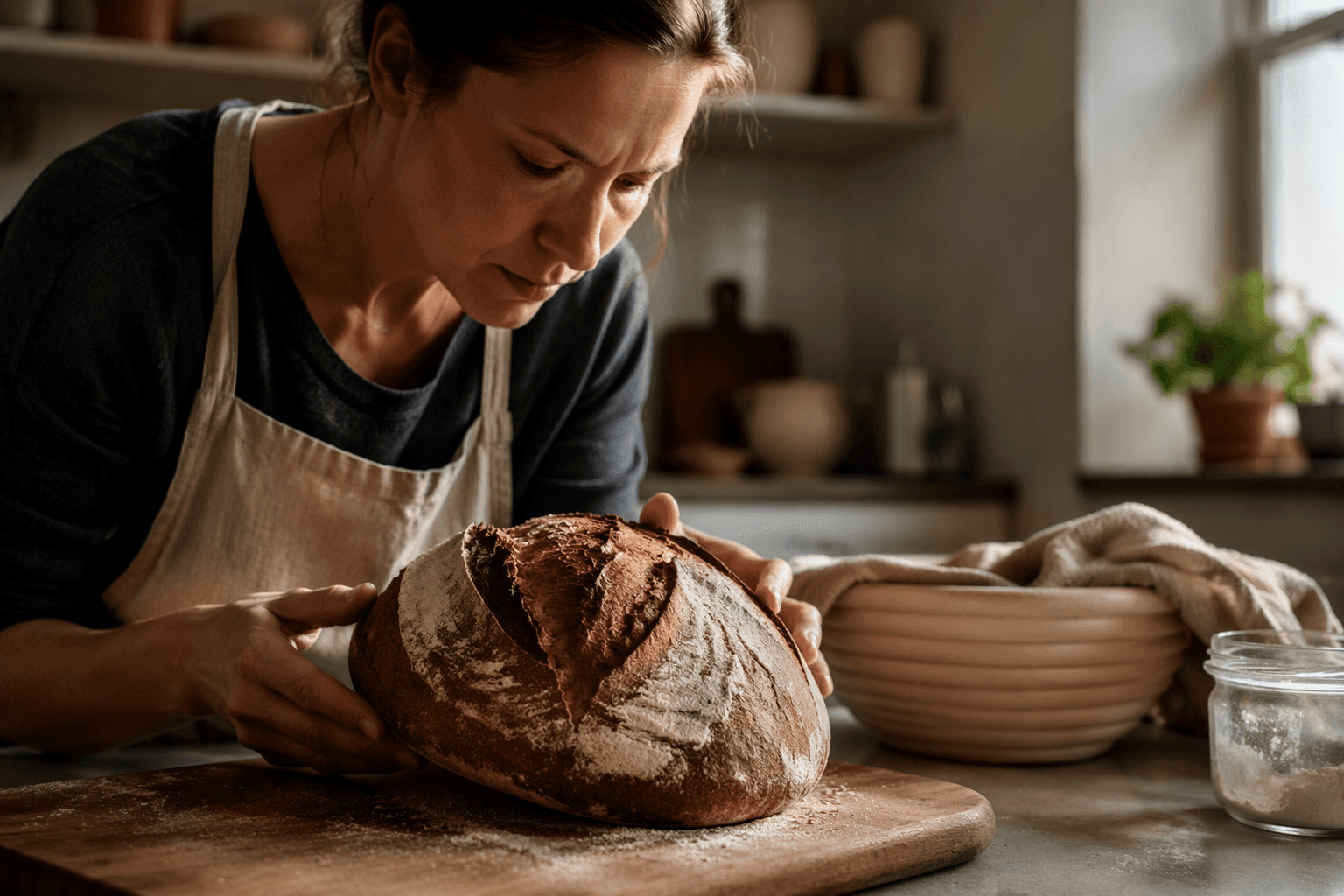
Pickle Sourdough Focaccia Turns Flavor Experimentation Into Savory Party Bread
A 74% hydration sourdough focaccia turns pickle flavor into a smart party loaf, if you keep the brine out of the dough and let the topping do the talking.

Why pickle focaccia works when it is built like bread, not a stunt
Pickle sourdough focaccia only works if you treat it like a real dough first and a flavor experiment second. The backbone here is simple and strong: 500 grams of bread flour, 370 grams of water, 100 grams of active sourdough starter, and 10 grams of salt. That puts the dough at 74 percent hydration before you even touch the pickle element, which is exactly the kind of environment that can produce a fluffy, flaky crumb if you handle it gently and give fermentation time to do its job.
That is the main reason this bread feels smarter than a random viral mashup. The sourdough base is already doing useful work, building structure, acidity, and a long, airy texture, and the pickle note comes in as contrast rather than chaos. You are not trying to turn the whole loaf into a brine bomb. You are using sourdough as a platform for a savory flavor that feels at home on a party table, alongside cheese, dips, grilled meat, or sandwich fillings.
The dough has to stay in charge
High-hydration focaccia can carry a lot of flavor, but it cannot carry a lot of abuse. Bread flour gives the dough enough strength to hold onto gas, while the starter gives it the fermentation lift that creates the open crumb people want from sourdough focaccia. Salt matters here too, because it keeps the dough from racing out of control and helps balance the sharpness that pickle flavor brings.
The practical lesson is that briny, acidic add-ins should never replace the dough's own structure. Too much pickle juice in the mix will loosen gluten, make the dough slacker, and push the crumb toward gummy instead of airy. If you want this bread to bake up like proper focaccia, let the dough develop on its own first, then add the pickle note with restraint.
Where the pickle flavor belongs
The cleanest way to work with pickle flavor is to keep it on the surface or in a small, controlled accent, not deep inside the dough. That gives you the flavor punch without flooding the crumb. This is especially important in a formula like this one, because a wet, enriched topping can easily overwhelm a dough that is already designed to be soft and airy.
Best places to put the pickle element
- On top, as a finishing layer that stays visible and bold
- In a light seasoning mix, where the pickle note reads as savory rather than soggy
- In small, well-drained pieces rather than loose, wet chunks
- As part of a flavoring or extract approach, which keeps the dough itself balanced
If you want the sharpest result, think in terms of dill, garlic, and the clean sour snap of pickle flavor rather than a pool of brine. That keeps the bread tasting intentional. It also makes the loaf more versatile, because the flavor reads as savory and structured instead of wet and novelty-driven.
How to keep the crumb open instead of soggy
A focaccia like this lives or dies on texture. The goal is a loaf that bakes fluffy and flavorful, with a crumb that feels light enough to tear but sturdy enough to carry toppings. That means gentle handling, a well-fermented dough, and toppings that are dried or balanced so they do not dump extra liquid into the bread as it bakes.
The easiest mistake is assuming the pickle part can be handled like any other topping. It cannot. Pickles bring moisture, salt, and acid, and all three can work against the very qualities you want from sourdough focaccia if you overdo them. Drain the pieces well, keep the topping layer modest, and resist the urge to chase flavor by adding more liquid to the dough.
A few rules keep the crumb honest:
- Use the full dough formula as your anchor, especially the bread flour and starter
- Let fermentation build strength before you add any heavy topping load
- Avoid soaking the dough in pickle brine
- Bake until the loaf is fully set, so the interior reads airy rather than damp
That last point matters more than people admit. A sourdough focaccia should feel plush, but it should not collapse into a wet center just because the flavor idea is exciting. If the crumb cannot hold its shape, the pickle note becomes a distraction instead of a feature.
Why this is more than a novelty
The best thing about this loaf is that it points toward a bigger idea: sourdough does not have to stop at rustic boules and plain sandwich loaves. The recipe works as a guide for adding extracts and flavorings to sourdough creations, which makes it less of a one-off and more of a template. Once you understand how the base behaves, you can move into savory territory with more confidence, whether that means pickle, herbs, spices, or another sharply defined flavor.
That is also why it makes sense on a party table. This bread is bold enough to stand out, but still familiar enough to pair with dips, cheese boards, sandwiches, or grilled mains. It has the kind of flavor that gets noticed without requiring a new serving ritual, which is exactly what you want from a shareable loaf.
Who should bake it
This is the loaf for a baker who already understands what a wet dough feels like and wants to push sourdough in a savory direction. If you like a standard focaccia framework, trust active starter, and care about crumb as much as flavor, this is a satisfying project. If you are still learning how to read fermentation or you want every bake to behave like a simple white loaf, the pickle angle may feel fussy.
For everyone else, the appeal is obvious. The formula gives you a base that is strong enough to support experimentation, while the pickle element adds a sharp, snackable edge that makes the bread feel made for sharing. It is not trying to replace classic focaccia. It is trying to show how far a good sourdough dough can go when you treat it like a canvas for savory flavor.
This article was produced by Prism’s automated news system from verified source data, official records, and press releases, then run through automated quality and moderation checks before publishing. The system is built and supervised by the people who set the standards it runs under. Read our full AI policy.
Did this article answer your question?