Quick Sourdough Discard Crackers, Three Ingredients and 25 Minutes
Three ingredients, one hot oven, and a snap-crisp payoff make these discard crackers the fastest way to turn starter leftovers into a snack.
Why these crackers win on speed
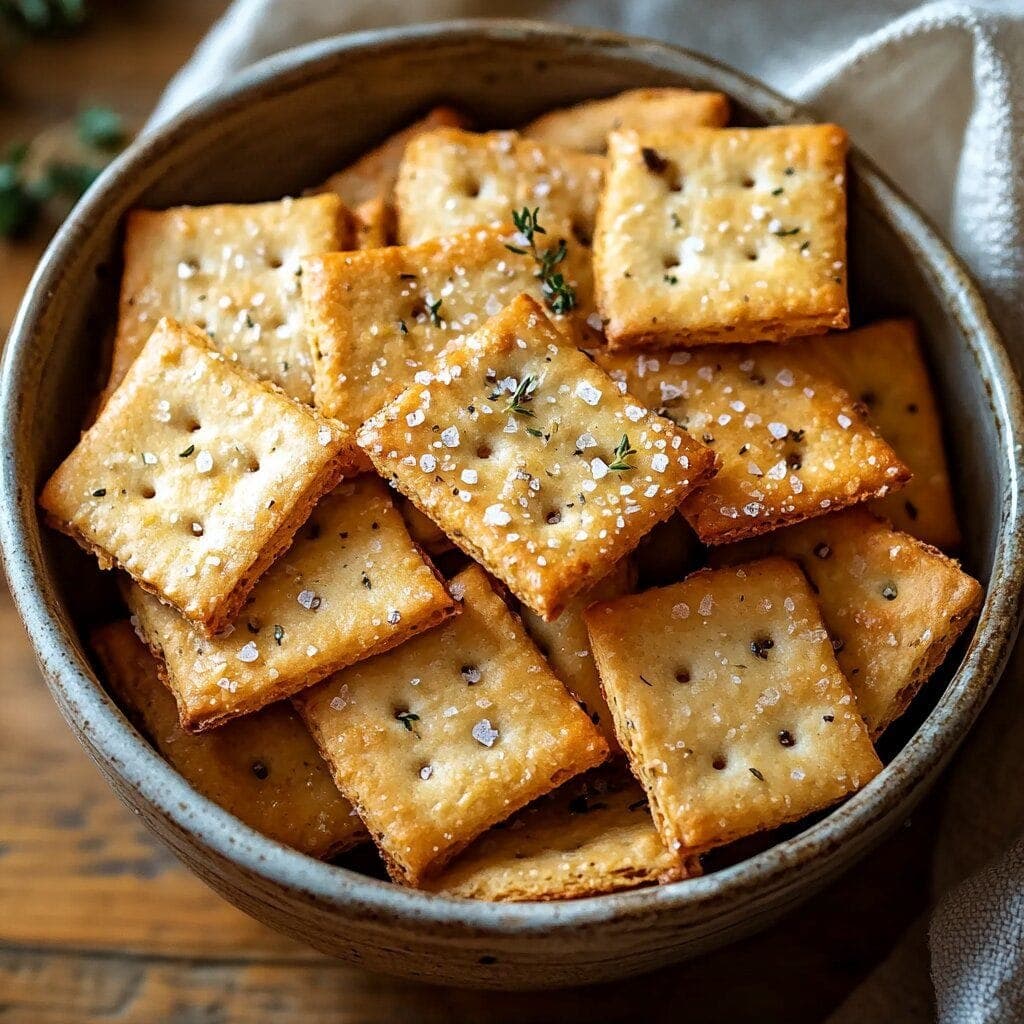
Three ingredients and 25 minutes is about as low-friction as sourdough discard gets. Easy Recipe Chef’s April 9 recipe treats that jar in the fridge not as guilt, but as a shortcut to a crisp, savory snack that feels intentional instead of improvised.
That is the real appeal here: the recipe trades depth of process for immediacy, and it does so without flattening flavor. Sourdough discard already brings flour, wild yeast, tangy bacteria, structure, and a built-in sour note, so the job of the recipe is not to disguise it. It is to sharpen it into something snackable with butter for binding and crispness, plus salt to keep the tang from tasting one-note or harsh.
For home bakers deciding what to do with discard, crackers often make more sense than pancakes, muffins, or bread when the priority is speed and thrift. Pancakes and muffins can use discard well, but they still lean toward a fuller ingredient list and a sweeter, more breakfast-coded result. Bread asks for feeding, mixing, shaping, proofing, and more patience. Crackers skip straight to the part where the discard becomes useful tonight.
The three ingredients do the heavy lifting
The minimal formula is the whole point. King Arthur Baking’s version uses discard, melted butter, salt, and seasonings, and its instruction set underlines the low-friction logic behind the category: no rolling pin required, just a quick mix and a bake. America’s Test Kitchen has made the same case in its seeded cracker recipe, calling crackers one of the easiest and best uses for sourdough discard, with a dough that comes together quickly and does not need resting before rolling out.
That structure matters because it keeps the recipe accessible even when the starter is overdue for attention. America’s Test Kitchen also notes that leftover starter can be refrigerated for up to two weeks, which means discard crackers sit right at the intersection of waste reduction and practical planning. If you have accumulated a cup or two of leftovers, you have enough raw material to turn into flavor across more than one bake.
The ingredients each earn their place. The discard gives the crackers their sourdough identity and a little internal body. Butter helps the dough bind and encourages crispness in the oven. Salt is not optional, because it reins in the tang and keeps the crackers from tasting flat or overly sour.
The fastest route from discard to crackers
1. Mix the discard with melted butter, salt, and any seasonings you want to use.
If your discard is cold, let the butter cool to lukewarm before you combine it, so the fat does not seize.
2. Spread the batter almost paper-thin on parchment.
This is the part that decides the texture. Thicker layers stay soft in the center, which is exactly what you do not want from a cracker.
3. Season immediately and bake without delay.
Do not let the spread batter sit around on the parchment, because it can bond to the paper and tear as you try to remove it.
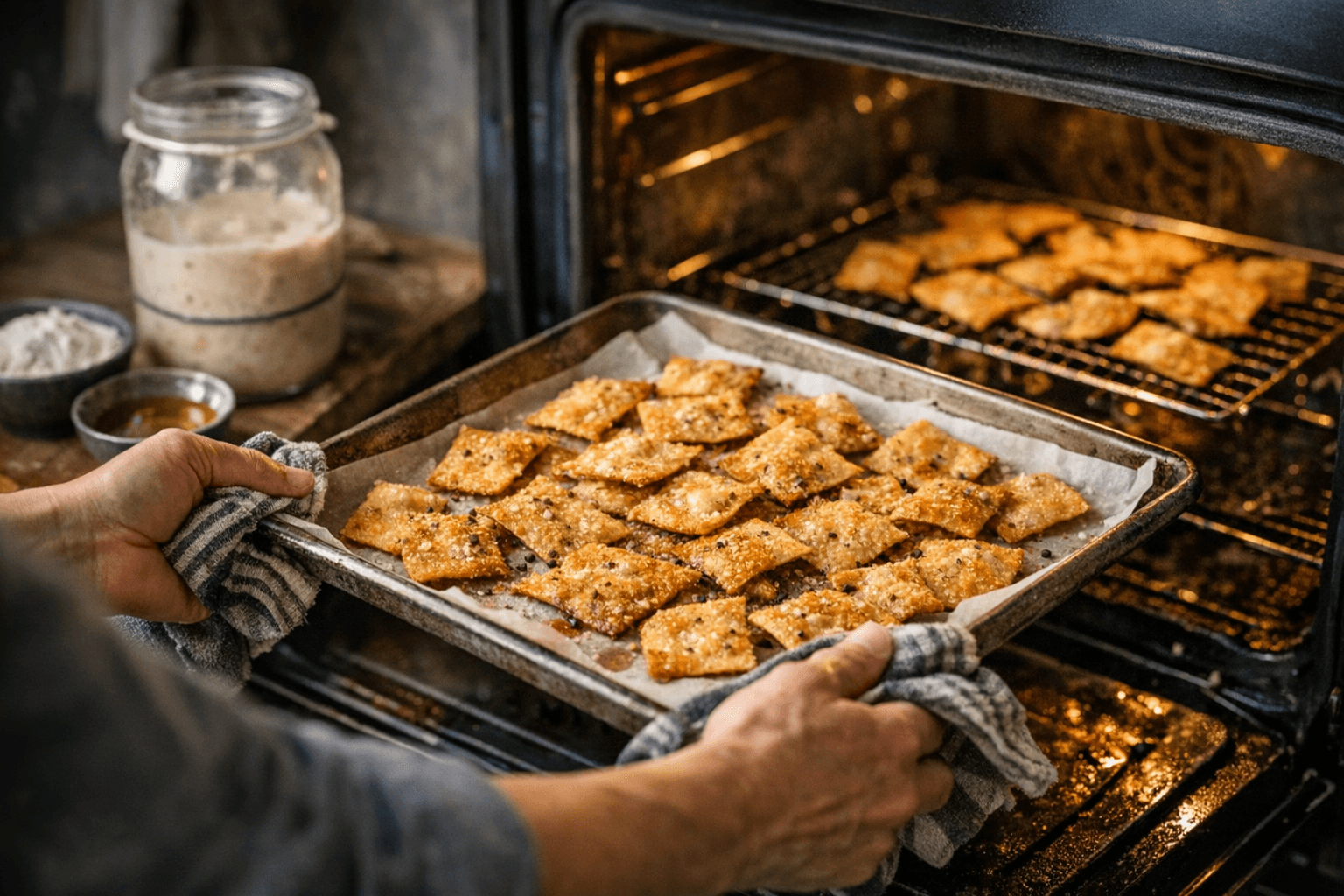
4. Cool until crisp, then break or cut into pieces.
The finished crackers should snap, not bend, and that is the reward for the thin spread and the careful bake.
That kind of precision is why the recipe feels more like a troubleshooting guide than a casual snack idea. The difference between a crisp cracker and a chewy one comes down to very small decisions, especially how thin you spread the batter and how quickly you move it into the oven.
Flavor is flexible, but the base stays lean
The beauty of discard crackers is that the formula leaves room for whatever is already in your pantry. Flaky salt, everything bagel seasoning, sesame seeds, herbs, Parmesan, and poppy seeds all fit naturally into the same dough. That means the recipe can stay pantry-friendly on a Tuesday and still feel special enough for a cheese board on Friday.
Food52 has leaned into that same flexibility with a thyme-and-black-pepper version that comes together in under an hour and pairs especially well with goat cheese. That pairing points to one of the smartest reasons to make crackers instead of another discard bake: they can be a savory companion, not just a way to use up starter. When the goal is something you can set beside cheese, dip, or a spread, crackers have a clearer job than muffins or pancakes.
A familiar answer to the discard dilemma
This is not a brand-new trick, and that is part of why it works. King Arthur Baking has been framing discard crackers as a solution to the discard dilemma since its 2020 blog post, and it still highlights how excess starter can become something tasty instead of something you feel compelled to throw away. America’s Test Kitchen did something similar with its 2020 #QuarantinyStarter coverage, treating discard as a reusable ingredient worth saving, seasoning, and turning into a fast bake.
The broader sourdough conversation, from King Arthur Baking to America’s Test Kitchen, Food52, and voices like Andrew Janjigian, CarolAnn Leventhal, Irene Yoo, Martin Philip, and Arlo, has made one thing clear: discard is not just byproduct. It is a usable ingredient with tang, tenderness, and real utility in the kitchen. Food52 is especially direct about that point, noting that discard contributes flavor and tenderization, but does not replace a leavener.
That distinction is the heart of why crackers win here. They do not ask discard to be bread, and they do not pretend to be a dessert rescue. They turn starter leftovers into something crisp, fast, and worth eating on purpose. King Arthur’s own version shows how far that can go, yielding about 5 dozen 1 1/2-inch squares in about 1 hour 5 minutes total, which is a striking amount of snack for so little active effort.
For the baker who wants the quickest path from jar to crunch, crackers are the smartest outlet. They make sourdough discard feel like an ingredient with momentum, not a chore waiting in the fridge.
This article was produced by Prism’s automated news system from verified source data, official records, and press releases, then run through automated quality and moderation checks before publishing. The system is built and supervised by the people who set the standards it runs under. Read our full AI policy.
Did this article answer your question?