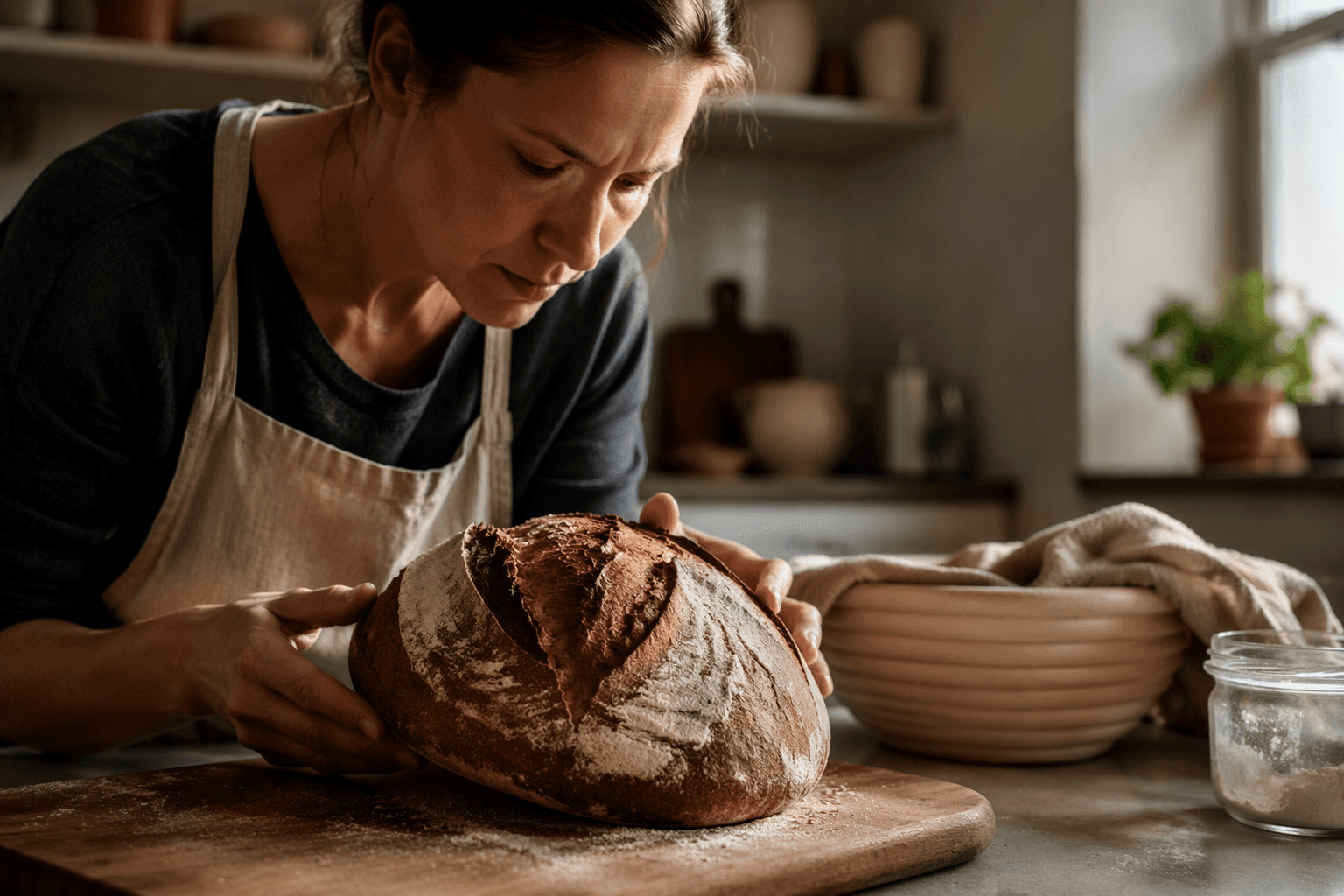
Fare Isle’s honey whole wheat sourdough loaf promises soft, reliable sandwich slices
Fare Isle’s honey whole wheat sourdough solves the weekday sandwich problem with a soft crumb, clean slices, and a schedule that fits real life.
Why this loaf solves the sandwich-bread problem
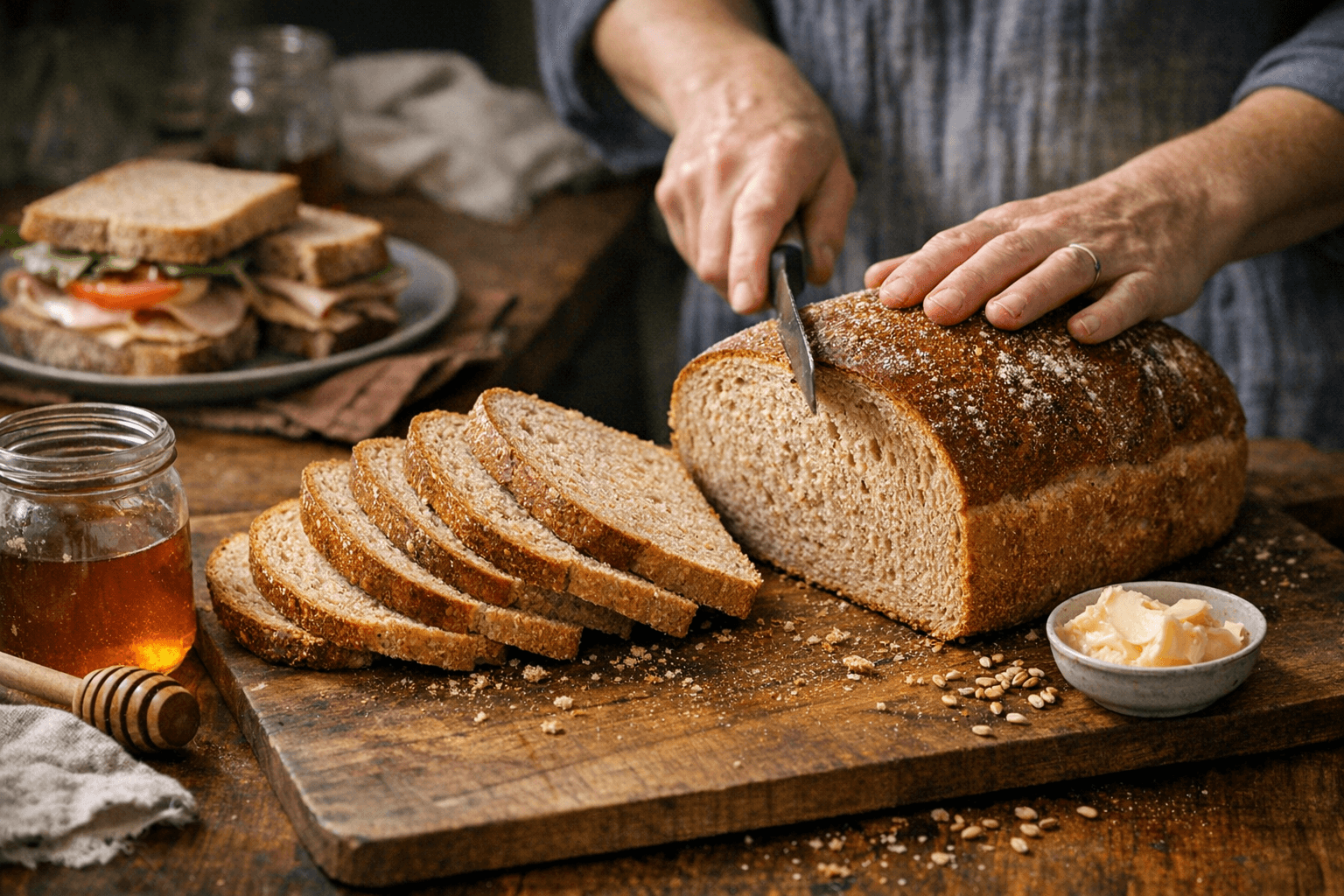
Most sourdough sandwich loaves fail in one of two ways: they bake up too dense to please anyone at lunch, or they come out with a crust that fights the knife. Fare Isle’s honey whole wheat sourdough sandwich bread, published April 13, 2026, is built to avoid both traps. It is meant to be fluffy, lightly sweet, and dependable enough to use every day, not just admire on a cutting board.
That distinction matters. This is not an open-crumb showpiece and it is not trying to mimic rustic country bread in loaf-pan form. The whole point is structure: tall slices, a soft bite, and a loaf that holds together for sandwiches, toast, and the kind of weekday use that exposes every weak point in a bread formula. The author even says it is one of the most reliable sourdough sandwich loaves in their private chef work, which tells you exactly what kind of success the recipe is chasing: consistency.
The flour blend does the heavy lifting
The most important design choice is the flour ratio. Fare Isle uses a 50/50 blend of whole wheat flour and bread flour, and that balance is doing two jobs at once. The whole wheat brings flavor and the deeper, nuttier character that many home bakers want, while the bread flour adds the gluten strength needed to give a pan loaf height instead of collapse.
Harvard T.H. Chan School of Public Health describes whole grains as containing the bran, germ, and endosperm, which explains why whole wheat tastes fuller but can behave more heavily than refined flour. In a sandwich loaf, that extra bran and germ are exactly why the structure needs support. The bread flour is not there as filler, it is there to keep the loaf from turning into the kind of dense slice that sends people back to store-bought bread.
There is also a practical nutrition angle here. Mayo Clinic notes that whole-grain foods provide fiber, vitamins, minerals, and other nutrients, and may help with cholesterol, weight, and blood pressure control. That is part of the appeal of a loaf like this: it gives you a way to eat more whole grain without making the bread feel punitive or dry.
Milk, oil, and honey are the softness engine
The other major move here is enrichment. The dough uses milk, oil, and honey, along with active sourdough starter, to build a tender bakery-style crumb that stays soft for days. Honey adds gentle sweetness, milk softens the dough, and oil helps the crumb stay supple instead of drying out after the first slice. Together, they make the bread feel more like a well-made sandwich loaf than a lean artisan sourdough.
That choice lines up with how bread formulas are often adjusted under federal standards. USDA Food and Nutrition Service notes that whole wheat bread products may include small amounts of fats, sugars, salt, or oils, which means this kind of enrichment is not a weird detour from whole-wheat bread, but a deliberate way to make it more usable. In other words, the milk, oil, and honey are not there to make the loaf fancy. They are there to make it practical.
The melted butter finish pushes that idea even further. A brushed-on finish after baking is a small detail, but it helps with the soft, appealing crust that sandwich bread needs. If you want a loaf that eats cleanly, slices neatly, and still feels indulgent enough for toast, this is the sort of finishing step that quietly matters.
Overnight fermentation is what makes the schedule workable
The recipe’s overnight fermentation is just as important as the ingredients. Fare Isle frames the process as manageable for real life, which is exactly the right way to think about it. The loaf is mixed, rested, bulk-fermented, shaped into a pan, proofed, baked, and finished with butter, so the work happens in stages instead of demanding constant attention.
That process also fits what sourdough bakers already know: fermentation is not only about flavor. A 2021 study in Foods examined wheat and whole wheat sourdough breads under different fermentation conditions and found effects on estimated glycemic index, starch digestibility, and textural and sensory properties. The takeaway for home baking is simple: time matters, and the schedule you choose can change both the feel and the eating quality of the loaf.
The overnight rest is part of why this bread sounds so reliable. A long, cool fermentation gives the dough time to develop without forcing you to hover over it all day, and that is a huge reason this style of loaf works for households. You get a finished bread that behaves predictably, which is often the difference between a recipe you try once and a recipe you bake again and again.
How to use this formula in your own sandwich loaf
The bigger lesson from Fare Isle’s loaf is that softness and whole grain do not have to fight each other. If you want sandwich bread that actually earns a place in the rotation, start with a flour blend that gives whole wheat some structural backup, then use a little enrichment to soften the crumb. Honey, milk, and oil are not decorative extras here, they are the reason the loaf stays tender and family-friendly.
A few practical takeaways are worth keeping close:
- Keep some bread flour in the mix if you want a tall pan loaf rather than a squat one.
- Use milk, oil, and honey to support softness, not just sweetness.
- Treat overnight fermentation as a tool for better texture and a saner schedule.
- Finish the loaf simply, so the crumb and slice quality stay front and center.
That is what makes this recipe worth paying attention to. It takes whole wheat sourdough out of the category of admirable but inconvenient bread and turns it into something that can live on the counter, be sliced without drama, and show up at breakfast, lunch, and toast time with the same dependable texture every day.
This article was produced by Prism’s automated news system from verified source data, official records, and press releases, then run through automated quality and moderation checks before publishing. The system is built and supervised by the people who set the standards it runs under. Read our full AI policy.
Did this article answer your question?