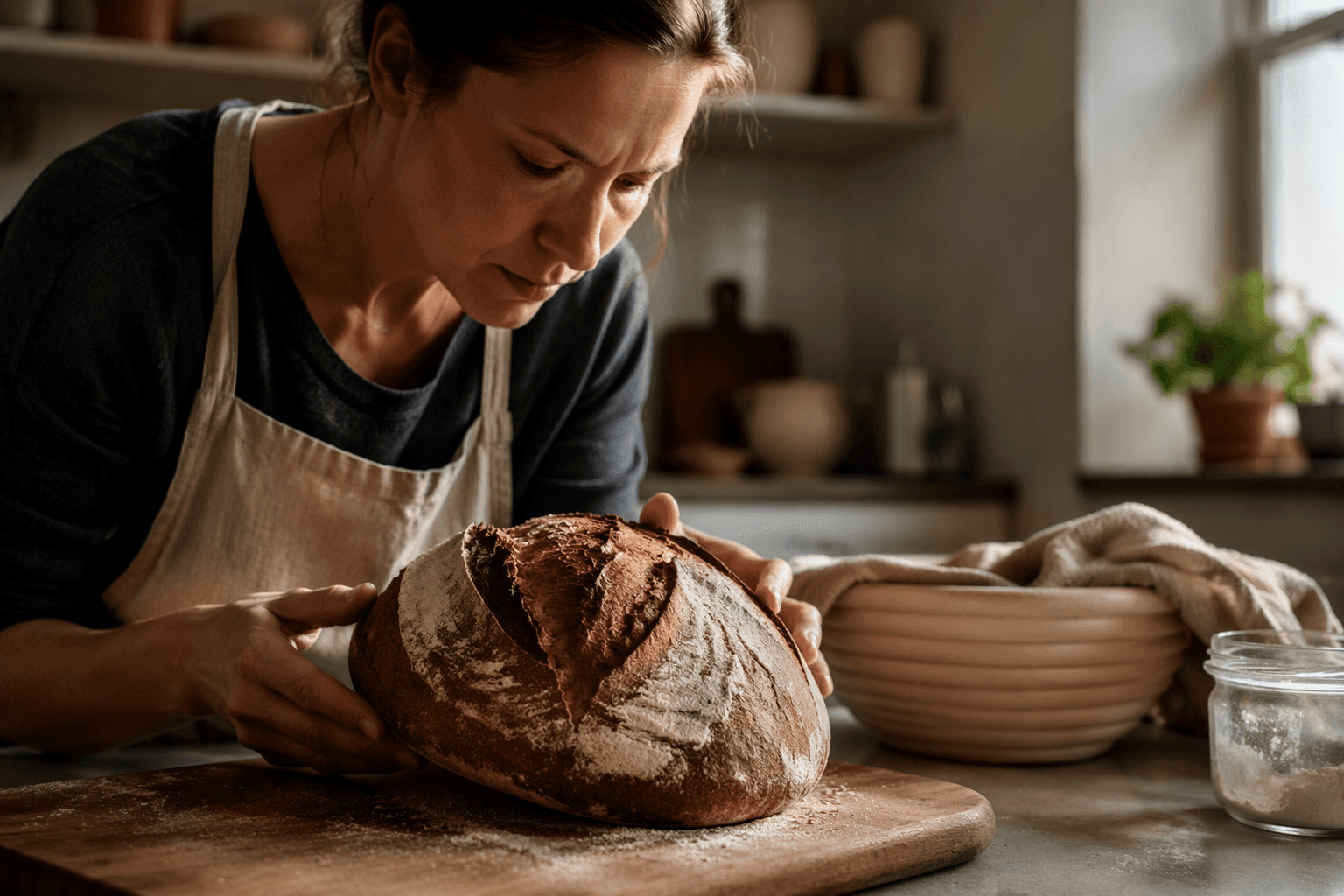
Sourdough starter shapes flavor, nutrition, and home baking creativity
The starter is more than a leavening engine: it drives sour flavor, can unlock minerals, and rewards patient bakers with better loaf control.
The jar is where sourdough really starts
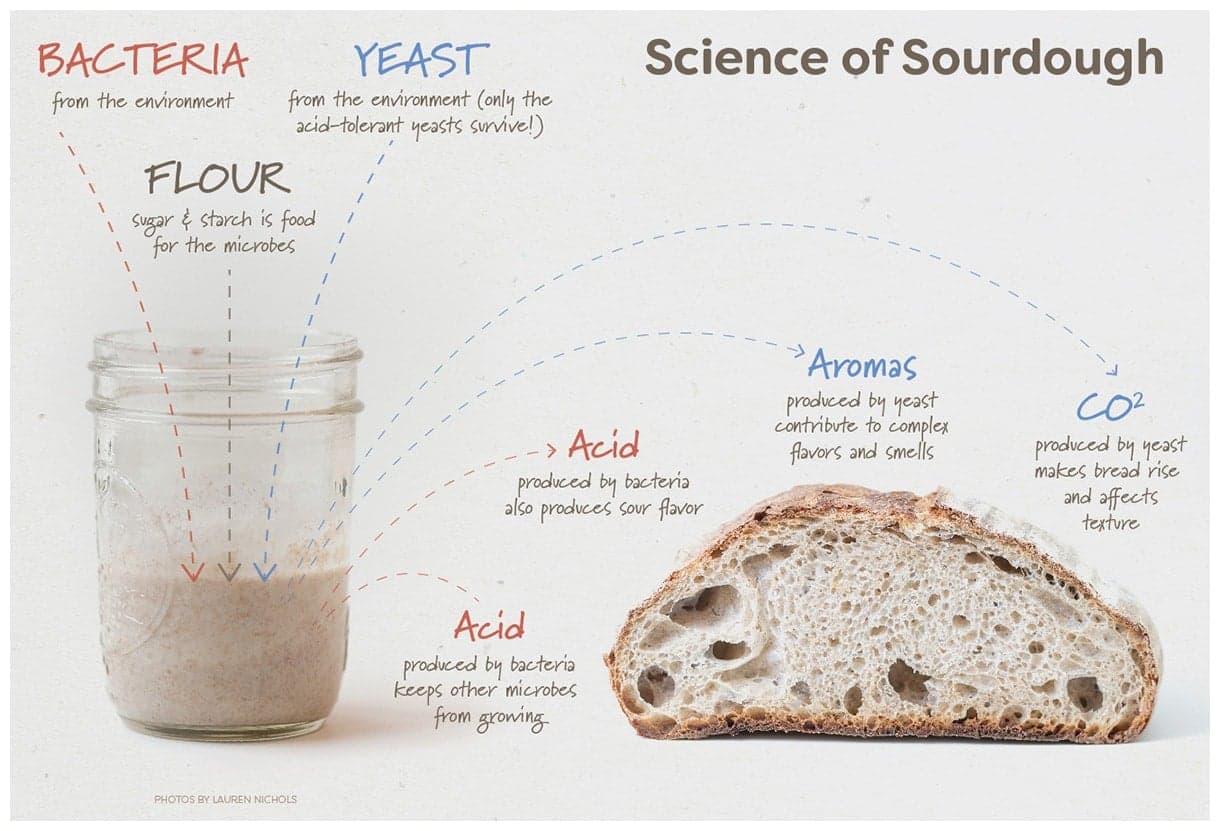
The sour tang in a loaf is not a mystery so much as a tiny ecosystem doing its work. In BYU Daily Universe Metro, Sophia Howcroft traced that flavor back to Gene Ahlborn, a food science professor at Brigham Young University, who explained that sourdough’s bite comes from bacteria producing natural acids, especially lactic acid. That means the taste people chase is inseparable from the biology in the starter.
Sourdough is usually described in the scientific literature as a symbiotic fermentation system of lactic acid bacteria and yeasts. Those microbes do more than lift dough. They shape aroma, acidity, crumb structure, and even how the bread behaves once it hits the oven. In home baking terms, the starter is not just a mascot sitting on the counter. It is the engine that turns flour and water into a loaf with personality.
What fermentation changes, beyond the tang
The biggest myth around sourdough is that it is automatically a health food. The truth is more interesting. Fermentation can reduce phytic acid, and that matters because phytic acid can bind minerals and limit how well the body absorbs them. When sourdough breaks down some of those phytates, minerals can become more bioavailable.
That does not mean every sourdough loaf is nutritionally superior. Ahlborn stressed that the health value still depends on the ingredients used, which is the part many glossy wellness claims skip over. White flour, whole grain flour, added seeds, and enriched recipes all change the final picture. The starter helps, but the formula decides how far that help goes.
Recent reviews make the case carefully. A 2022 systematic review in *Advances in Nutrition* looked at 25 clinical trials involving 542 people. It found the strongest evidence for effects on glucose response, appetite, gastrointestinal markers, and cardiovascular markers, but also said the field still needs more standardization before broad claims can be made. A 2025 critical review went further, reporting that in some contexts sourdough fermentation can cut phytate by as much as 90 percent and produce a glycemic index around 54 versus about 75 for conventional bread. That is a meaningful gap, but it is not a promise every recipe will deliver.
There is also a newer layer to the story. A 2026 study reported that sourdough fermentation can activate wheat enzymes that break down arabinoxylans, which may affect texture, digestibility, and flavor. In other words, the jar is not only changing sourness. It is remodeling the dough from the inside out.
How that science translates to a better loaf
If you bake sourdough at home, the practical lesson is simple: fermentation time, flour choice, and starter maintenance all shape the result.
- Longer fermentation gives the microbes more time to work on flavor and phytates, but more time is not automatically better if the dough overproofs or collapses.
- Flour choice matters because the nutritional upside of phytate reduction is most relevant when the dough contains minerals worth unlocking.
- Starter maintenance shapes consistency. A healthy starter gives you reliable rise, steady acidity, and fewer surprises when you are trying to hit the same crumb twice in a row.
The goal is not to worship long fermentation as a cure-all. It is to match the process to the loaf you want. If you are aiming for a lighter crumb, you need an active starter, a dough that has enough time to ferment properly, and a formula that supports structure. If you want deeper flavor, a slower, well-managed fermentation usually gives the microbes more room to develop complexity. If you care about nutrition, ingredients and fermentation both matter, not one or the other.
A home baker’s sourdough life, one loaf at a time
Caden McCloy, a home baker who has been making sourdough since 2018 after being taught by his bishop, shows how personal the craft becomes once you keep a starter around long enough. He bakes about once a week, sometimes more often when he wants to share loaves, and says he usually only buys bread for trips or sandwiches. His starter even has a name, Bun-Jovi, which says a lot about the way sourdough culture turns a jar into a companion.
McCloy also leans into creativity. He makes cinnamon swirl, rosemary, and asiago versions, and experiments with different olive oils. That range is part of the appeal of sourdough at home: the same fermentation backbone can produce a sweet breakfast loaf, a savory dinner bread, or something closer to a special-occasion bake. The starter is a constant, but the final loaf is a canvas.
That flexibility is why sourdough keeps pulling in new bakers even as it carries deep history. It is one of humanity’s oldest bread-making methods, and historical sources note that industrial baker’s yeast only became widespread in the late 19th and early 20th centuries. Long before packets and cubes, bakers relied on wild fermentation and learned to read dough by feel, smell, and timing. The modern comeback is not a trend pretending to be old. It is an old method finding new language in kitchens that care about flavor and process.
What to remember when the starter comes out of the fridge
The most useful sourdough advice is also the least glamorous: respect the process. The starter sets the tone, fermentation reshapes the dough, and ingredients decide how much nutrition and flavor you actually get. A loaf can be tangy without being especially nourishing, or nourishing without being aggressively sour.
That is the real mechanism behind the myth. Sourdough is not magic, but it is not marketing either. It is a living system that can bring more flavor, better mineral availability, and a more expressive crumb to the table when the baker gives it time, good flour, and enough care to keep the jar alive.
This article was produced by Prism’s automated news system from verified source data, official records, and press releases, then run through automated quality and moderation checks before publishing. The system is built and supervised by the people who set the standards it runs under. Read our full AI policy.
Did this article answer your question?