Sourdough discard rhubarb coffee cake brings spring brunch flavor
This rhubarb coffee cake uses sourdough discard for moisture and depth, not tang. The trick is balance: mild discard, sour cream, lemon zest, and a buttery streusel.
A spring coffee cake that treats discard like an ingredient, not a cleanup job
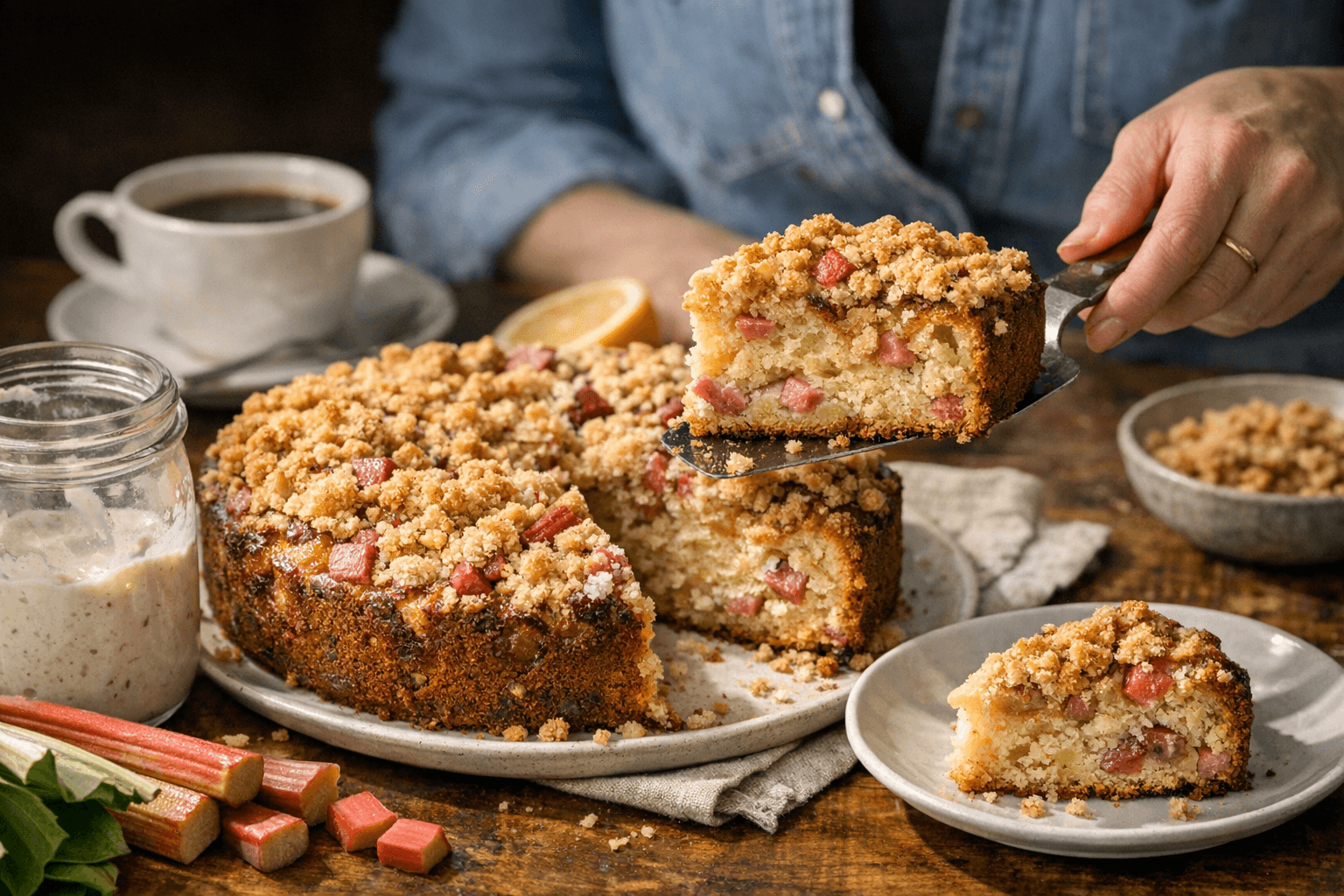
Leftover starter finally gets a role that feels made for it: a soft, old-fashioned coffee cake with rhubarb, sour cream, brown sugar, cinnamon, vanilla, and a buttery streusel top. The Garden Style’s sourdough discard rhubarb coffee cake, published on April 13, 2026, is built around restraint, which is exactly why it works. The discard is there to add moisture and depth, not a loud sour punch, so the finished cake lands squarely in brunch territory instead of drifting into novelty dessert.
That balance matters. Sourdough bakers know discard can make a batter feel more supple and more layered, but it does not carry the bake on its own. King Arthur Baking’s guidance is clear: discard is simply the portion removed during routine feeding, and discard recipes usually depend on other leaveners for lift. In this cake, that means baking soda does the structural work while the discard contributes a subtle complexity that plays nicely with fruit and spice.
Why the sourdough flavor stays in the background
The smartest part of this recipe is what it refuses to do. It does not chase aggression, and it does not ask rhubarb to compete with a sharp sourdough profile. Instead, it keeps the crumb tender and the flavor soft by leaning on fresh, mild discard, sour cream or Greek yogurt, and just enough baking soda to tame acidity and help the batter rise.
That combination gives the cake a practical sourdough lesson baked right into the crumb. Discard is not just a way to use up starter; it is a moisture-and-depth ingredient. When paired with sour cream, brown sugar, cinnamon, lemon zest, and vanilla, it creates a cake that tastes deliberate and cozy, with a gentle tang that supports the fruit rather than overpowering it. The lemon zest is especially important here because it brightens the rhubarb without making the cake taste sharp.
The streusel matters too. Butter and sugar on top do more than add crunch. They temper rhubarb’s tart edge and give the cake that old-fashioned coffee shop finish that makes a slice feel complete with coffee, tea, or a slow spring breakfast.
Why rhubarb is the right fruit for this moment
Rhubarb is one of the strongest seasonal signals you can bake with in spring. University of Minnesota Extension notes that it is among the first crops ready for harvest in spring, and Iowa State University Extension and Outreach describes it as a short-season vegetable in the Midwest, with harvest often running from early spring into mid- to late June. That narrow window is part of the appeal: when rhubarb shows up, it feels like a cue to switch from heavier winter bakes to something brighter and more relaxed.
The plant is also generous in a home garden. Illinois Extension says a single rhubarb plant can provide enough stalks for a family of four, and established plants can stay productive for five years or more. South Dakota State University Extension adds useful scale for bakers: rhubarb leafstalks can grow up to 18 inches long and 1 to 2 inches in diameter. Those thick stalks bring plenty of texture and a bold tartness that stands up well to sweet batter, especially in a coffee cake where the fruit does not need to dominate every bite.
Just remember the safety rule that never gets old: the leaves are not for the pan. South Dakota State University Extension warns that rhubarb leaves contain a toxic amount of oxalic acid and should not be eaten. For baking, the stalks are the prize, and they deliver the clean, puckery flavor that makes this cake feel unmistakably spring.
How the recipe reads in the pan
This is the kind of bake that rewards a baker who wants a lighter crumb without abandoning the character of sourdough. The cake is described as soft, moist, and lightly sweet, which is exactly the lane discard should occupy in dessert. If you are used to using discard in pancakes or crackers, this is a good reminder that it can do more than rescue scraps. In a coffee cake, it can help create a tender interior that still slices neatly and holds its shape under streusel.
The flavor profile is also specific enough to feel intentional. Brown sugar deepens the sweetness, cinnamon adds warmth, vanilla rounds the edges, and rhubarb cuts through with tartness. The result is not a showy sourdough statement. It is a spring brunch cake that happens to have better texture and more complexity because discard is in the batter.
For bakers who want subtle sourdough influence in dessert, that is the sweet spot. You get the practical payoff of using starter at its discard stage, a softer crumb from the added moisture, and enough flavor depth to make the cake feel more interesting than a standard sour cream coffee cake. It is the kind of recipe that quietly earns a repeat spot, especially when rhubarb is in season and the coffee is still hot.
This article was produced by Prism’s automated news system from verified source data, official records, and press releases, then run through automated quality and moderation checks before publishing. The system is built and supervised by the people who set the standards it runs under. Read our full AI policy.
Did this article answer your question?