Triple chocolate sourdough cookies turn discard into fudgy dessert
Discard gets a real job here: browned butter, cocoa, and three chocolates turn leftover starter into a chewy, fudgy cookie with crisp edges.
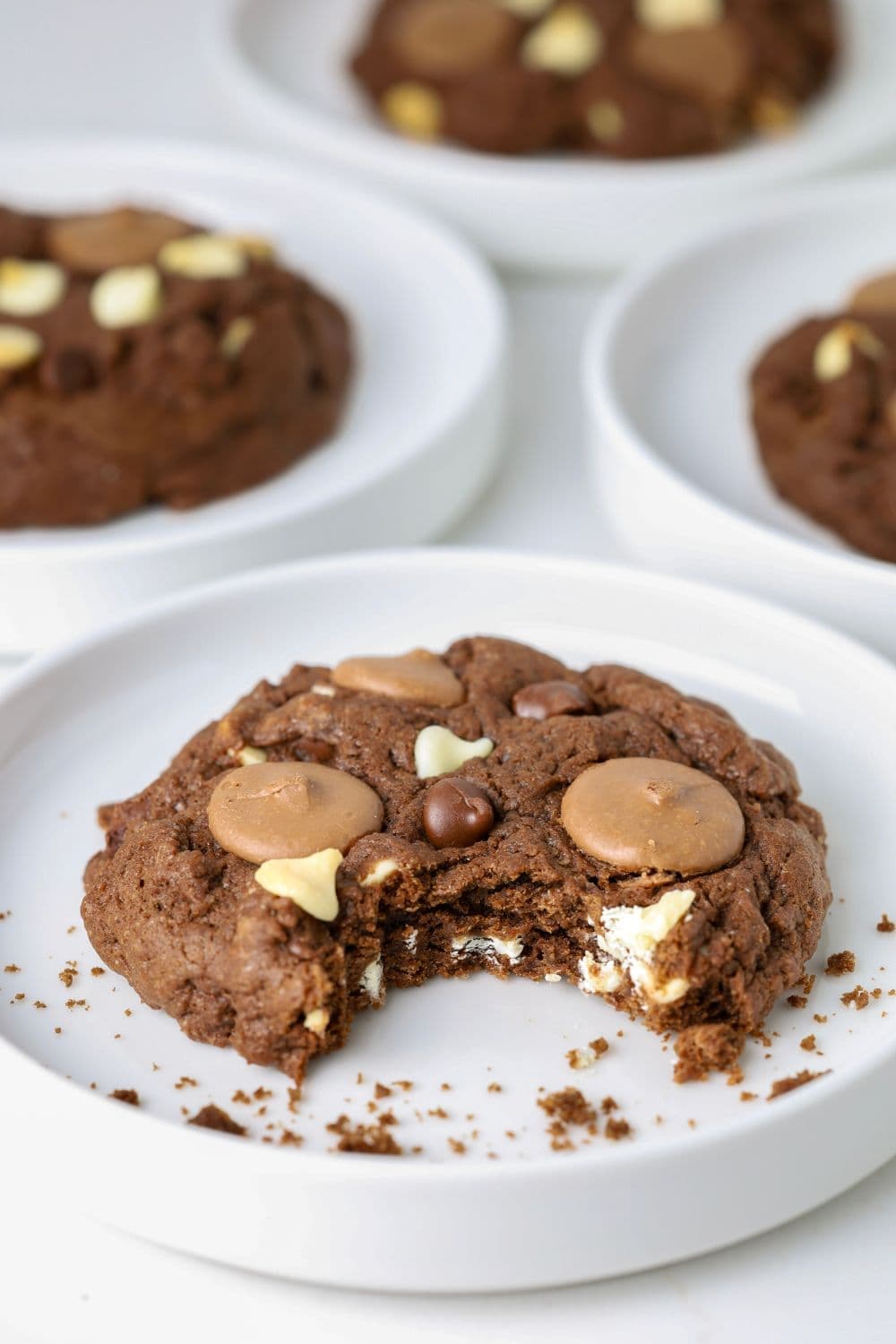
Triple chocolate sourdough cookies solve the most satisfying kind of starter problem: what to do when the jar keeps filling up, but you are not in the mood for another loaf. A recipe from Somebody Feed Seb turns that leftover starter into a dessert that feels bakery-worthy first and frugal second, with a subtle fermented edge, a deeper chocolate profile, and the kind of chewy center that makes discard feel like an ingredient with purpose.
Why this discard bake works
Sourdough discard is the portion removed during feeding so the starter does not keep multiplying without limit. Clemson Extension’s simple example, 30 grams starter plus 30 grams flour plus 30 grams water, shows how quickly that unused portion can accumulate in a working kitchen. Because discard still contains flour and water, it brings both moisture and acidity to the dough, which is exactly why a cookie formula has to be built around it rather than simply tossing it in and hoping for the best.
That is where this recipe gets smart. Instead of treating discard like a novelty add-in, it treats it like a wet ingredient with personality, then balances it against fat, yolk, cocoa, and chocolate so the final cookie lands chewy rather than loose.
The technique that keeps the crumb right
The most important move in the dough is moisture control. The recipe uses browned butter, which cooks off some water while building a nutty, toasted flavor, and it relies on only an egg yolk instead of a whole egg to keep the dough from going too soft or cakey. Those choices are doing real technical work, not just adding richness for the sake of it.
That matters because sourdough discard can push a dough in the wrong direction if the liquid balance is not adjusted. Other sourdough-cookie formulas follow the same logic, trimming moisture with an egg yolk and browned butter to keep the texture on the chewy side. In other words, this is not a gimmick that happens to contain starter. It is a deliberate formula built to control hydration.
Chocolate does the heavy lifting
Cocoa powder and three kinds of chocolate do more than make the cookies look decadent. The cocoa deepens the dough itself, while the mix of chocolate pieces creates layers of melt, snap, and rich pockets throughout the bake. The result is a cookie that feels like a serious bakery treat, with crisp edges and a fudgy center that holds together without becoming heavy.
The triple-chocolate structure also fits a broader pattern in sourdough cookie baking. Independent chocolate-forward sourdough cookie recipes use the same three-part approach, which suggests that the combination is not a decorative flourish but a reliable way to make discard cookies taste fully intentional. The sourdough element gives the dough complexity, while the chocolate carries the dessert experience all the way through.
What discard actually contributes
Discard does not turn these cookies sharply sour, and that is part of the appeal. Its value is more subtle: a faint fermented edge, a little extra depth, and the practicality of putting leftover starter to use instead of letting it sit in the fridge until feeding day. For many bakers, that makes discard less of a flavor bomb and more of a quiet upgrade that earns its place.
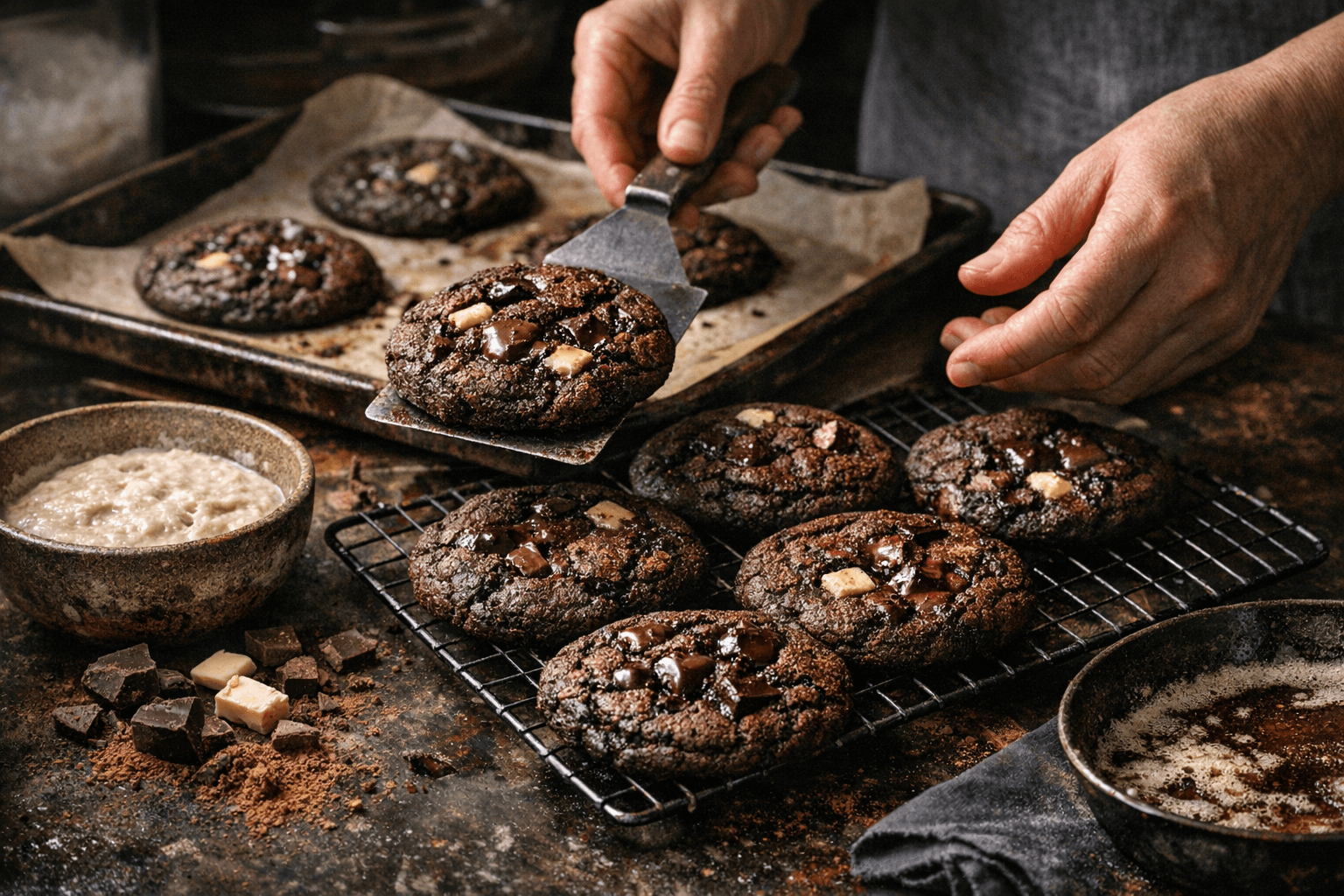
That is why this recipe feels worth making even when waste reduction is not the main goal. The author treats discard as something useful, delicious, and technically interesting all at once. It is thrift, yes, but it is also texture, moisture management, and a small flavor shift that supports the chocolate rather than competing with it.
Why this matters beyond one mixing bowl
King Arthur Baking describes discard as the portion removed during feeding and notes that it can be used in recipes instead of being thrown away. That idea sits comfortably inside a much larger waste conversation. ReFED’s 2026 U.S. Food Waste Report says nearly one third of all food in the United States is lost or wasted as it moves from farm to fork, and estimates 70 million tons of surplus food in 2024, about 29 percent of the U.S. food supply.
A cookie will not fix that scale of loss, but it does show how home bakers can make a small, repeatable dent in the problem. The point is not just to avoid tossing starter. The point is to turn an ordinary byproduct into something people actually want on a plate.
How to think about the formula in your own kitchen
- Expect a fudgy, chocolate-forward cookie, not a cakey one.
- If your discard is especially loose, watch the rest of the dough for excess moisture.
- Browning the butter matters for both flavor and texture, since it reduces water and adds nutty depth.
- The egg yolk is not optional decoration here. It is part of the moisture strategy that keeps the crumb right.
- Keeping all three chocolates gives the cookies their bakery-case character and their rich, layered finish.
For bakers who already keep a starter alive, this is the kind of recipe that makes discard feel useful again. It keeps the culture going, keeps the waste down, and delivers a cookie that tastes like you meant to make it all along.
This article was produced by Prism’s automated news system from verified source data, official records, and press releases, then run through automated quality and moderation checks before publishing. The system is built and supervised by the people who set the standards it runs under. Read our full AI policy.
Did this article answer your question?