What to look for in a stand mixer for sourdough bread
A sourdough mixer earns its spot only if it can handle dense dough, steady low-speed kneading, and the batch size you actually bake.
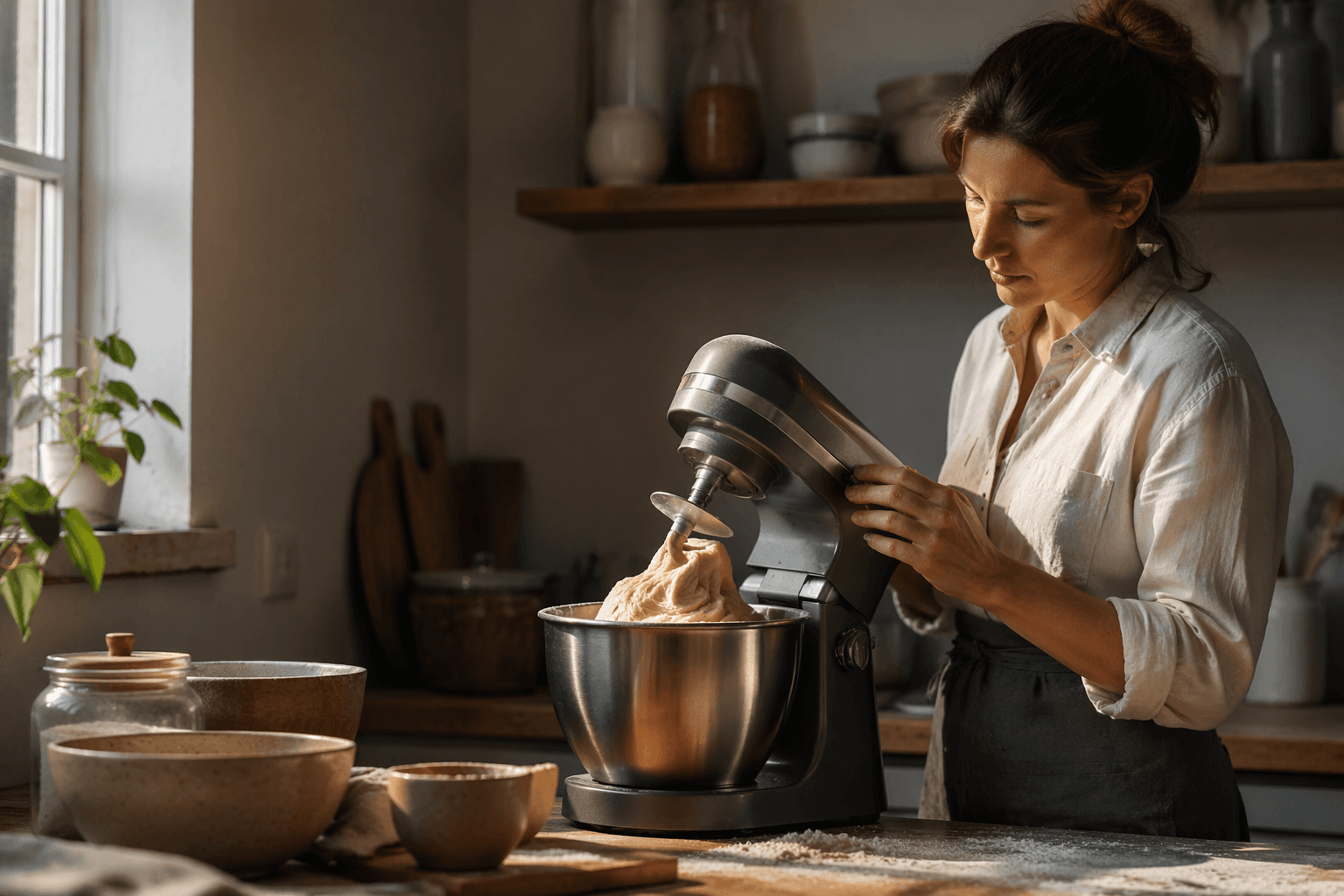
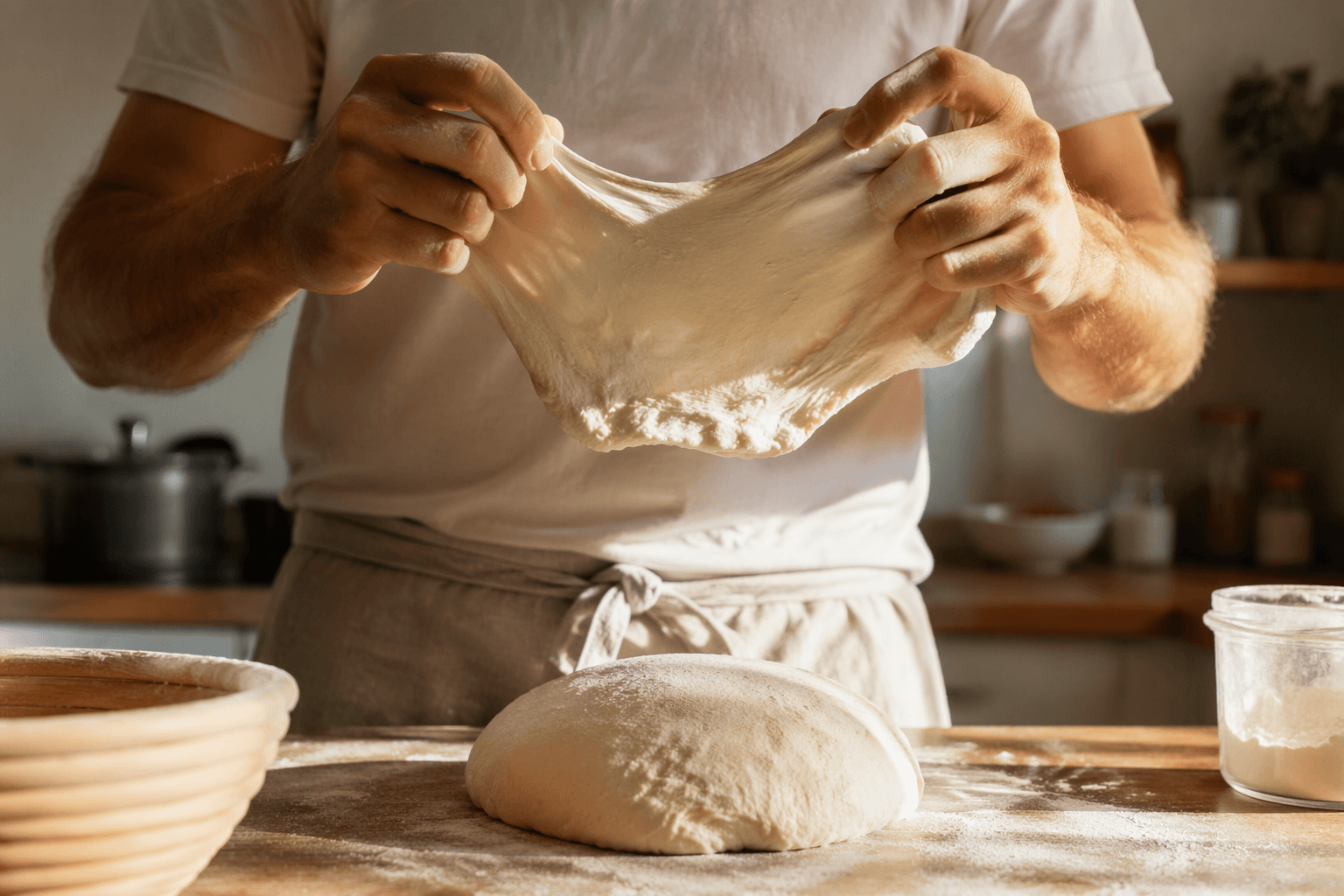
High-hydration sourdough dough is dense, cold, and sticky, especially when you work with whole grains or add-ins, so before you spend serious money on a stand mixer, remember that the machine has to bring torque and durability, not just a familiar logo.
Why sourdough asks more from a mixer
Consumer Reports classifies stand mixers as heavier kitchen work, including kneading bread dough. That framing matches what sourdough asks of a machine: steady force over time, not a flashy burst of speed. If the mixer heats up, slows down, or struggles with stiff dough, the mixing bowl becomes a place of frustration instead of help.
It is whether it can handle bread without turning the dough warm, sluggish, or overworked.
Power matters more than polish
The clearest filter is motor strength. A useful baseline for regular sourdough work is at least 500 watts, with something closer to 800 watts if you bake larger batches or several loaves at once. Cuisinart’s 5.5-quart Precision Master and Precision Pro both use 500-watt motors and are marketed for taking on “the densest of dough.”
KitchenAid’s current bowl-lift stand mixers come in 5-, 6-, 7-, and 8-quart sizes, and KitchenAid says the 7-quart model is better suited to heavier mixtures and bigger batches. KitchenAid also says that model has 2x the power in the bowl compared with its tilt-head line. If your sourdough habit is a weekly single loaf, that is one decision; if you mix multiple boules or bake for a crowd, it is another.
Transmission matters too. A direct-drive or bottom-drive design transfers torque more efficiently than belt-driven systems, which can slip or bog down when the dough gets stiff. Bosch’s Universal Plus has a bottom-drive, high-torque motor and a 6.5-quart bowl, and Bosch says it is built for heavy bread loads and larger batches.
Bowl size should match your loaf habit
Bowl size is where a lot of bakers overbuy or undershoot. A 5-quart bowl can be enough for a single loaf built from roughly 500 grams of flour, but the second you start mixing multiple loaves, you will feel the limits fast. That is where 7-quart or larger bowls start making sense, especially if you like to batch bake and keep a few doughs moving at once.
Shape matters almost as much as size. Wide, shallow bowls give the dough hook better access and reduce the chance of unmixed pockets, while narrow bowls can leave bits of dough stuck where the hook cannot quite reach. That is one reason bowl-lift machines often feel more bread-friendly than smaller tilt-head models: they are built to accommodate heavier mixtures instead of just taller batters.
Cleanup matters too, because sourdough sticks everywhere. Dishwasher-safe bowls and accessories make the difference between a tool you reach for and one you start avoiding. Cuisinart says the bowl and accessories on its 500-watt Precision Master are dishwasher safe.
How to use the mixer without fighting the dough
A mixer can improve sourdough, but only if you use it the way bread dough wants to be handled. One of the most useful adjustments is to reduce liquid by 5 to 10 percent when you convert a hand-mixed formula for machine mixing. Mixers develop gluten faster than hands, so a slightly stiffer dough helps the hook stay engaged and keeps the structure more predictable instead of climbing the hook and smearing itself around the bowl.
The low-speed rule shows up again and again in bread guidance. Bosch’s booklet uses speed 2 for bread dough and suggests a 15- to 30-minute rest before continuing kneading, a small pause that can improve flavor and texture. KitchenAid’s sourdough recipe also uses speed 2, attaches the dough hook, and kneads for 5 minutes before fermentation, while King Arthur Baking’s classic sandwich bread formula calls for 5 to 7 minutes of kneading at medium-low speed, with the dough just barely cleaning the sides of the bowl.
King Arthur’s sourdough guidance uses the dough hook on first speed for brief mixing and then lets the dough rest.
When hand mixing is still the smarter path
A stand mixer is helpful, but it is not mandatory. King Arthur’s pro bread-baking guidance says that a home kitchen may hover around 70°F and suggests a desired dough temperature around 90°F if you are trying to mimic bakery conditions. That matters because fermentation is sensitive to temperature, and an aggressive mixer can push dough in the wrong direction if it warms the mix or overworks it.
That is why some bakers still prefer stretch-and-fold by hand, especially for high-hydration doughs. Hand mixing gives you more feel for the dough, and it avoids the temptation to let the machine do too much.
This article was produced by Prism’s automated news system from verified source data, official records, and press releases, then run through automated quality and moderation checks before publishing. The system is built and supervised by the people who set the standards it runs under. Read our full AI policy.
Know something we missed? Have a correction or additional information?
Submit a Tip