Whisk’s sourdough class teaches starter, shaping and baking basics
At Whisk’s four-hour sourdough class, beginners leave with a loaf, a starter plan and clearer shaping instincts. Chef Vindi Rathnayake turns the hard parts into repeatable steps.

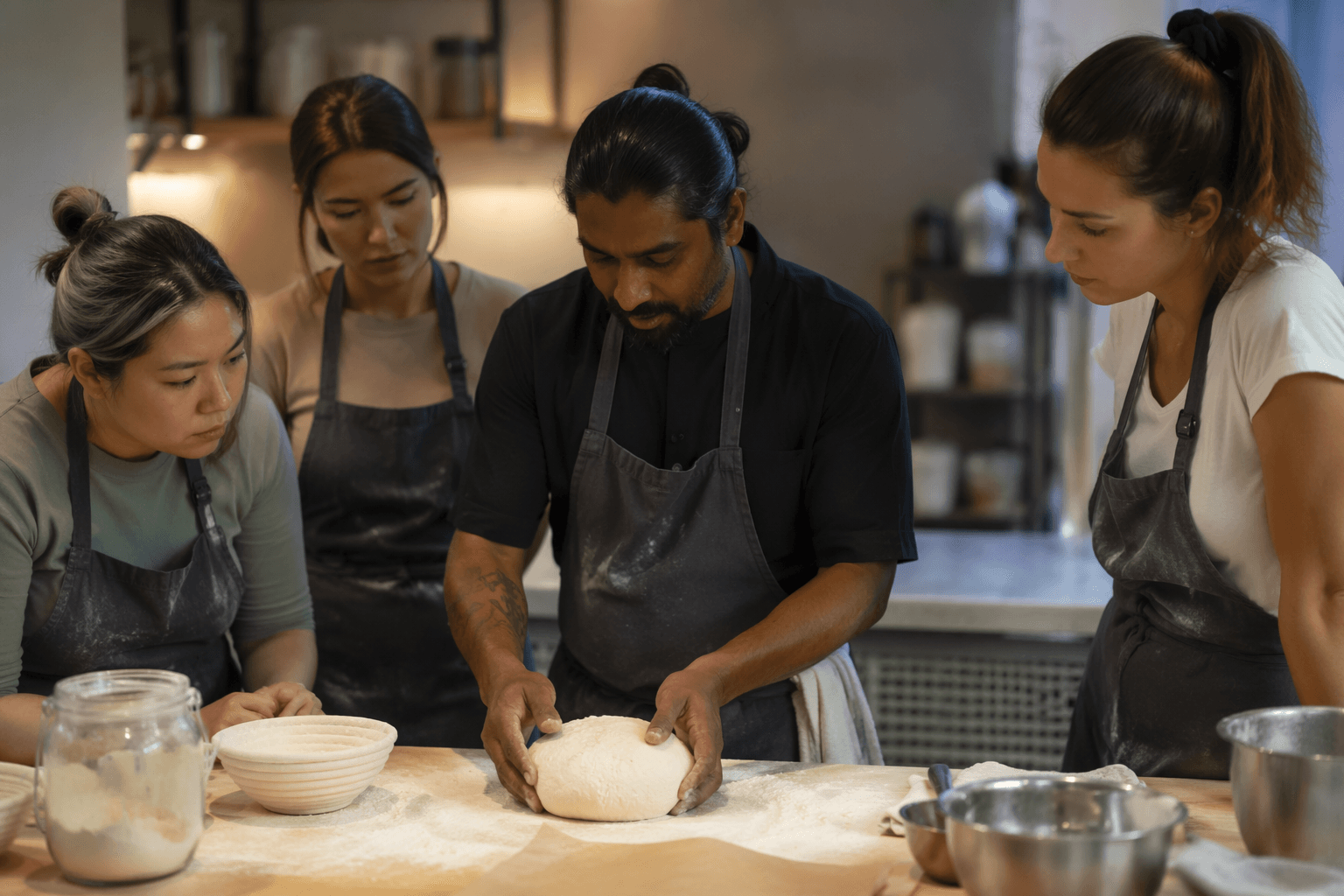
Whisk’s sourdough class gives beginners something social media rarely does: a baker in the room who can correct a sticky dough before it goes sideways. In four hours, Chef Vindi Rathnayake walks students from starter care to shaping and baking, with a white loaf to take home and another dough to finish later. The point is not just to watch bread happen, but to learn why it works well enough to do it again.
Hands-on learning is the whole appeal
The June 24, 2026 session ran from 10:00 a.m. to 2:00 p.m. at Whisk in Bellevue, Washington, and it is built for people who are curious about sourdough but still uneasy about it. Whisk’s listing describes the class as hands-on and aimed at helping home bakers feel confident, which is exactly the kind of format that pulls sourdough offline and back into a kitchen where mistakes can be fixed in real time.
That teaching style fits an established pattern at the Bellevue shop. A March 2026 Whisk sourdough class, covered by Seattle Refined, followed the same four-hour window and was described as step-by-step, supportive and hands-on. For a technique that can wobble over something as small as a warm kitchen or an overproofed dough, the appeal of an in-person class is obvious: you get the cue, the correction and the result in one place.
Starter care is where most beginners get stuck
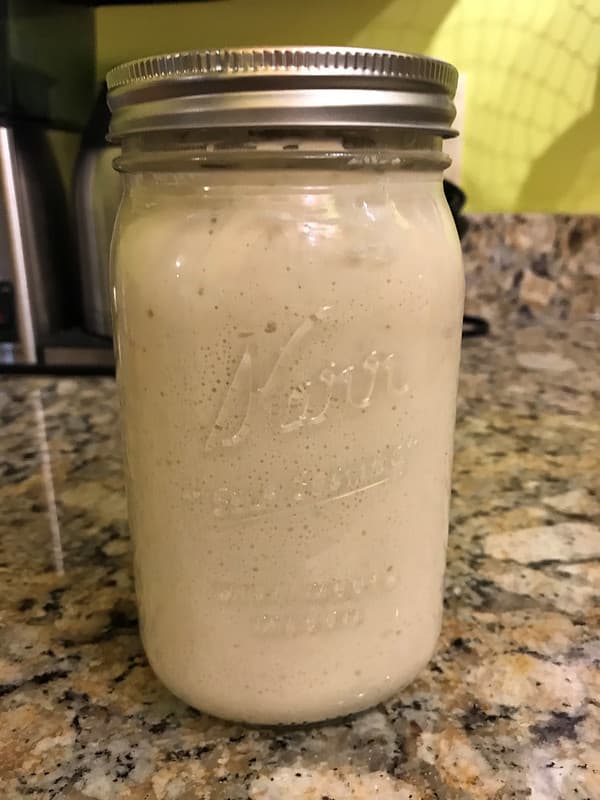
The class starts with the part that can make sourdough feel alive and a little intimidating: the starter. Rathnayake covers feeding, maintaining and using starter, which matters because starter is not a powder mix or a one-time trick. Colorado State University Extension describes it as a living ecosystem of microscopic yeast and bacteria, and keeping it healthy means regular feeding, with refrigeration available when you want to stretch the time between feedings.
That idea is easier to remember when you connect it to how sourdough actually works. Purdue University explains that sourdough depends on wild fermentation, with lactic acid bacteria and yeast naturally present in flour and water. South Dakota State University Extension adds two practical benchmarks beginners can use: a starter from scratch usually takes about 7 to 10 days to become ready for baking, and it tends to grow best around 70 degrees Fahrenheit.
From mixing to shaping to the oven
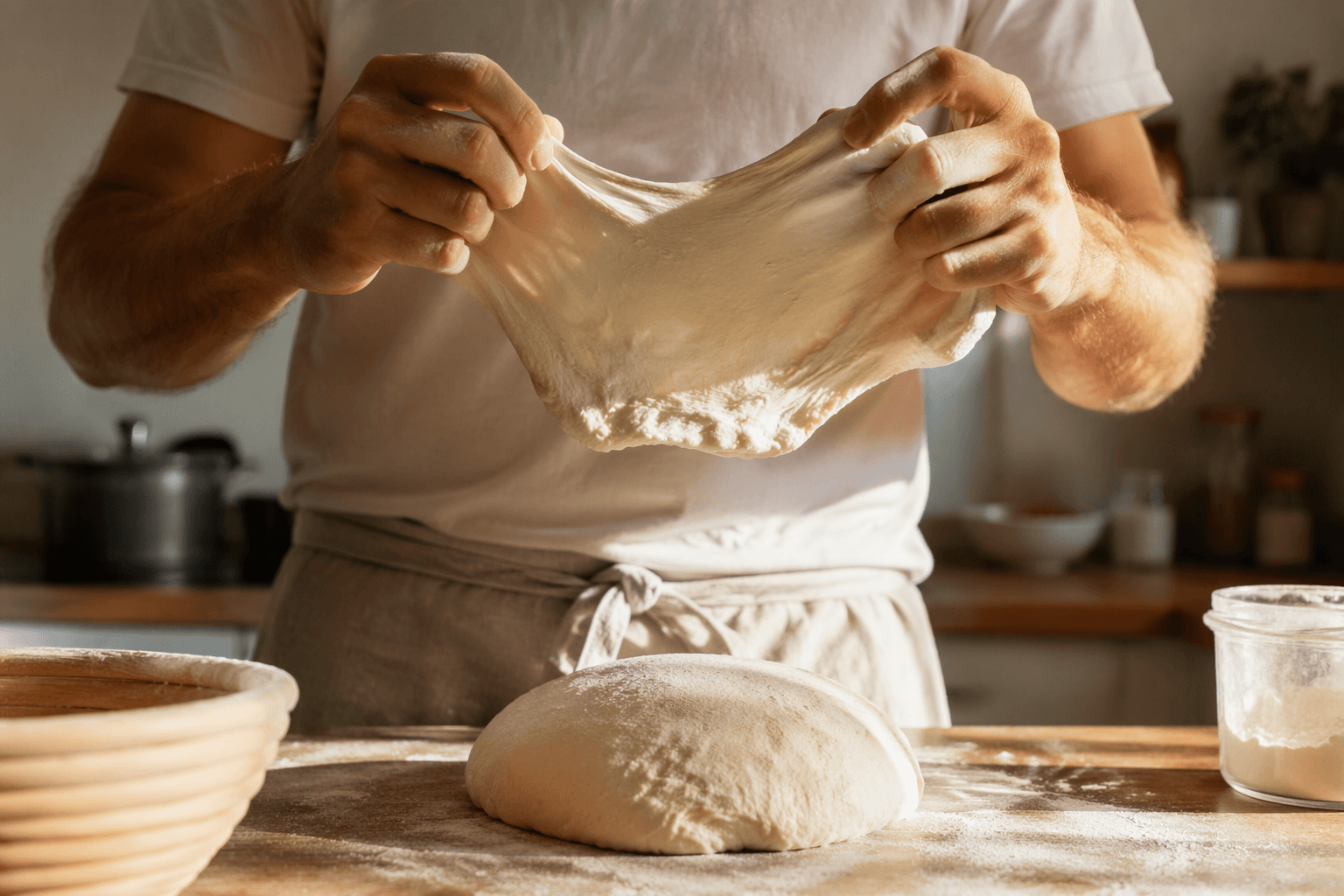
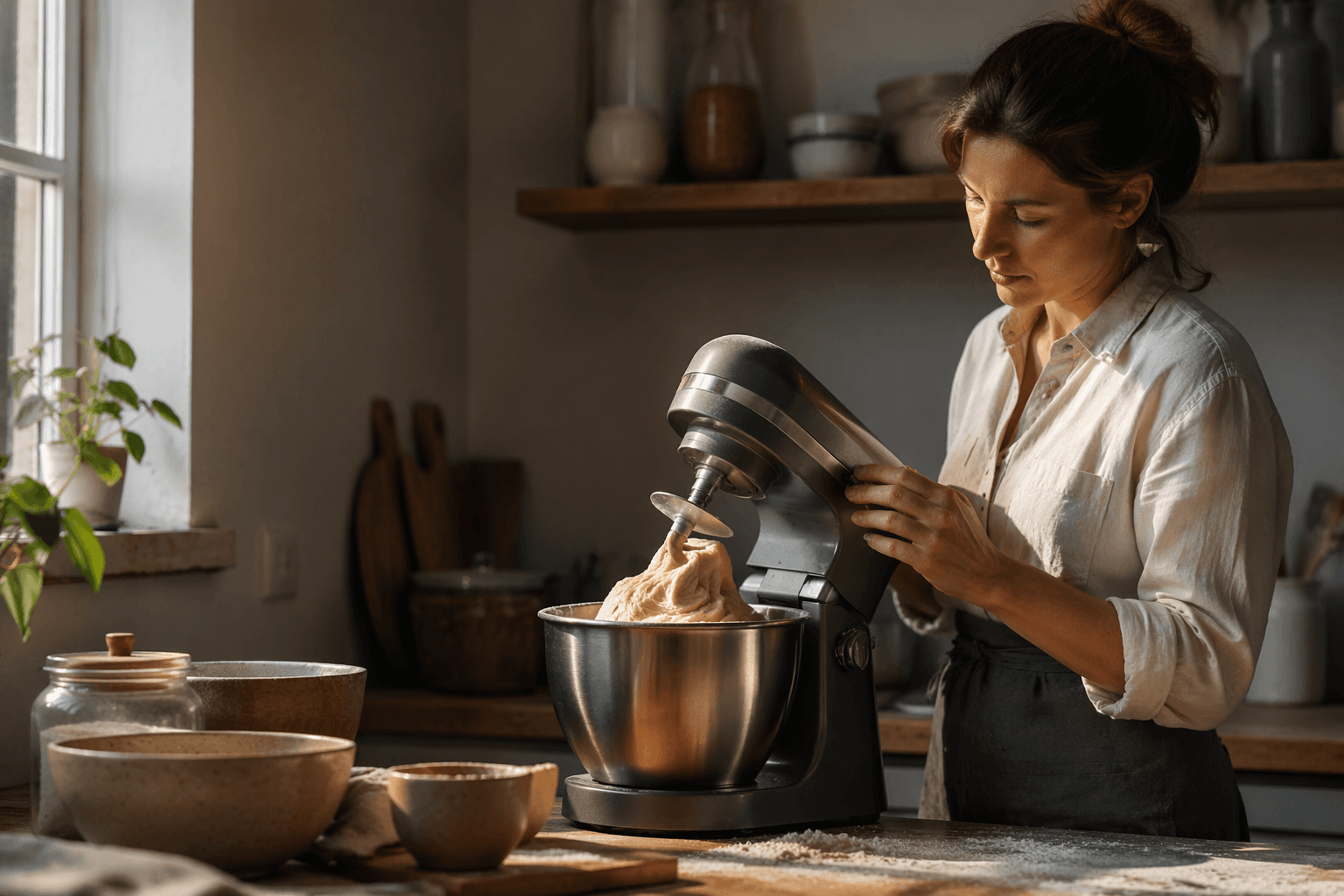
Once the starter is behaving, the class moves through the rest of the bread-making chain: mixing, kneading, shaping, slow proofing and baking. That sequence matters because beginners often know the recipe but not the feel of the dough, and sourdough exposes every small mismatch between timing and temperature. The class also includes sourdough science, including bulk fermentation, so students can connect what they see in the bowl to what they will later see in the oven.
That is where the practical questions live. How long should the dough sit before shaping? When is it ready for the final proof? How do you keep a loaf from spreading instead of rising? A class like this turns those decisions from guesswork into observation, which is why in-person sourdough teaching still holds its own against a feed full of short videos and captioned tips.
Students bake more than one thing
The payoff is not a single demo loaf. Students bake a white sourdough loaf to take home and also make a second sourdough bread to bake later, which gives them a second run at the process after class. The flavor choices include olive and rosemary, seeded, jalapeño and cheddar, cinnamon and raisin, or plain white, so the lesson extends beyond a basic boule and shows how a starter can carry different doughs.
The class also includes sourdough crackers, which is a smart way to make use of the same starter knowledge in a different format. In the March 2026 Whisk session, students also took home starter and made crackers from discard, reinforcing the shop’s emphasis on using the whole system, not just one finished loaf. By the end of the session, the bread is not the only thing students leave with. They leave with a routine.
Why the science still matters
Whisk folds sourdough science into the class without letting the science take over, and that balance is part of its usefulness. Purdue traces sourdough back to ancient Egyptian bread-making and later to the California Gold Rush, which makes it one of the oldest bread traditions still circulating in modern kitchens. The recent resurgence has brought a fresh wave of home bakers into the fold, but a 2023 systematic review also shows why instructors still need to separate promise from proof: sourdough fermentation has been linked in studies with possible higher satiety, lower glycemic responses and improved postprandial markers, yet those claims still need careful scientific interpretation.
That is a useful frame for anyone coming to sourdough because of health headlines. The real value of the class is more immediate than any wellness claim. It helps you handle a living starter, read a dough at shaping time and understand the bake well enough to trust it the next time the kitchen is warm and the schedule is not.
Chef Vindi Rathnayake brings the right kind of guidance
Rathnayake’s background helps explain why the class feels approachable without being watered down. Seattle Refined described her as a trained baker and pastry chef from Sri Lanka, and The Pantry says she was born and raised there before training in Melbourne, Australia, as a baker and pastry chef. PCC Community Markets notes that she earned Certificate III from the William Angliss Institute of Melbourne, and she has worked in bakeries in both Melbourne and Seattle.
That combination of formal training and close, practical teaching is what makes the class work for nervous beginners. Sourdough has a reputation for being fussy, but a four-hour session with a live instructor turns the process into a chain of small, visible decisions. By the time the dough goes into the oven, the mystery has already started to shrink.
This article was produced by Prism’s automated news system from verified source data, official records, and press releases, then run through automated quality and moderation checks before publishing. The system is built and supervised by the people who set the standards it runs under. Read our full AI policy.
Know something we missed? Have a correction or additional information?
Submit a Tip