Arches shuttle proposal would offer free, voluntary alternative for visitors
Arches is not getting a mandatory shuttle. The current plan is a free, voluntary option for visitors, with a launch window that could begin as early as September 2026.

What exactly is being proposed for Arches?
Arches may be headed toward a free shuttle, but the key trip-planning detail is simple: this is being framed as a voluntary alternative, not a replacement for driving into the park. The current concept would connect downtown Moab to Arches in a county-led, contractor-operated pilot, and riders would not pay a fare under the present plan.
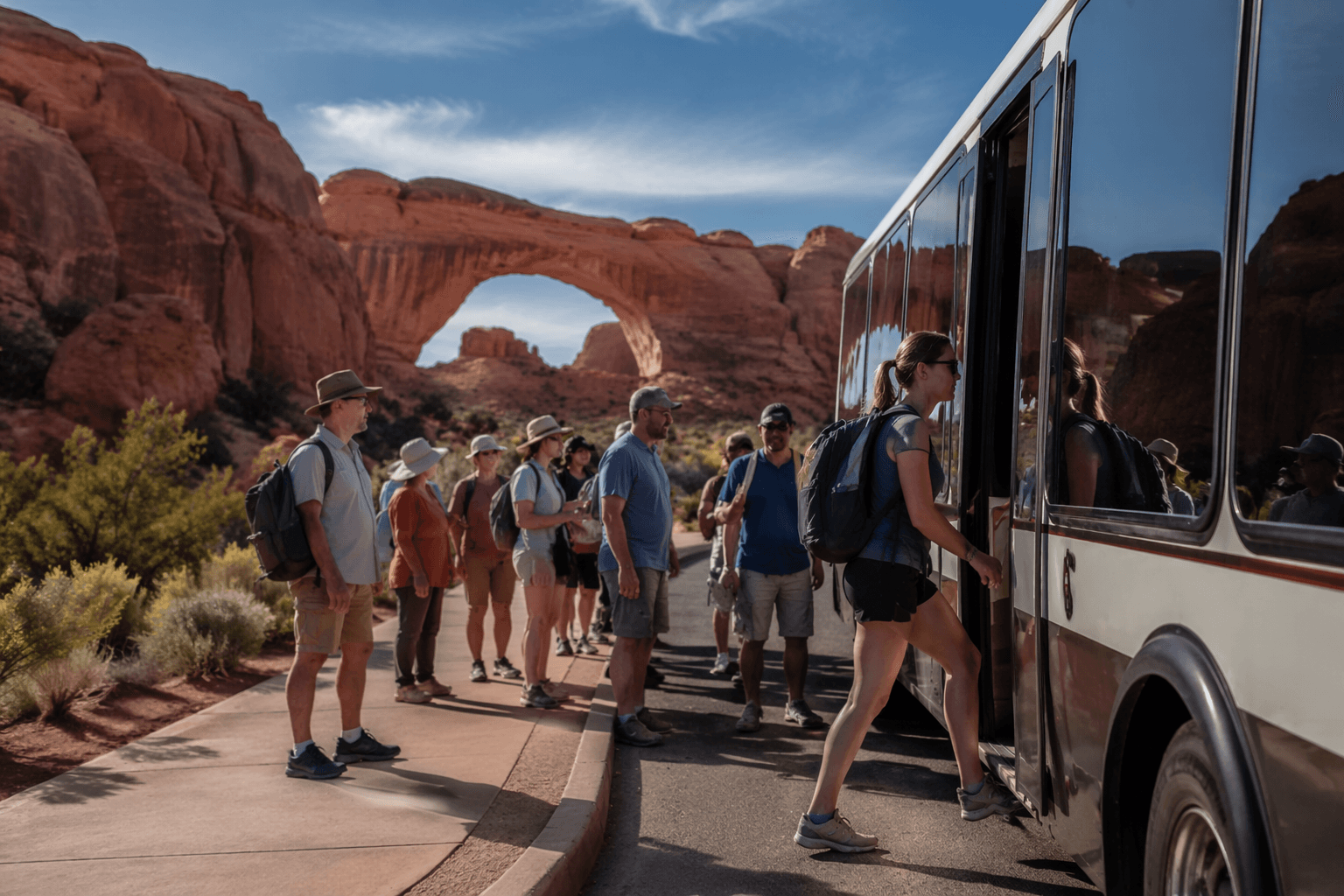
That is a very different setup from a normal transit route or a paid park bus. It is also not just a repeat of the old 2012 pilot that never launched. The new version is being built around a funding stack that combines Grand County money, Utah funding, and a National Park Service Centennial Challenge contribution.
When could it start?
If the pilot keeps advancing, the first operating year is described in two seasonal windows: September through October 2026, then March through June 2027. That gives visitors a clear clue about the timing, even though the project is still in proposal mode.
The funding clock is one reason the conversation is moving now. Grand County says Centennial Challenge money must be matched one-to-one with nonfederal funds and obligated by September 30, 2026. That deadline is why the shuttle keeps reappearing in local planning discussions instead of fading away again.
How would this change park entry?
It would not turn Arches into a bus-only park. The shuttle is described as an added option for visitors who want to leave the car in Moab and ride in, not a mandatory substitute for private vehicles.
That matters because the park has already stepped back from timed-entry reservations for 2026. On February 18, 2026, the National Park Service said advanced timed-entry reservations would not be required this year, though visitors should still expect entrance lines and possible temporary restrictions when congestion builds. In other words, the shuttle proposal sits alongside a looser 2026 entry system, not a hard entry control model.
Will this solve parking headaches?
It should help some, but nobody should mistake it for a full fix. The National Park Service says Arches visitation rose 74% between 2011 and 2021 and hit a record 1.8 million visits in 2021, and that congestion and parking problems have persisted despite expanded parking, more staffing, and temporary entrance closures.
The park’s transportation background also shows why planners keep circling back to a shuttle and why they still worry about its limits. Arches has a 52-mile road system, key destinations are spread out, and earlier analysis suggested a shuttle might cut private cars by only 23% to 28%. That same analysis put operating costs at $2 million to $3 million for a five-month season, before bus purchase and maintenance.
So the practical traveler takeaway is this: if the pilot happens, it may ease some pressure at the entrance and in parking lots, but it is not being sold as a silver bullet for all congestion inside the park.
Can you still make a spontaneous visit?
Yes, and that is part of why this proposal is getting so much attention from regular Arches visitors. Because it is voluntary, you would still be able to drive in under the current concept, which means the shuttle is a choice, not a gatekeeper.
That said, the broader access picture is still changing. Arches used timed-entry reservation pilots in 2022, 2023, 2024, and 2025, so visitors have already had several seasons of adapting their plans around access controls. The shuttle would be another layer of flexibility, especially for people who want to avoid entering the park in their own vehicle during busier periods.
Why does this keep coming back?
Grand County says the shuttle has been examined in at least seven federal planning efforts since 1999, and the National Park Service says it began an Alternative Transportation System and Congestion Management Study in 2011. The park’s own 2012 feasibility study went as far as identifying a preferred pilot shuttle system, along with non-shuttle alternatives.
The broader federal transit model also explains the persistence. Grand County’s Q&A notes that 81% of park transit operations, carrying 98.5% of park transit riders, are run by non-NPS partners. In plain English, gateway communities and contractors do a lot of the heavy lifting when national parks run transit systems, and Arches is leaning into that model rather than trying to build everything in-house.
What still needs to be answered before visitors can rely on it?
Quite a bit. The biggest unanswered questions are the ones that matter most on a hot desert day: where the buses will be stored, who will drive them, how often they will run, whether they will pick up at hotels, and how the system will handle heat safety and passenger drop-offs.
Those details matter because the pilot is still being shaped as an actual visitor service, not just a funding concept. The county-approved match, which came from transient room tax mitigation funds instead of the general fund, was approved by Grand County commissioners on a 4-3 vote on May 19, 2026. Officials have also said the total package could reach $3 million, with $1.5 million from the National Park Service Centennial Challenge program, $1 million from the Utah Transportation Commission, and $500,000 from Grand County.
The bottom line for anyone planning an Arches trip is straightforward: this is a real access proposal with a narrow federal funding window and a possible launch later this year, but it is still a proposal. For now, the most important change is not that driving is going away, it is that Arches may soon give visitors a free alternative for getting in, and that could reshape how you plan a morning at the park even before the first shuttle leaves downtown Moab.
This article was produced by Prism’s automated news system from verified source data, official records, and press releases, then run through automated quality and moderation checks before publishing. The system is built and supervised by the people who set the standards it runs under. Read our full AI policy.
Did this article answer your question?