Grand Canyon imposes Stage 2 fire restrictions as water reserves run dry
Grand Canyon travelers lost campfires, charcoal grills and open smoking as Stage 2 restrictions kicked in parkwide, after water reserves for fire suppression ran dry.
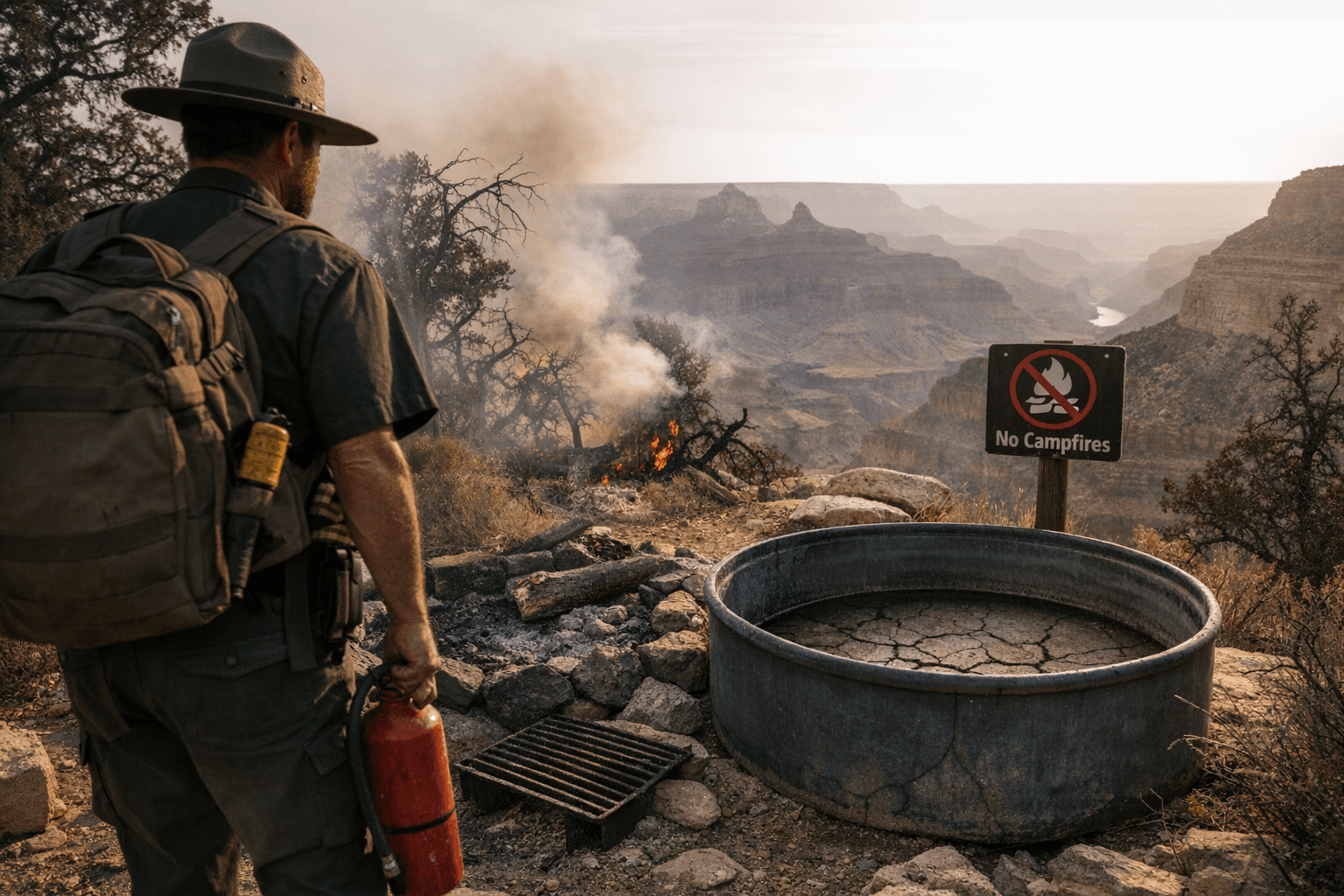
Campfires are off the table at Grand Canyon National Park, and so are charcoal grills, warming fires and most outdoor smoking. The park put Stage 2 fire restrictions in place on April 11, and this time the trigger was not just hot weather or a windy stretch. Water reserves available for fire suppression had been depleted, turning the restriction into a trip-planning problem for anyone headed to the South Rim, North Rim or backcountry.
The order covers the entire park, including campgrounds, residential areas, backcountry sites and developed recreation areas. Liquid petroleum devices such as stoves and lanterns are still allowed, but only in spots cleared of flammable material for at least 3 feet. Smoking is prohibited outdoors except inside an enclosed vehicle or building, and fireworks remain banned year-round. For campers who expected a traditional fire after a long day on the Rim, the evening routine now looks a lot more like a dry, low-flame backcountry setup than a classic canyon campsite.
The fire limits landed alongside another strain on the park’s infrastructure. An April 8 water notice said no water was being pumped to the South Rim at that time because of significant breaks in the 12½-mile Transcanyon Waterline, the line that brings water up from the inner canyon. Under those conservation measures, Mather Campground and Desert View Campground stayed open for dry camping only, with spigots turned off. Camper Services closed, while South Rim lodging remained open with reduced occupancy. Day-use operations continued, and food and beverage services, the Grand Canyon Clinic, the Canyon Village Market and the Post Office stayed open in Grand Canyon Village.
The water problem is not a one-off. The National Park Service says the Transcanyon Waterline has suffered more than 85 major breaks since 2010, which is why the Transcanyon Waterline Replacement Project is underway and expected to finish in 2027. That long-running repair story explains why a water shortage can quickly become a fire-suppression issue, not just a utility headache.
Grand Canyon has already moved through similar restrictions before. On Oct. 31, 2025, the park imposed Stage 3 water restrictions and Stage 2 fire restrictions because limited water availability and construction on the waterline were squeezing firefighting capability. Earlier, on Sept. 4, 2025, the park lifted Stage 2 fire restrictions on the South Rim after monsoonal activity reduced fire danger. This spring’s order shows the same pattern, only with a sharper edge: when the water system tightens, canyon travel tightens with it.
This article was produced by Prism’s automated news system from verified source data, official records, and press releases, then run through automated quality and moderation checks before publishing. The system is built and supervised by the people who set the standards it runs under. Read our full AI policy.
Did this article answer your question?