Grand Canyon North Rim reopens to scarred post-fire landscape
The North Rim is open again, but visitors are driving into a burn scar: charred trees, lost cabins and no potable water or overnight lodge this season.
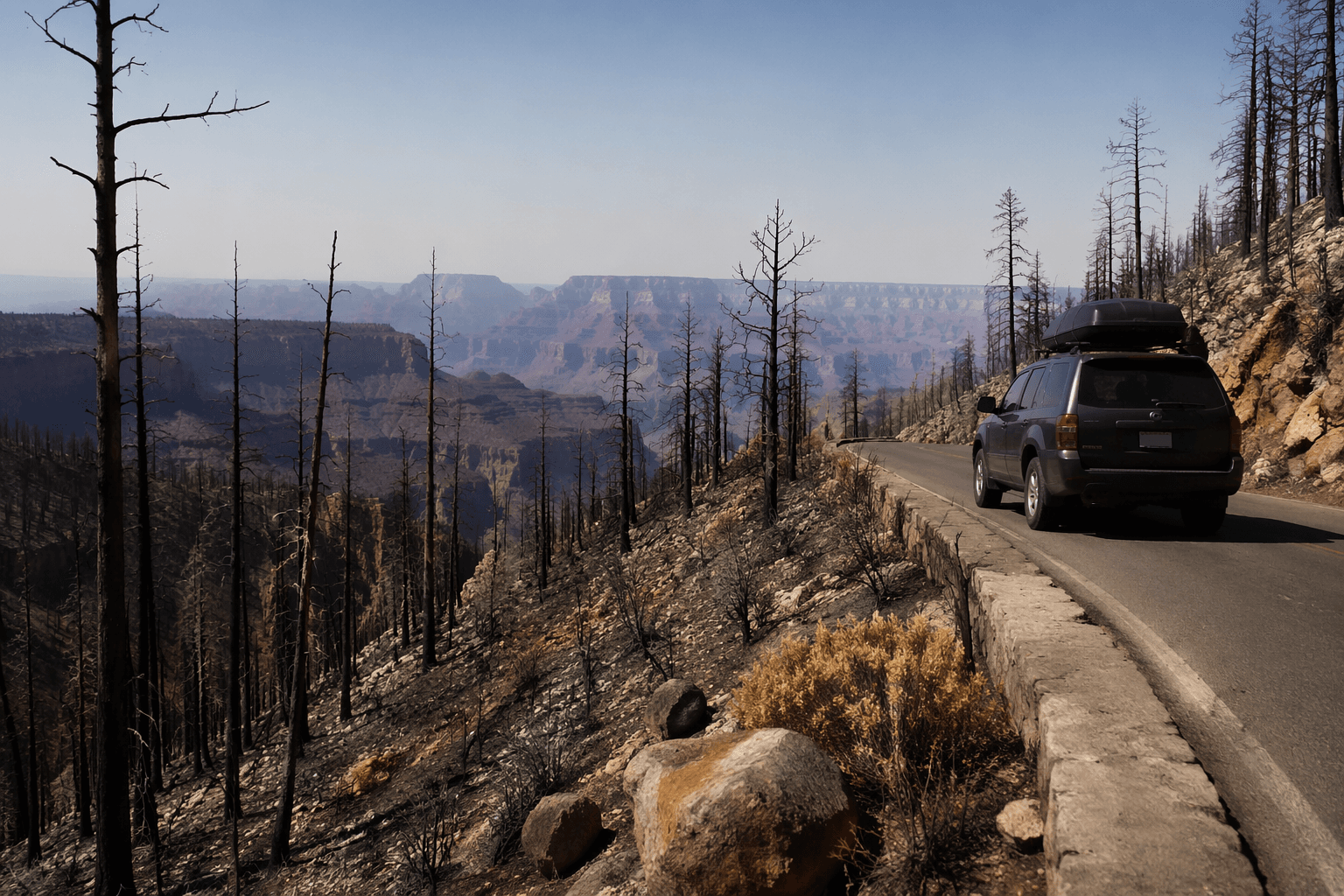
The North Rim is back on the map, but the first thing many visitors see is not a tidy reopening. It is a corridor of charred trees, surviving green pockets and the remains of buildings near the Grand Canyon Lodge area, a reminder that the Dragon Bravo Fire did not just alter the scenery. It changed the trip.
Park officials welcomed the first vehicles through the gate at 6 a.m. on May 15, and the reopening has given travelers access again to one of the canyon’s most sought-after summer rims. But the view now comes with context. The fire ignited on July 4, 2025 and ultimately burned 149,399 acres, including 71,129 acres of Grand Canyon National Park-managed land. In the developed North Rim area, it destroyed the Grand Canyon Lodge and numerous historic cabins. Preliminary assessments put the loss at between 50 and 80 structures.
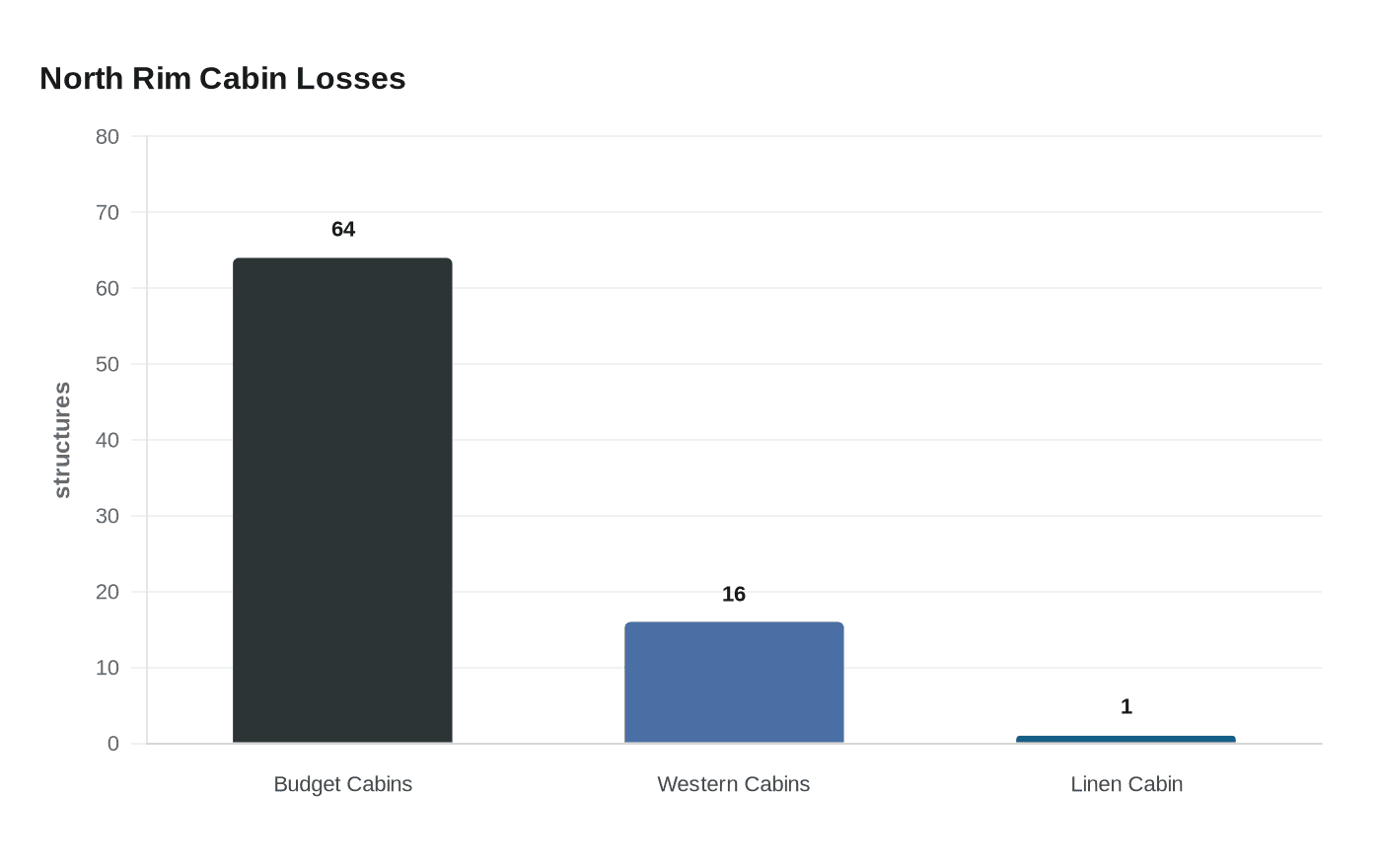
The losses were especially severe around the lodge complex. The National Park Service later said all 64 Budget Cabins were destroyed, along with 16 Western, or Deluxe, Cabins and one historic linen cabin that were or will be removed as total losses. The Grand Canyon Lodge itself carried deep history, first completed in 1928, rebuilt after a 1932 fire, and operating since 1936 before the 2025 blaze ended that run.
For visitors planning a North Rim trip this season, the practical reality is mixed. All paved roads inside the park are open again, including Highway 67, Cape Royal Road and Point Imperial Road, so classic overlooks are back in reach. That means Point Imperial, Cape Royal, Roosevelt Point, Walhalla Overlook and Angels Window are once again part of a workable North Rim itinerary. The North Kaibab Trail reopened on May 15 for foot traffic only, Cottonwood Campground reopened the same day, and the North Rim Campground reopened on June 1. Overnight lodging is not available on the North Rim during the 2026 season, and stock use on the North Kaibab Trail is suspended.
The harder adjustment for most travelers is not the road access. It is the self-reliance. Potable water is not available anywhere on the North Rim this season, including the North Kaibab Trailhead and Supai Tunnel, so visitors need to carry everything they will drink. Park officials also say burned landscapes can raise the risk of flash flooding, debris flows, rock falls, erosion and falling trees, especially during monsoon storms or heavy rain. To manage that, the park has expanded flash flood monitoring in the Bright Angel Creek watershed and approved a plan on May 28 to modernize the water system serving the North Rim developed area and Cottonwood Campground.
That is the real shape of the season now: a North Rim you can reach, a North Rim you can still hike and drive, but also a North Rim that asks you to look straight at the damage before you settle into the view.
This article was produced by Prism’s automated news system from verified source data, official records, and press releases, then run through automated quality and moderation checks before publishing. The system is built and supervised by the people who set the standards it runs under. Read our full AI policy.
Know something we missed? Have a correction or additional information?
Submit a Tip