Australian Builder’s Soma Tiny House Expands Family-Sized Living
Soma pushes tiny-house family living past romance and into real use, with three bedrooms, standing-height walkways, and a footprint that tests road-legal limits.
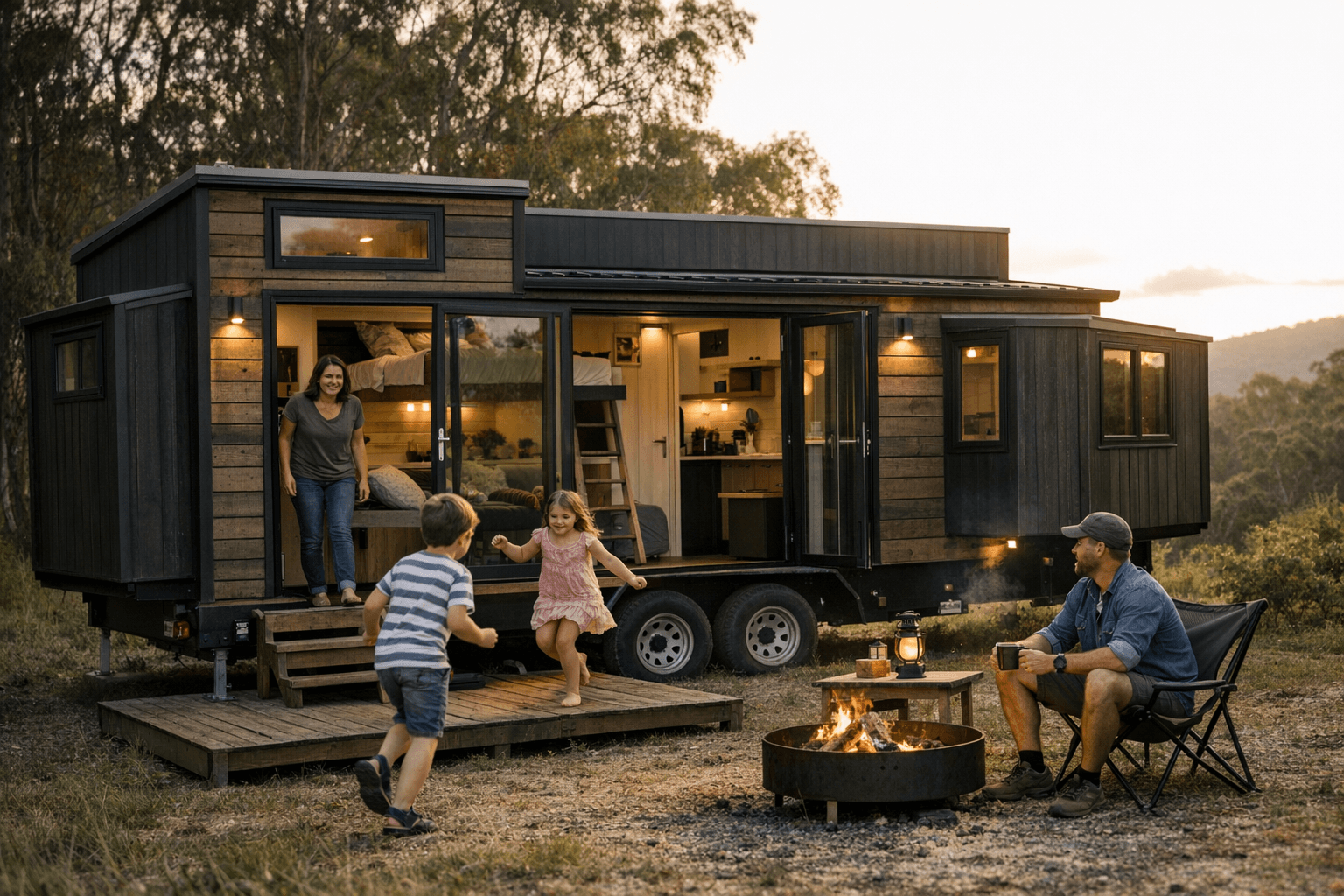
The hard question with Soma is simple: can a 32.8-foot “Tiny Mansion” actually work for a family, or is this just bigger-box marketing in tiny-house clothing? Removed Tiny Homes is betting that the answer is yes, and the layout makes that bet in a very specific way, by trading the usual couple-focused loft-and-lounge formula for real sleeping separation, more storage, and a plan that looks built for everyday family chaos instead of weekend dreaming.
What the Soma is trying to solve
Soma sits in Removed Tiny Homes’ Mansion on Wheels lineup, alongside earlier releases like Onda and Solace, and it pushes hard toward family utility. Homecrux described the home as measuring 32.8 feet long, 11 feet wide, and 14.7 feet high, which gives it a visibly larger stance than the average towable tiny house. That matters because the biggest complaint about many THOWs is not aesthetics, it is living too close to your own stuff and your own people.
Removed Tiny Homes brands Soma as a “Tiny Mansion,” and the name is doing real work here. The company says the home has a full-height downstairs bedroom plus two expansive lofts above, connected by standing-height walkways, which is a very different proposition from the usual tiny house where the loft is just a crawl-in sleeping shelf. Homecrux says the three-bedroom plan can comfortably accommodate six to eight people, and that is the line that will matter most to families deciding whether this is a genuine downsizing option or just an oversized showpiece.
Why the layout feels different from a standard tiny house
The smartest thing about Soma is that it does not pretend one sleeping zone can solve everything. The full-height master bedroom sits behind a pocket door at the far end of the home, and it comes with a king bed and wardrobe, which gives parents or hosts something tiny houses rarely deliver: a real adult room with a door that shuts. That kind of separation is not a luxury flourish, it is what keeps family life from collapsing into a single noisy room after 8 p.m.
Upstairs, the two loft bedrooms are connected by standing-height walkways, and each one has a queen bed and storage. That detail matters because it turns the upper level into circulation space, not just a ladder-access afterthought. The result is a layout that can hold children, guests, or older family members without forcing everyone into the same sleeping pattern, which is the biggest pain point in couple-oriented tiny houses.
The central living area is built around open-plan living and a large kitchen island, and that makes the home feel less like a cabin with beds tacked on and more like a small house arranged to support daily routines. In practical terms, the island becomes prep space, serving space, homework space, and the place where people inevitably gather. That is exactly the kind of multifunctional furniture tiny-house buyers end up valuing most once they stop thinking about floor plans as diagrams and start living in them.
The kitchen, bathroom, and storage story
Soma’s L-shaped kitchen uses generous cabinetry and modern appliances, which is what you want if the home is meant for six to eight people instead of two. In a family-size tiny house, storage is not an accessory; it is the difference between a workable plan and a mess that becomes permanent by week three. The kitchen island, cabinetry, and wide open-plan living zone suggest Removed Tiny Homes understands that families need places to put food, school gear, bedding, and the thousand small items that make a house livable.
The bathroom is also laid out with household use in mind. Removed Tiny Homes lists a glass shower, vanity sink, washer-dryer unit, toilet, and cabinet, and that washer-dryer inclusion is a serious livability marker. A tiny house can get away with a romantic bath setup in a couple’s build, but once children enter the picture, laundry capacity and bathroom storage become daily friction points, not side notes.
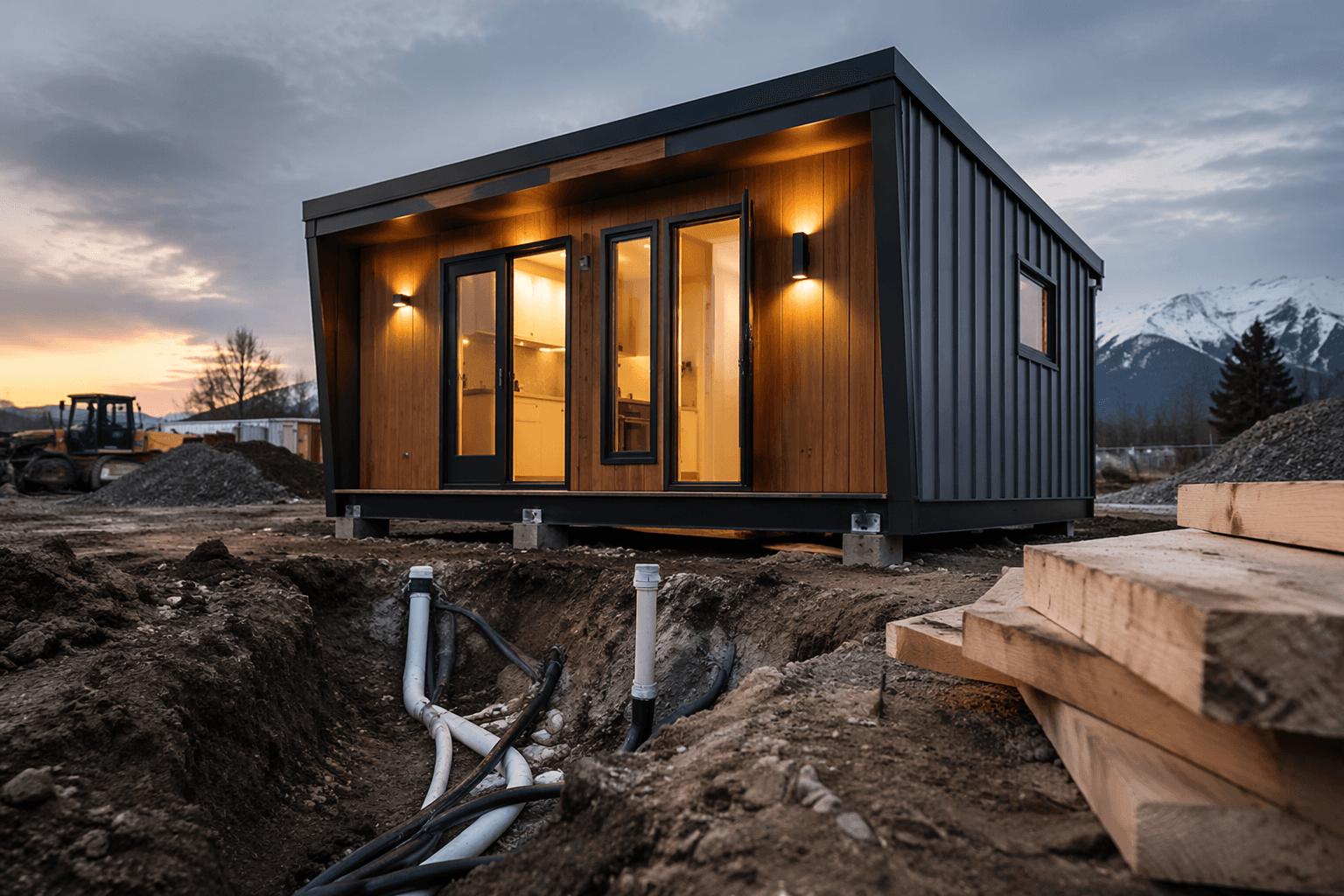
The exterior keeps the same practical tone. Board-batten and metal cladding give the home a more architectural look than a novelty shell, while two glass French doors and multiple windows keep the interior bright and airy. That light matters in a compact home because visual openness can make a small footprint feel tolerable long after the novelty has worn off.
How Soma fits into the broader Removed Tiny Homes pitch
Removed Tiny Homes says it was founded to build architect-designed, sustainable, off-grid homes, and that mission shows up in the way the company frames its buyers. It is not pitching only to retirees or minimalists; it specifically markets to downsizers with families, retirees, first-home buyers, and people looking for supplementary income or mortgage-free living. That broad target tells you the company sees tiny living less as an aesthetic movement and more as a housing strategy.
Soma also makes more sense when placed next to Onda, which Removed describes as a “world-first layout” with three downstairs bedrooms and an elevated upper level for the kitchen, bathroom, and main living space. Onda and Soma are part of the same design philosophy: if you cannot make tiny living feel spacious, then make it organized, segmented, and capable of handling more than one household role at a time. The difference is that Soma leans more openly into the “mansion on wheels” idea, with its full-height bedroom and twin lofts connected by walkways.
That is why Homecrux’s framing lands. The story is not about a tiny house becoming less tiny for the sake of it; it is about tiny-house design moving away from romantic minimalism and toward household utility. For a lot of buyers, that shift is the whole game.
The legal and buying reality
There is a catch, and it is the one that always follows oversized towable builds: road-legal dimensions. Australian tiny-house explainers say road-legal THOWs generally have to stay within about 2.5 metres wide, 4.3 metres high, and 12.5 metres long. Soma’s 11-foot width puts it well above that typical width guidance, which means it is a notably oversized towable unit and may be more complicated to move than a standard tiny house on wheels.
That complication is exactly why local rules matter as much as the build itself. Australian regulation guides note that council requirements can vary widely even when a home fits vehicle dimensions, so a buyer cannot stop at the tow-limit conversation. The real test is whether the intended site, transport plan, and council rules all line up before the build order goes in.
Removed Tiny Homes is clearly trying to reduce some of that friction with a straightforward sales setup. The company says its Tiny Mansions launch included a limited Luxury Living Upgrade Pack on the first five builds, a $5,000 deposit locks in a build slot, and licensed trades complete the home in about 10 to 12 weeks after contract signing. That is a fairly fast turnaround for a custom home, but it also reinforces that this is a serious purchase, not an impulse buy.
Bottom line on Soma
Soma works best if you judge it as a family housing solution first and a tiny house second. The full-height master bedroom, the two lofts with standing-height walkways, the open-plan kitchen island, and the laundry-ready bathroom all point in the same direction: this is a build meant to solve the daily annoyances that make most tiny houses feel temporary or cramped.
What it does not solve is the complexity of moving a very wide towable home through Australia’s road and council framework. That is the trade-off baked into the concept. If the goal is a compact house that can actually hold a family without everyone stepping on each other, Soma makes a convincing case; if the goal is easy towing and standard THOW simplicity, this one is already bigger than the category’s comfort zone.
This article was produced by Prism’s automated news system from verified source data, official records, and press releases, then run through automated quality and moderation checks before publishing. The system is built and supervised by the people who set the standards it runs under. Read our full AI policy.
Did this article answer your question?