Birmingham Launches Tiny Shelter Village to House and Support Unhoused Residents
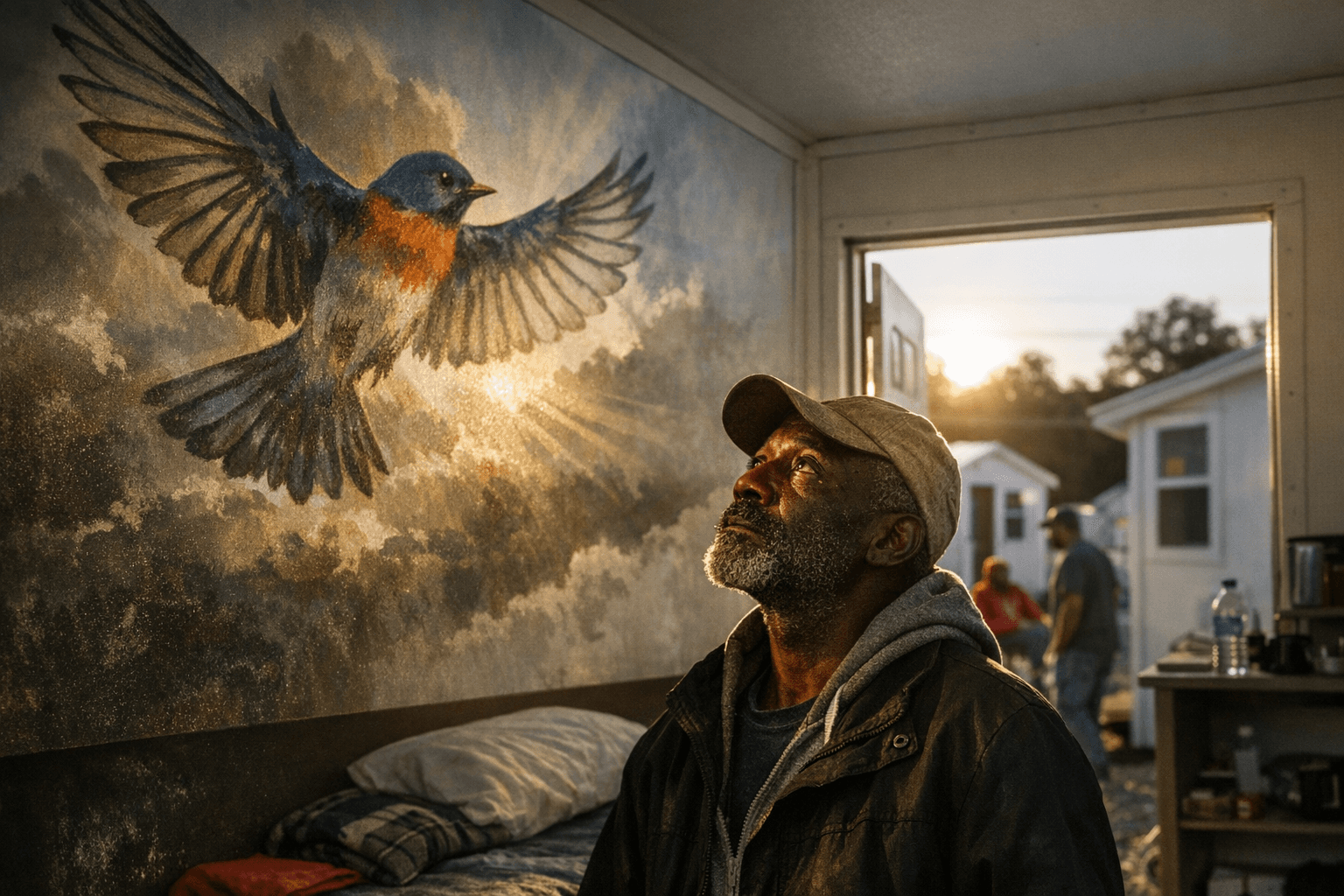
Michael Toliver looked up at a bird mural inside Birmingham's new 14-unit tiny shelter village and knew: "This is my house right here."
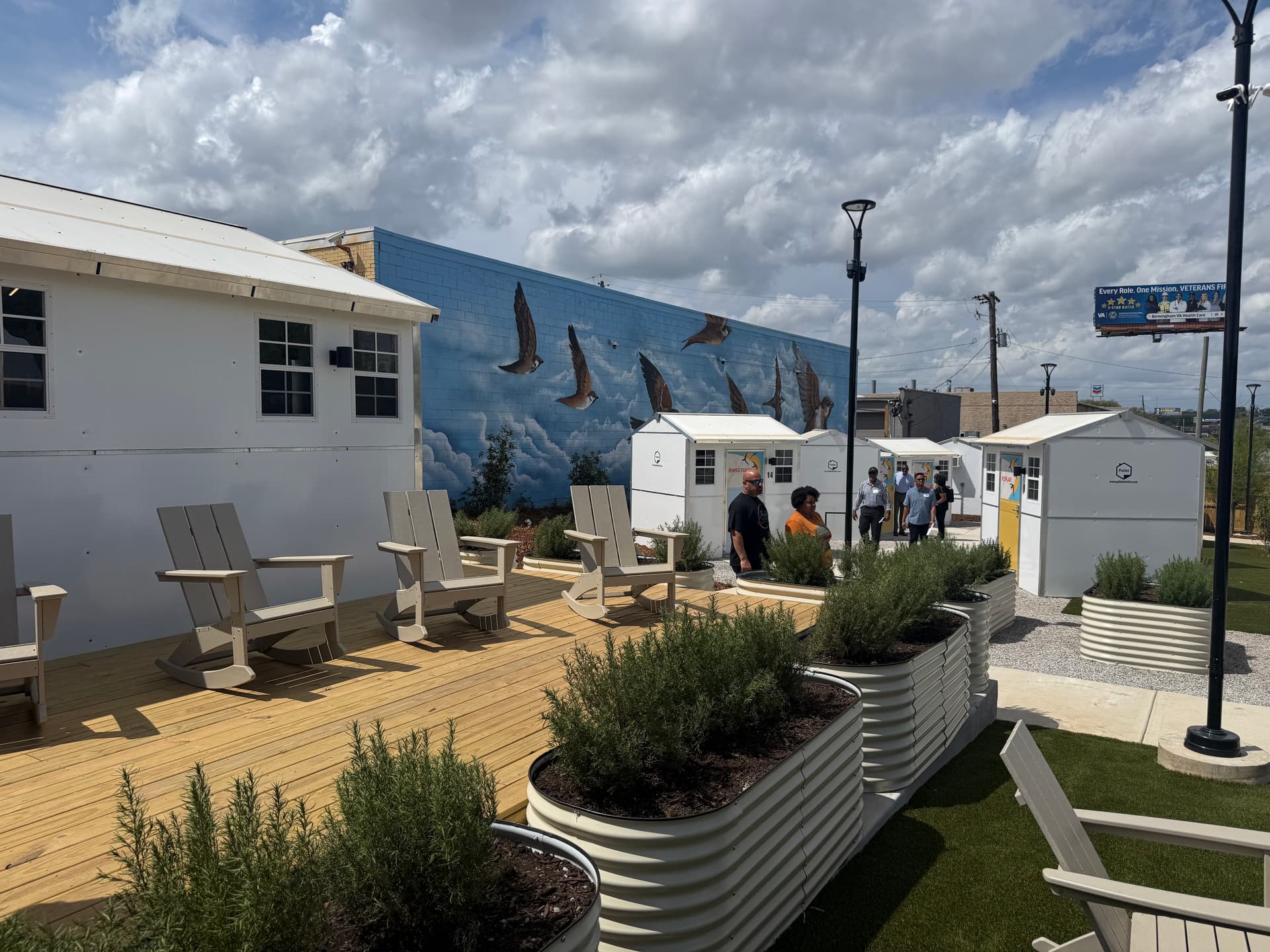
Birmingham opened its first tiny-shelter community last week, admitting a dozen residents to a 14-unit pallet-style village called Home For All, a partnership between the city and Faith Chapel Care Center designed to bridge the gap between the street and permanent housing.
The pilot site sits just west of downtown and centers on a community building flanked by 14 lockable individual shelter units, each outfitted with a bed and basic amenities. That detail, lockable doors, matters in the tiny-shelter model: privacy and personal security are what separate these units from congregate emergency shelters, and they're often what unhoused individuals cite when explaining why they avoid traditional shelters altogether.
Michael Toliver, among the first residents accepted into Home For All, found meaning in something simpler. Inside the community center, a mural of a bird caught his eye. He looked up at it and felt, as he put it, "Well this is my house right here." He described the mural as a daily reminder to keep pushing, the kind of psychological anchoring that advocates argue modest but dignified housing can provide.
Beyond the physical structure, the program wraps each resident in coordinated services: a dedicated case worker, employment training, and community service participation as part of program engagement. The explicit pairing of private shelter with job-readiness support is what distinguishes Home For All from warehouse-style emergency beds and aligns it with the housing-plus-services model that has shown the most promise in moving people into stable long-term housing.
Birmingham and Faith Chapel Care Center are running Home For All as a pilot, which means the program's real test starts now. The immediate metrics are straightforward: occupancy, participation rates in employment training and case management, and neighborhood impact near the west-downtown site. Over a 6- to 12-month horizon, the city will need to show that residents are exiting into permanent housing, not cycling back to the street.
The stakes extend beyond Birmingham. Mid-sized Southern cities face mounting pressure around homelessness, and few have the land inventory or capital of larger metros to build permanent supportive housing at scale. Pallet-style shelters can be stood up quickly on smaller parcels, and the operational cost per unit is a fraction of traditional shelter beds or new supportive housing construction. If Home For All's 14-unit model produces measurable exits to stable housing, it becomes a replicable blueprint.
The open questions are ones every pilot of this kind faces: whether the city secures recurring operational funding beyond the initial window, whether neighborhood acceptance holds as the site becomes established, and whether outcome data gets collected rigorously enough to actually drive expansion decisions. Those answers will start coming into focus over the next several months.
Know something we missed? Have a correction or additional information?
Submit a Tip