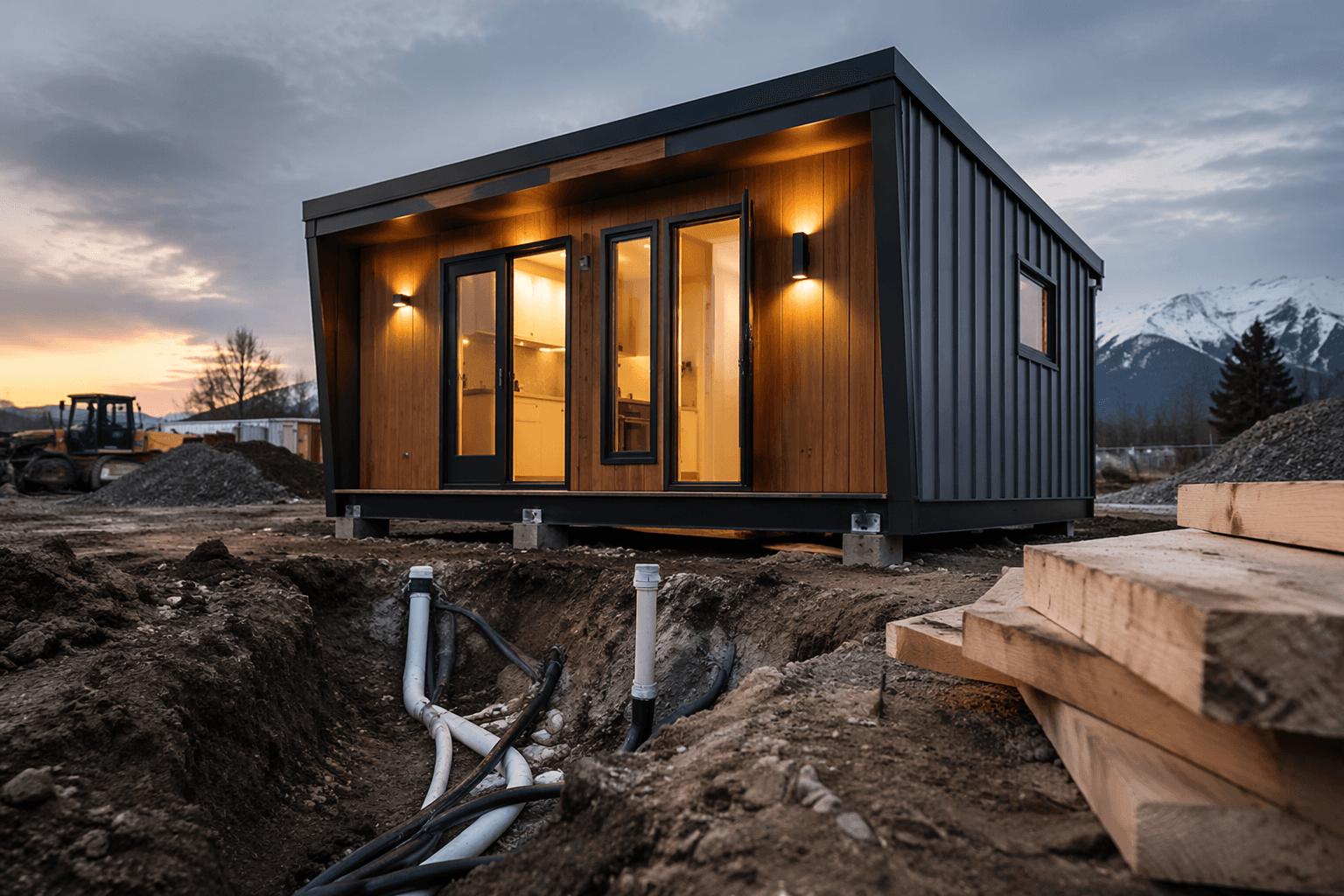
Craft House rethinks tiny-house layouts with full kitchen and bedroom
Justine flips the tiny-house script: no sofa-first lounge, just a real kitchen, a proper bedroom, and a layout built for daily use.
A tiny house that chooses cooking over couch culture
Justine makes its point fast: it gives up the familiar living room-first tiny-house formula so the kitchen, dining area, and bedroom can actually work like real rooms. In a 27.5-foot footprint, that is not a gimmick. It is a blunt layout decision, and it changes how the home feels the minute you step inside.
That tradeoff is the whole story here. Instead of forcing daily life around a cramped sofa zone and a lofted bed, Craft House built a single-level plan that leans into what many tiny-house owners really do at home: cook, eat, work, and sleep. The result is a compact home that reads less like a weekend cabin and more like a small, permanent apartment on wheels.
Why the layout stands out
The biggest shift is simple: there is no conventional lounge taking up the middle of the house. That space is redirected toward a full kitchen and a dining area that can pull double duty as a work spot or a place to relax. For tiny-house living, that matters because the “living room” in many builds ends up being the least-used square footage in the house.
Justine’s social center is a round table that seats four, which is a more practical move than squeezing in a tiny sectional and hoping it passes for comfort. If you actually host people, eat at home, or work from a laptop, the table earns its keep every day. This is the kind of layout shift tiny-house buyers should study closely, because it tests whether a house should be organized around lounging or around daily routines.
A kitchen built like it matters
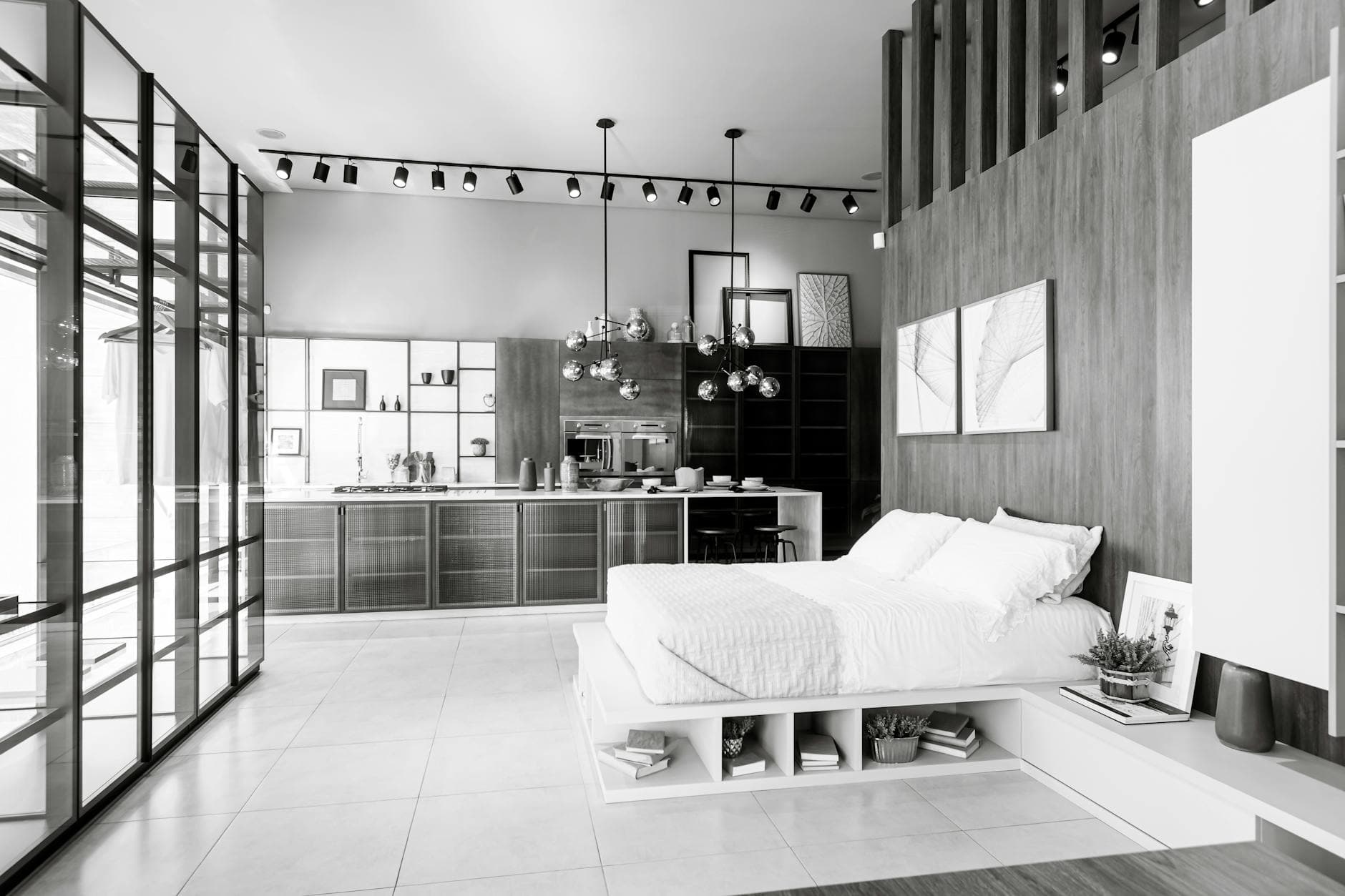
The kitchen is the strongest argument for the whole design. Craft House did not treat it like an afterthought jammed into a corner. It comes with high-strength plywood cabinetry, a sink, an induction hob, an oven, and a refrigerator, which gives it the feel of a compact apartment kitchen rather than a stripped-down cabin setup.
That matters because kitchen quality often decides whether a tiny house feels livable after the novelty wears off. A decent counter run, real appliances, and enough storage turn a tiny home from “cute” into functional. Justine’s kitchen is the room that tells you this home was designed for repeated use, not just weekend photos.
A bedroom that stays on the main floor
The other smart move is the bedroom placement. Instead of putting sleeping space in a loft and asking buyers to climb every night, Craft House put a proper bedroom at the opposite end of the house. It fits a queen-size bed plus a wardrobe, which means two people can sleep there in relative comfort without treating bedtime like a workout.
That choice makes Justine easier to live in year-round. It also removes one of the biggest tiny-house compromises: climbing to bed, dealing with low ceiling clearance, and giving up usable storage to a sleeping loft. There is still a small loft above the bathroom, but that space is reserved for luggage storage, which is exactly the kind of narrow-use loft that makes sense in a small build.
Bathroom, storage, and the rest of the floor plan
At the rear, the bathroom keeps the footprint tight without feeling bare. It includes a glass-enclosed shower, toilet, and vanity sink, covering the essentials in a compact but complete package. The placement also helps the rest of the house stay open, since plumbing and private-use space are consolidated at one end.
The small loft above the bathroom is one of the better details in the house because it preserves floor space where it counts. Too many tiny homes spend their loft budget on a bed whether the owner wants one or not. Here, the loft works as storage, which is far more useful for seasonals, spare bedding, and luggage.
Materials and exterior details give it a finished look
Justine’s exterior is wrapped in thermo-pine siding with standing-seam metal detailing, a combination that gives the house a more polished, modern face. The double glass entry door and multiple windows help pull daylight into the interior, which is especially important in a home that does not rely on a big open lounge to feel spacious.
Inside, Scandinavian spruce runs across the walls, ceilings, and flooring. That does two jobs at once: it warms up the compact interior visually and keeps the finishes coherent, so the house feels intentionally designed instead of pieced together room by room. In a small space, that consistency is not just cosmetic. It helps the house feel calmer and less chopped up.
What the numbers say
Craft House lists Justine as a fully functional mobile home for year-round use, approved for road traffic. The company gives the dimensions as 8.4 meters long, 2.5 meters wide, and 3.5 meters to the roof ridge, which puts the house squarely in the travel-ready tiny-home category.
The usable area is broken down as 4.4 square meters for the bedroom, 10 square meters for the living room zone, and 2.6 square meters for the bathroom. That breakdown explains the design logic better than any lifestyle pitch could. The house does not chase an oversized communal room; it spreads the space toward the kitchen, sleeping area, and core functions buyers actually need.
The price is listed at 199,000 PLN net, about $55,000. That places Justine in a middle-market bracket for buyers who want a move-in-ready, all-season tiny home instead of a shell they still have to finish themselves.
The optional extras show where the platform can go
Craft House also offers add-ons like a fireplace, terrace, garden furniture, and off-grid features. Those options widen the appeal without changing the core idea of the house, which is still a practical, road-legal mobile home with a deliberate interior plan. The fact that it runs on standard RV-style hookups also makes it easier to plug into existing setups without special infrastructure.
That broader catalog matters too. Justine sits alongside other Craft House models such as Adams, Tommy, Katrin, Erica, Françoise, Angela, Off Grid, and Mini, so this is not a one-off experiment. It looks more like part of a company-wide design direction: build tiny homes that behave less like novelty cabins and more like small, usable homes.
Who this layout is really for
Justine is not trying to win over people who want a plush sofa, a giant TV wall, and a lounge-first floor plan. It is aimed at buyers who would rather have a real kitchen, a real bedroom, and a dining table that actually gets used. That is a meaningful shift in tiny-house thinking, because it asks a sharper question: what space do you really use every day?
For anyone comparing layouts, that is the comparison worth making. A standard tiny house often prioritizes the idea of hanging out. Justine prioritizes the act of living.
This article was produced by Prism’s automated news system from verified source data, official records, and press releases, then run through automated quality and moderation checks before publishing. The system is built and supervised by the people who set the standards it runs under. Read our full AI policy.
Did this article answer your question?