Erie County ends tiny-homes project after funding shortfall stalls completion
Christina Vogel killed Erie County’s 25-unit tiny-home push after it sat unfinished for months, with no budget for maintenance, liability, or the permits to open.
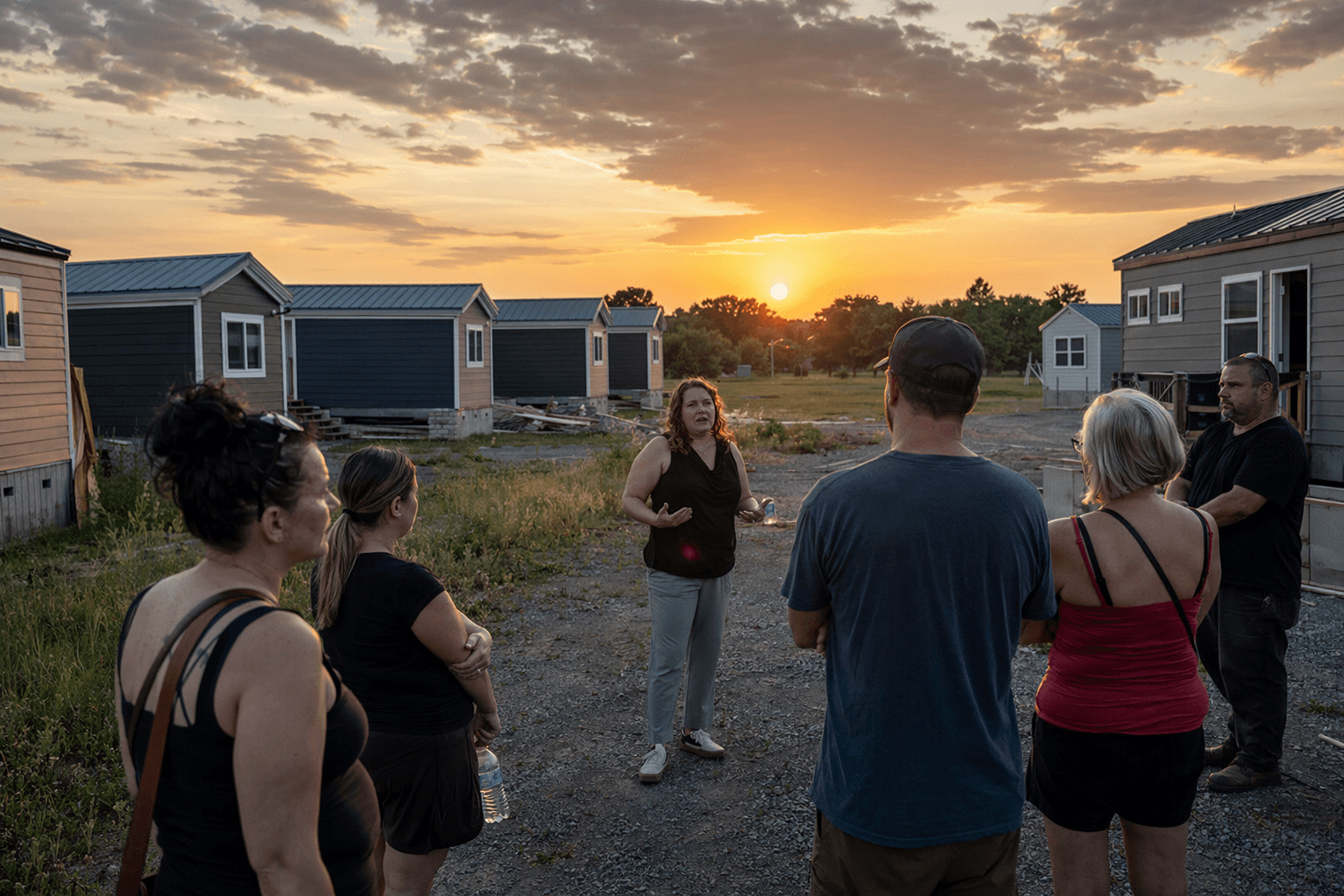
Christina Vogel shut down Erie County’s tiny-homes experiment after the county spent COVID-relief money on construction but never lined up enough funding, permits, or operating support to turn the shell of a village into usable housing.
The termination came on April 27, 2026, ending Brenton Davis’s Pathway Home Village proposal for 25 units near East 16th Street and Wallace Street, next to the Community Resilience Center and Erie County Prison. Davis had pitched the site as transitional housing for people experiencing homelessness, with 15 homes designed for two people each and 10 two-story units intended for small families.
What was left behind was a project caught between a build and a program. The units had exterior and interior framing, but they still needed to meet code, and city officials had already raised fire-safety concerns about electrical work done without the proper approvals. In practical terms, the county had structures on the ground but not functioning homes.
Chris Groner, the county administration director, said the previous administration used American Rescue Plan money to build the units, but never identified the ongoing costs for maintenance and liability, and those expenses were not in the county budget. Erie County’s ARP allocation was $52,391,502, but the county said it would take more than $2 million just to finish the project, before adding the long-term operating costs that usually decide whether a tiny-home community survives.

That missing operating plan is where Erie County’s version fell apart. The county had moved from the original tiny-home pitch toward a broader homeless-services strategy, including a later homeless program at the Community Resilience Center, but the village itself still had not cleared the final permitting hurdles. By early 2026, the county’s plans were still going through city and Building Standards and Safety Bureau review.
The county then began exploring whether a homeless-service agency could take over the site instead of running it itself. Mercy Center for Women was floated as a possible successor, but nonprofit leaders warned that the project was still an empty shell that needed mechanical, electrical, plumbing, and financing work before any resident could move in.
That is the hard lesson in Erie County’s collapse: tiny homes are the visible part, not the expensive part. The real test is whether the county, city, and an operator can pay for code compliance, utilities, maintenance, staffing, and liability before the first resident arrives. Erie County never got there, and Christina Vogel made the termination call rather than keep carrying a project that had already stalled out.
This article was produced by Prism’s automated news system from verified source data, official records, and press releases, then run through automated quality and moderation checks before publishing. The system is built and supervised by the people who set the standards it runs under. Read our full AI policy.
Did this article answer your question?