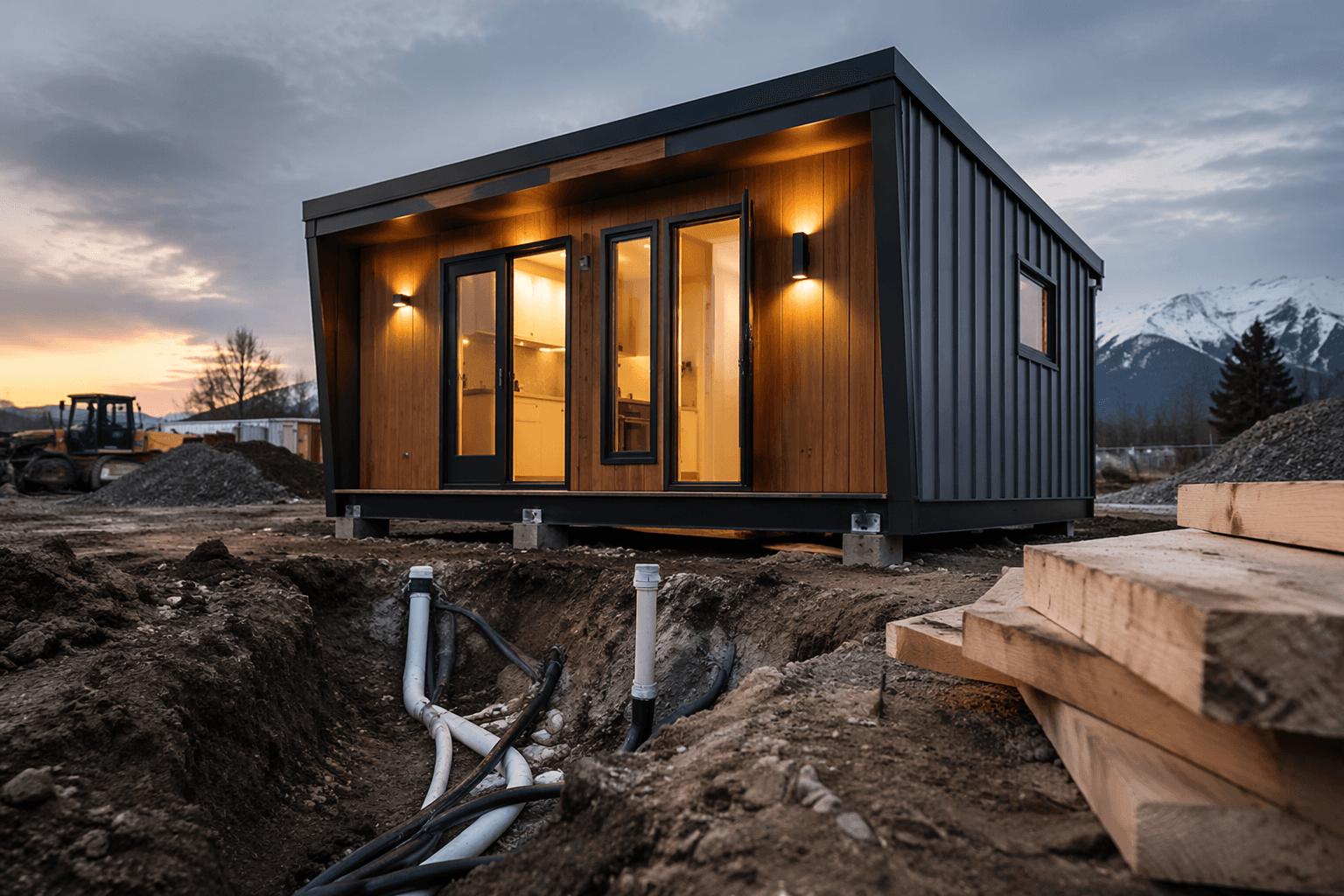
Recycled Aluminum Could Make Tiny Houses Greener, Lighter, and Stronger
Recycled aluminum cuts production energy by about 95% and solves the tiny-house problem that matters most: weight.
.jpg&w=1920&q=75)
Why recycled aluminum belongs in the tiny-house conversation
Tiny houses live or die on material choices. Every stud, panel, and finish affects tow weight, trailer load, maintenance, and how hard the build is on the planet, which is why recycled aluminum fits this space better than most people expect. It is not just a green talking point. It is a practical building material with hard numbers behind it: lighter than many common alternatives, durable enough for real-world use, and backed by a recycling system that already feeds old cans, window frames, and automotive parts back into new products.

The strongest case starts with energy. The Aluminum Association says recycling aluminum takes about 5% of the energy required to make new aluminum, and the International Aluminium Institute’s 2019 comparison puts that gap at 186 gigajoules per tonne for primary aluminum versus 8.3 gigajoules per tonne for recycled aluminum, a 95.5% energy saving. That is the kind of difference tiny-house builders should care about, because it changes the material’s climate footprint before the first wall panel ever gets cut.
Why the climate math is so compelling
Aluminum is unusual because it can be recycled over and over without losing its inherent value. The Aluminum Association describes it as 100% recyclable, and notes that roughly 75% of all aluminum ever produced is still in use today. That matters in tiny-house construction because the material does not just perform well once, then vanish into a landfill. It can stay in circulation, which is exactly the kind of circular logic small-home builders already like to talk about, but rarely get to prove with one material.
The supply chain is not hypothetical either. The industry already has a strong scrap stream built around window frames, beverage cans, automotive parts, and similar sources. Those inputs are cleaned, sorted, melted, and reused, and the Aluminum Association says more than 80% of U.S. aluminum production is recycled or secondary aluminum. In other words, this is a mature material system, not a boutique experiment.
The emissions numbers sharpen the point. The International Aluminium Institute says recycled aluminum production in its cited comparison emitted 0.52 tonnes of CO2e per tonne. For a community that pays close attention to embodied carbon, that is not a side note. It is the kind of data that can actually influence what gets specified on a bill of materials.
Where recycled aluminum earns its keep in a tiny build
The real beauty of recycled aluminum is that the environmental case and the construction case line up. Tiny houses, especially towable ones, are brutally sensitive to weight. A few extra pounds can push a trailer beyond its gross vehicle weight rating, change axle requirements, or force compromises in layout and finish. That is why Tiny House’s weight guidance emphasizes regular weigh-ins at certified scales and recommends lightweight materials such as aluminum framing and composite decking.
Aluminum’s high strength-to-weight ratio gives builders room to work without piling on bulk. That can mean a house that is easier to move, less punishing on the chassis underneath, and more forgiving when you are trying to keep the whole structure within transport limits. If you have ever watched a tiny build creep upward in weight one choice at a time, you know how fast the wrong material can wreck the plan. Recycled aluminum is attractive precisely because it helps solve that problem without giving up durability.
This is also where recycled aluminum can outperform some heavier, more maintenance-hungry options. It resists the kind of rot and moisture issues that make wood systems more vulnerable in certain applications, and because it is already widely recycled, it aligns with the low-impact mindset many tiny-house owners are after. The point is not that aluminum should replace every natural material in a build. The point is that in the right places, it can do several jobs at once.
What builders can actually use it for
In practice, recycled aluminum makes the most sense anywhere weight and durability matter at the same time. Framing elements, exterior components, trim, and select structural parts are all obvious candidates, especially in homes designed to travel. The material also makes sense when you want a cleaner maintenance profile and a build that does not fight the trailer from day one.
A sensible tiny-house approach with aluminum looks like this:
- Use it where pounds matter most, especially in towable designs.
- Check the finished home on certified scales, not just in theory.
- Keep a close eye on the trailer gross vehicle weight rating.
- Pair aluminum with other lightweight materials, such as composite decking, when that combination lowers total mass without cutting performance.
That is the practical side of the argument, and it is the part that should interest builders most. Recycled aluminum is not just a sustainability badge. It is a way to make a small house easier to move and less demanding on the structure that carries it.
Why this is bigger than one material choice
Tiny houses have always been about more than floor-area math. The movement’s deeper logic is restraint, efficiency, and deliberate building decisions, and that logic stretches back much further than the modern social-media version of the trend. JSTOR Daily points to Caroline Bartlett Crane, who designed an award-winning tiny home in Kalamazoo, Michigan, in 1924. That history is worth remembering because it shows that compact housing has long been tied to better use of space and resources, not just novelty.
Recycled aluminum slots neatly into that older idea. It answers a modern set of pressures, lower emissions, lighter trailers, easier transport, and less waste, without asking tiny-house builders to sacrifice structural usefulness. As the market matures, the winners are likely to be the materials that solve multiple problems at once. Recycled aluminum does exactly that, which is why it deserves a serious place in the next generation of tiny homes.
This article was produced by Prism’s automated news system from verified source data, official records, and press releases, then run through automated quality and moderation checks before publishing. The system is built and supervised by the people who set the standards it runs under. Read our full AI policy.
Did this article answer your question?