Seattle Tiny Home Village Offers Fentanyl Smoking Shacks Funded by Taxpayers
A viral video of Seattle's Interbay Village showed a tiny home used as a fentanyl den. LIHI then blacklisted the activist who posted the footage.
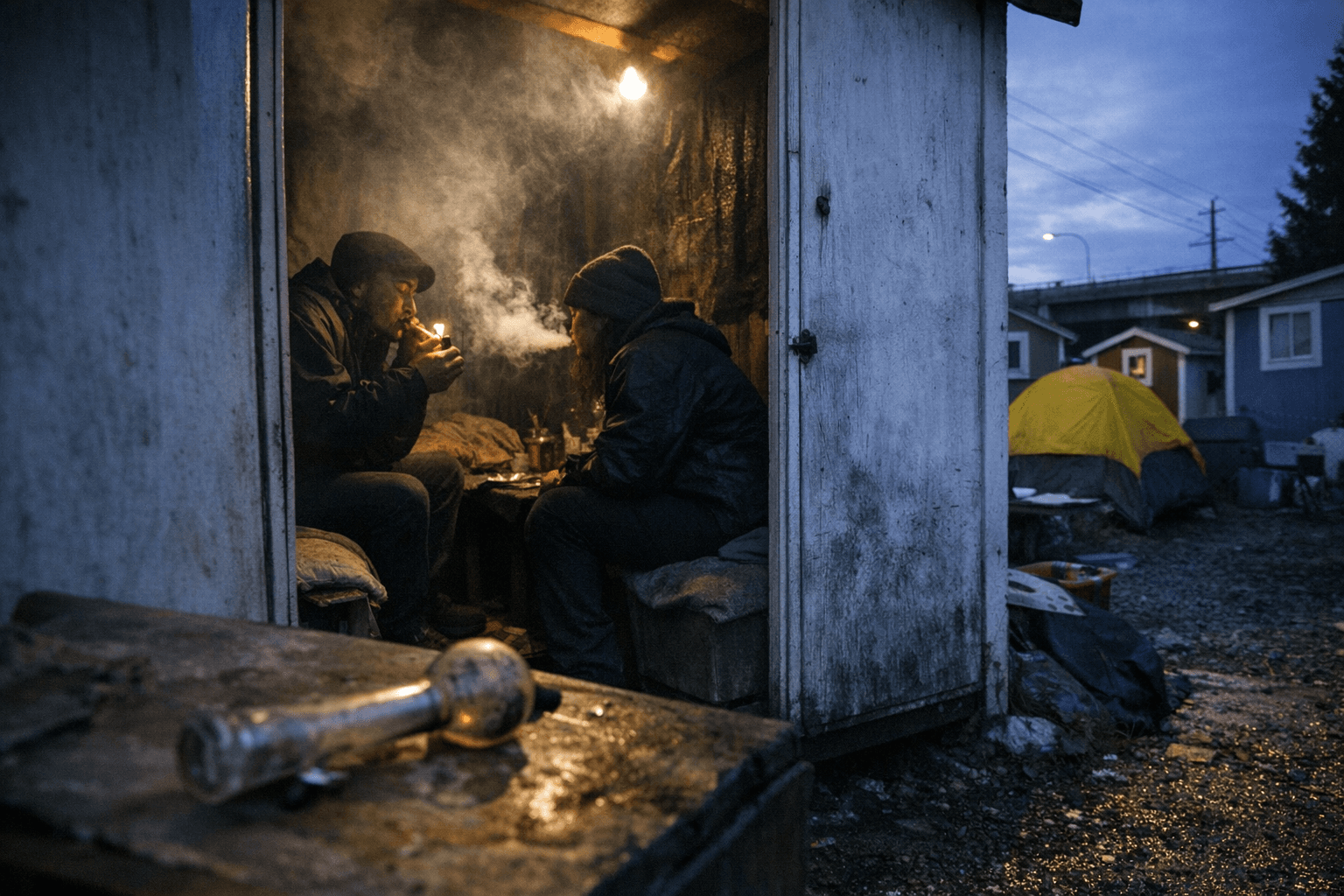
A resident of Seattle's Interbay Village Tiny Home Community walked Andrea Suarez through the property and stopped in front of an empty tiny home with a few chairs inside. That unit, the resident told Suarez, was where other residents went to use hard drugs, including fentanyl, often alongside the drug dealer who also lived in the village.
Suarez, founder of We Heart Seattle, posted the video to X. Within days it had been viewed by more than 100,000 people. Operators of Interbay Village, run by the Low Income Housing Institute (LIHI), then told her she was no longer welcome on the property.
"That film was actually taken a few weeks ago, and when I went back to visit my client at that village a couple days ago, I had four or five staff come out of the woodwork and tell me, 'oh, by the way, you're blacklisted, you're not allowed to come here anymore,'" Suarez said. Village managers told her the reason was that someone had filmed without permission.
The controversy put a spotlight on how LIHI operates Interbay Village and similar taxpayer-funded tiny house communities across Seattle. The villages are framed by their operator as "harm reduction" housing: low-barrier or no-barrier facilities where drug use is openly permitted and treatment is not required. Critics say the policy amounts to enabling addiction.
Suarez argued that most taxpayers have no idea they are funding these projects. "The definition of harm reduction is to give people a place to live, to stabilize, and put the oxygen mask on so that they can have a better chance at accessing resources, treatment, mental health care, versus a tent," she said. "But what we saw there, and what we've always known, is that drug use is allowed inside the tiny house villages. They just often turn into trap houses and drug dens and places to have your friends over and use drugs."
The units in question have been described as "fentanyl smoking shacks" and "safe consumption" sites operating inside the village, with Narcan oversight standing in for treatment protocols. When LIHI Executive Director Sharon Lee was asked directly whether these controversial safe consumption sites exist on her properties, she declined to give a yes or no answer.
Reports claim taxpayer funding underwrites the harm-reduction model at Interbay Village, with plans to expand the number of such villages ahead of the FIFA World Cup coming to the region. LIHI has not provided a public statement addressing the specific allegations raised in Suarez's video.
Know something we missed? Have a correction or additional information?
Submit a Tip