ARP 2600 defined modular synthesis for practical musicians
The ARP 2600 made modular patching playable without a wall of modules. Its fixed core, patch points, and keyboard turned complexity into an instrument.
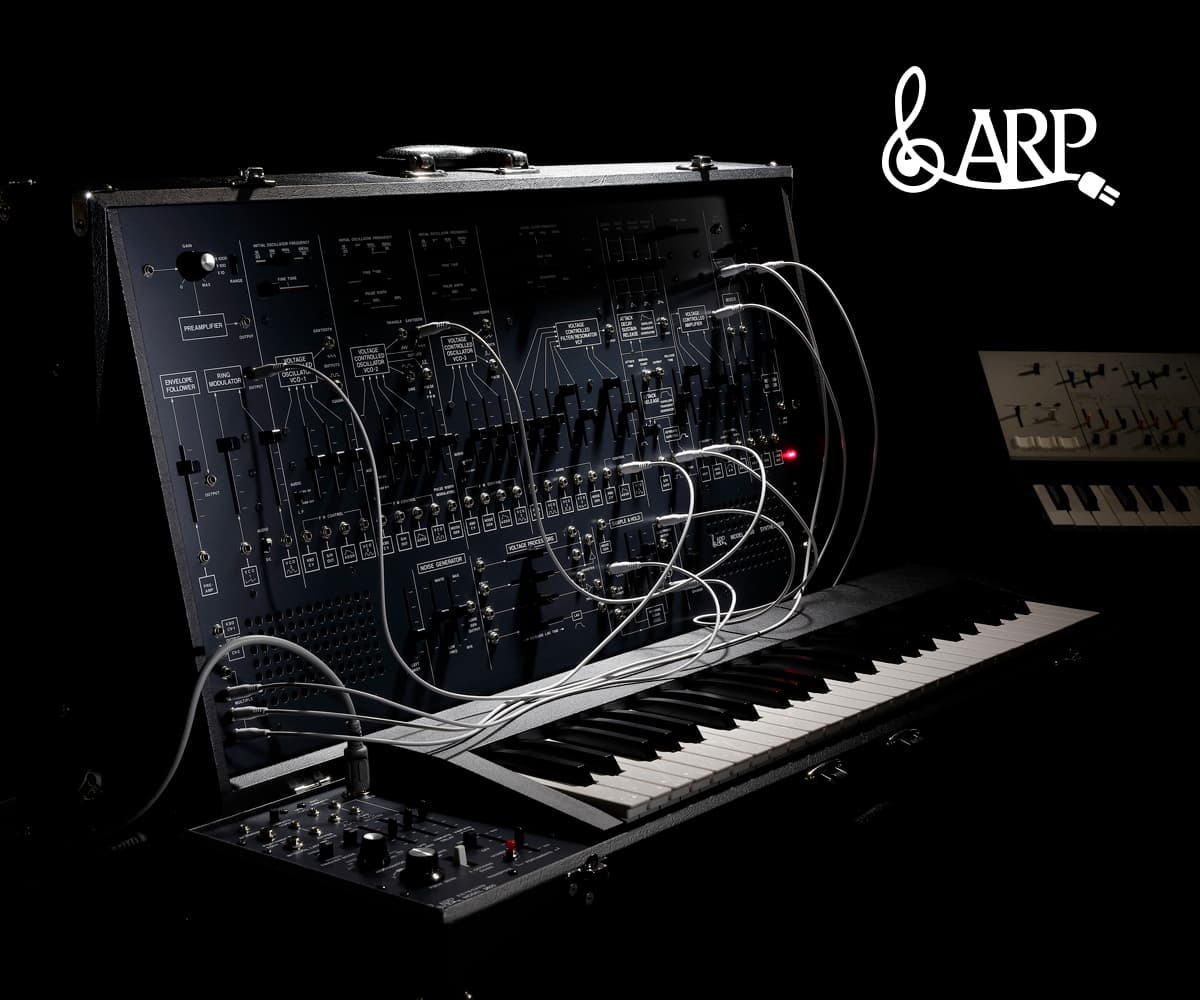
The ARP 2600 solved a problem vintage players still recognize: how do you get modular-style flexibility without turning the studio into a maintenance project? Its answer was a semi-modular monophonic design with a fixed internal signal path that could be rerouted through clearly labeled patch points, so the instrument stayed compact, stable, and fast to play. That is why it became ARP’s practical alternative to a full modular system and why it still reads like a gateway drug for collectors who want hands-on complexity without committing to a room full of modules.
A modular mindset, but playable
The 2600’s big idea was not just that it could be patched. It was that the patching was already organized around a working instrument. Vintage Synth Explorer describes it as a semi-modular monophonic synthesizer that was user-friendly enough to serve as a teaching instrument, and that dual identity is the key to understanding its appeal. You were not building a synth from scratch every time you sat down; you were moving through a pre-wired architecture and deciding which parts of it to override.
That made the 2600 feel different from many competing systems of the era. The fixed modules gave it a dependable center of gravity, while the patch cords let you break the normal flow whenever you wanted something stranger. In practice, that meant a musician could move from standard subtractive sounds into more experimental routing without losing the plot, which is exactly the kind of immediacy that made the machine useful in classrooms, studios, and serious private setups.
The architecture that mattered
The 2600 was not a vague concept box. Its core voice path was built around three oscillators, a 24 dB per octave filter, an ADSR envelope, a VCA, and a mixer. Around that sat the pieces that gave it character and flexibility: an envelope follower, ring modulator, noise generator, LFO with sample and hold, built-in spring reverb, and a preamplifier with stereo speakers.
That layout is why the 2600 remains so easy to discuss in sound-design terms. The oscillator section gives you the raw weight, the filter gives you the familiar ARP sweep, and the sample-and-hold and envelope follower open the door to more animated, less predictable patches. The built-in spring reverb and speaker section also matter more than they sound on paper, because they made the instrument feel more complete and immediately usable than a bare-bones modular cabinet.
The real trick was normalization. The signal path already worked before you touched a patch cord, so the synth could behave like a normal keyboard instrument until you decided otherwise. That is the difference between a machine that invites experimentation and one that demands maintenance before inspiration.

Why the keyboard changed the game
The 2600’s keyboard integration is one of the reasons it mattered beyond the lab. A fully modular rig could be wonderfully deep, but it often separated the player from the instrument in a way that slowed down experimentation. The ARP 2600 put performance control and patching in the same chassis, which changed what “playable experimentation” meant in synthesizer history.
Korg’s modern ARP 2600 FS materials frame the instrument as a bridge between the individual elements of modular synthesis and the immediacy of a production and performance instrument, even calling it a complete sound design studio. That is a fair description because the 2600 was never just a training tool or just a studio effect box. It was a keyboard that could act like a small modular system when you needed it to, and that dual role made it useful to musicians who wanted to learn synthesis by doing rather than by diagram.
The model history tells the collector story
ARP produced the 2600 from 1971 to 1980, and the total run across all variants was only about 3,000 units. Production reportedly peaked in 1973 and 1974, which helps explain why the instrument has become so hard to find in clean condition. The model family moved through several revisions, including the 2600, 2600C, 2600P, 2601, and the European 2602 designation.
Those revisions matter because they map the instrument’s evolution from early prestige object to more serviceable machine. Later units were generally more reliable and easier to maintain, while early examples, especially the original blue-panel and early gray-panel versions, are the ones collectors chase hardest. That scarcity is not just about nostalgia. It is about the fact that the earliest versions sit closest to the instrument’s original design intent, and that is where many players still hear the magic.
The Bob Moog Foundation’s archive work reflects that same collector pressure. Working ARP 2600s often fetch many times their original price, which is what happens when a machine crosses from vintage gear into reference status. It is no longer only a synthesizer you buy because you want one. It becomes a benchmark you compare everything else against.
Why the reissues still have to prove themselves
The endurance of the design is obvious in the Korg ARP 2600 FS. Sound On Sound evaluated the reissue against a late-1971 original and came away saying the FS looks like a 2600, feels like a 2600, and sounds like a 2600, while still leaving room to tell the two apart. That is the hardest compliment a vintage reissue can earn, because it means the original architecture is strong enough that modern builders still have to chase the same physical layout, response, and sonic behavior.
That comparison also underlines what the vintage machine got right the first time. The 2600 did not become a classic because it was merely old or rare. It became a classic because the design made modular thinking usable, and usable synths get played, patched, taught, repaired, and remembered. ARP hit on a format that felt technical without feeling forbidding, and the instrument’s long afterlife in classrooms, studios, archives, and collector racks is the proof.
The educational angle was never an accident
ARP heavily marketed the 2600 to high schools and universities, and that placement tells you a lot about its design philosophy. It was sold as something that could teach synthesis without requiring a full modular education first, which is a more radical idea than it first sounds. A machine that can introduce patching, oscillator interaction, filtering, modulation, and signal flow in one chassis is not just a product, it is a curriculum.
That is also why the 2600 keeps showing up in conversations about practical modular synthesis. It does not pretend complexity is the point. It shows that complexity becomes useful when the routing is visible, the controls are immediate, and the instrument is built to be played before it is admired. The ARP 2600 still solves that problem, and that is why the best vintage examples remain coveted not as relics, but as working definitions of what a synth can be.
This article was produced by Prism’s automated news system from verified source data, official records, and press releases, then run through automated quality and moderation checks before publishing. The system is built and supervised by the people who set the standards it runs under. Read our full AI policy.
Did this article answer your question?