How China Became a Synth Nation, from Moog to Modern Manufacturing
China's synth story starts with a Moog in Beijing and ends with a manufacturing scene collectors keep underestimating.
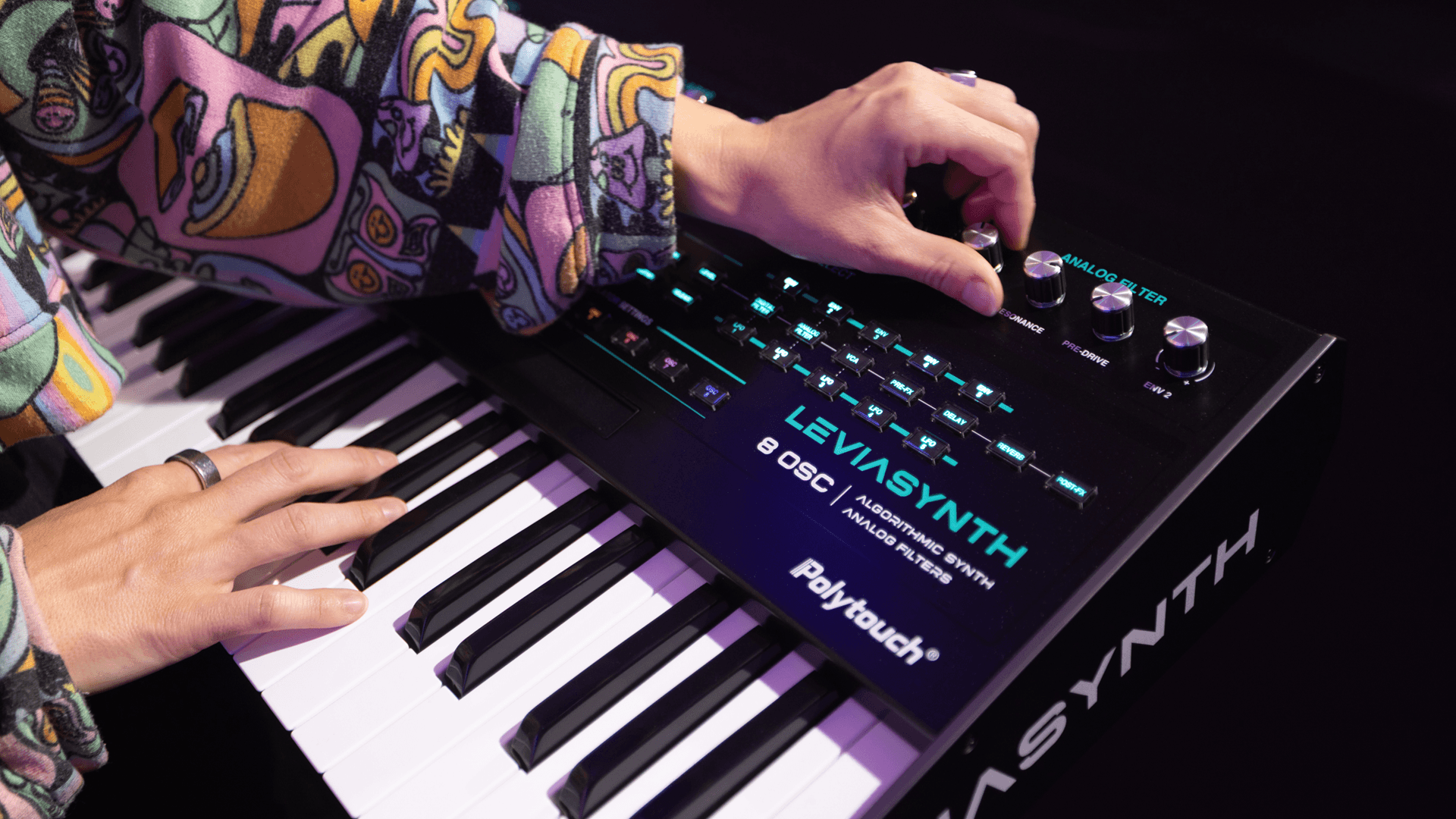
China had a synth history stretching back to the 1970s, yet it only recently produced its first mass-market synth. That gap is the whole point: this is not a copycat footnote to the Japan-Europe-US vintage canon, but a missing chapter with its own origin story, its own early machines, and its own collector blind spots.
The Beijing Moog moment collectors skip past
The cleanest place to start is 1973, when Bernie Krause and Paul Beaver brought a Moog Model III modular synthesizer to China and demonstrated it to Premier Zhou Enlai. That is not just a good anecdote, it is the kind of hinge event synth history is built on. The Model III sat in the lineage of Robert Moog’s first complete voltage-controlled modular synthesizer, introduced in 1964, which means the instrument shown in Beijing was already carrying the weight of the modern analog era.
The diplomatic backdrop matters too. Richard Nixon’s opening to China created space for cultural exchange, and that made Western musical technology visible in a way that was bigger than music alone. Krause was not a random visitor either. Moog’s own history materials describe him as someone who has spent more than 50 years exploring sound, and as one of the early people who helped push the Moog into the hands of artists including George Harrison, The Monkees, The Byrds, and The Rolling Stones. By the time that Beijing demo happened, the Moog was already a symbol of possibility, not just a machine with patch cords.
Why China arrived late, and why that matters now
If you come at this from the usual collector angle, the puzzle is obvious. China is one of the world’s great electronics manufacturing powers, so why didn’t it become a synth nation earlier in the same way Japan, the United States, Germany, or the United Kingdom did? The answer is partly historical, partly industrial, and partly cultural. The domestic market matured slowly, the country’s relationship with synthesis began under very different political conditions, and the local scene did not get the same uninterrupted commercial runway as the established vintage centers.
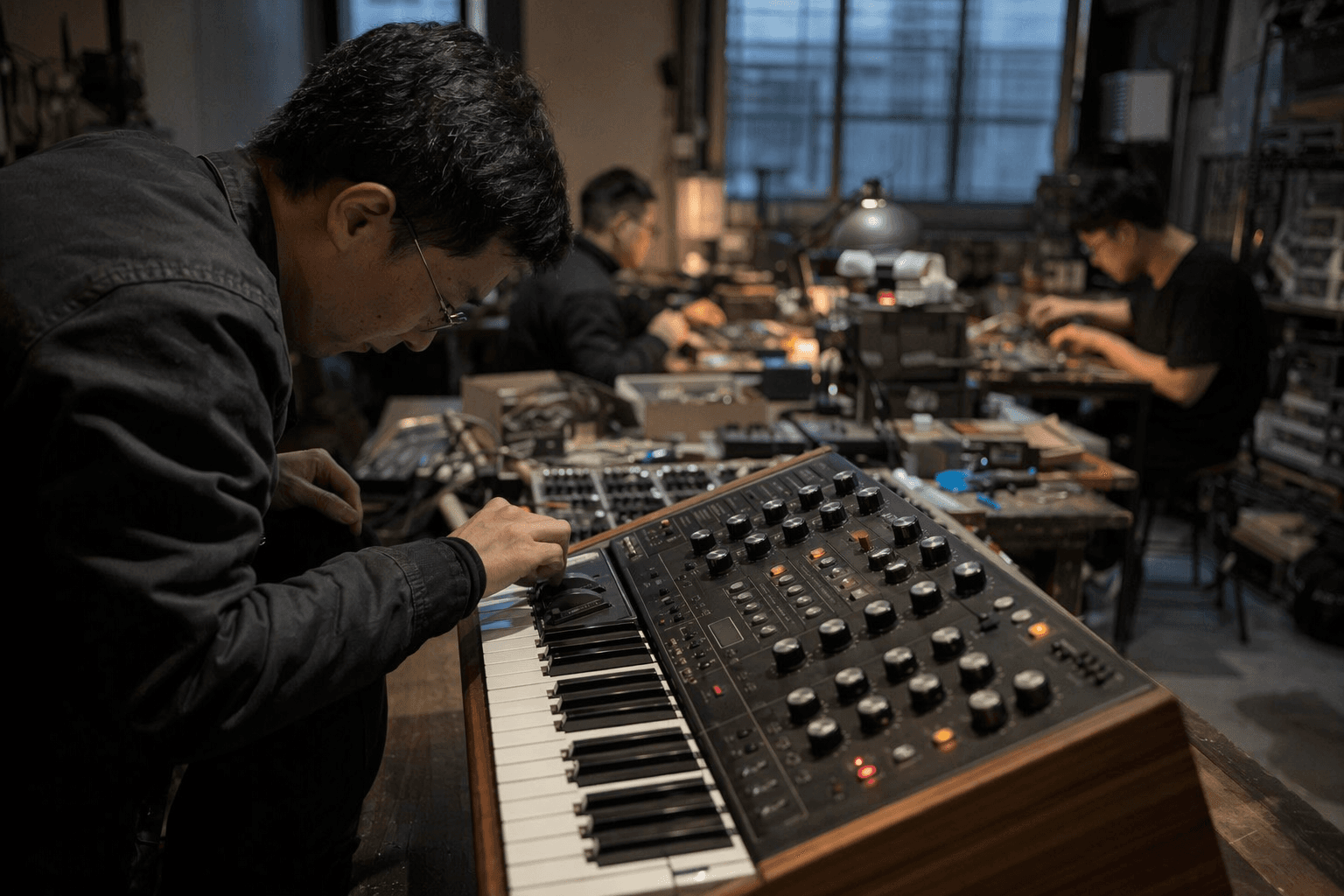
That is where the “technological leapfrogging” idea makes sense. China often moves by skipping an old layer and building on the next one. In synth terms, that means the country’s later rise was not simply about making more units cheaper. It was about entering a global field after the core vocabulary was already defined, then adapting fast. For collectors, that changes how you read the market: a Chinese-built or Chinese-designed synth is not automatically late or derivative. It may be part of a faster, more flexible technical renaissance that arrived after the classic analog story had already been written.
The 1970s instruments that deserve more attention
The most useful part of this history for vintage buyers is the overlooked hardware. One of the names to know is the Yema YM-8501, also called the “Wild Horse.” It is identified as one of the first electronic instruments produced in China and one of the few synths to emerge there in the 1970s. That alone makes it important. Scarcity is one thing, but historical placement is what turns scarcity into real collectibility.
Just as important, early Chinese electronic-instrument design was not limited to a single novelty synth. A Chinese-language research paper points to pioneering 1970s electronic pianos such as Mustang, Jiale, Angel, and Jiaying. That tells you the ecosystem was broader than the standard “first synth” story. The early field was building around keyboards, electronic pianos, and adjacent instrument forms, which is exactly the sort of detail vintage obsessives should care about. If you only hunt for the obvious modular or polysynth landmarks, you miss the local instruments that show where a scene actually started.
What collectors should care about in practice
This is where the practical collector question gets sharper. When a Chinese synth or early electronic keyboard turns up, you should not treat it as a generic curiosity. Ask what part of the story it belongs to: an early domestic design, an export-era manufacturing piece, or a later mass-market instrument built after globalization had changed the game. The difference matters because the first group is where the historical value lives.
Survivability matters too. Early production numbers were small, the documentation is thinner than the big Japanese and American lines, and the service path is not always straightforward. That means condition, originality, and whether the instrument can still be brought back into playable shape all count for more than the badge on the panel. If you are buying safely, you are buying the history as much as the object. A preserved Yema YM-8501 or one of those early electronic pianos is not just a shelf piece, it is evidence that China’s synth story began much earlier than most collectors assume.
The missing chapter in synth history is the point
What makes this history matter is not that China finally entered the synth conversation. It is that the conversation itself was incomplete without it. The old narrative says the important action happened in the familiar trio of Japan, Europe, and the United States. The better story says China began with a Moog shown to Zhou Enlai, moved through a slower and more complicated domestic development, and then arrived at a moment when it could manufacture at scale and design with much more freedom.
That changes the collector’s map. It means the future of vintage interest is not only in the canonical Western machines, but in the overlooked Chinese pieces that prove the industry was never a closed club. If you care about where synthesizer culture actually came from, the Chinese chapter is not a side note. It is one of the reasons the modern market looks the way it does now.
This article was produced by Prism’s automated news system from verified source data, official records, and press releases, then run through automated quality and moderation checks before publishing. The system is built and supervised by the people who set the standards it runs under. Read our full AI policy.
Did this article answer your question?