Waldorf Iridium Desktop MK2 Debuts with Major Hardware, Software Refresh, €2399
Waldorf’s Iridium Desktop MK2 adds Per-Note-Parameter-Locks with Aphex Twin input, a new Seeds oscillator engine, more RAM/flash and four-part multitimbrality, priced at €2,399.
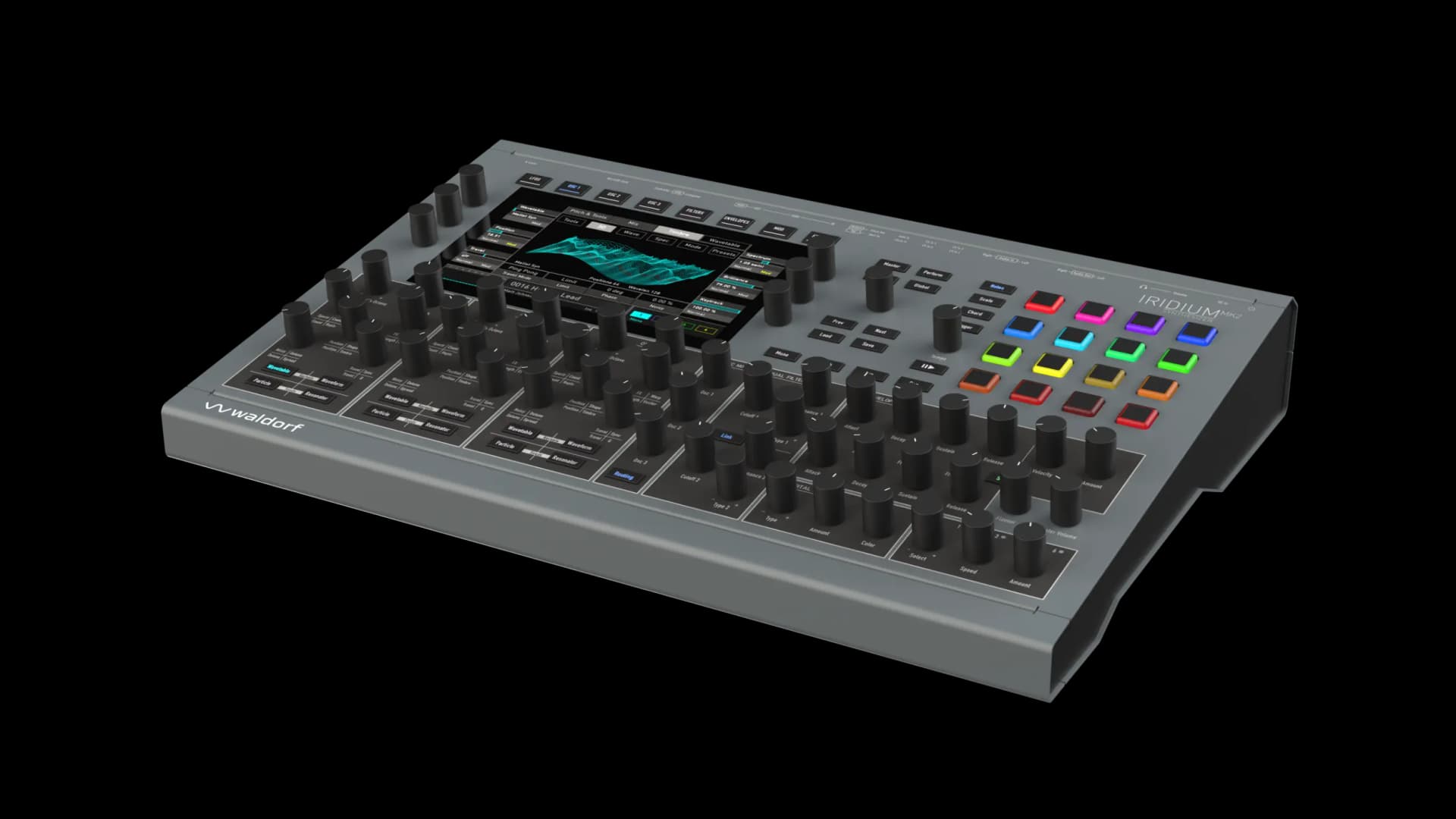
Waldorf Music released the Iridium Desktop MK2 as a deep hardware and software refresh of the 2020 Iridium, priced at 2.399,00 € and targeted at sound designers and cinematic composers who need "extra density." The headline feature is a Per-Note-Parameter-Locks system developed with Aphex Twin, which lets each of the 128 notes be assigned up to 16 individual parameter variations, input by holding a note and turning knobs and saved with each patch.
Under the hood Waldorf reports expanded memory and a revised CPU board that increases RAM and flash storage to support larger samples and new synthesis modes. One published detail states user samples total 6 GB, and multiple outlets note "more RAM and flash storage," but sources disagree on whether the CPU chip itself was changed or only the CPU board was revised, so exact chipset and memory partitioning remain to be confirmed.
The MK2 raises the Iridium’s multitimbral capability to four independent layers, up from two, and adds round-robin and random-robin modes borrowed from the Protein architecture. A new wavetable-inspired engine called Seeds appears as a sixth synthesis method available to each of the three oscillators. Synthopia phrased the Seeds concept this way: "Inspired by wavetable synthesis, Waldorf has found a way to dynamically synthesize waypoints from sub-oscillators, called 'Seeds'... controlled and recombined using techniques like ring modulation and frequency modulation, and enriched with noise and other non-pitched material."
Protein lineage shows up again in a new Flavour knob, described as a micro-variation control that "adds sonic liveliness using our new concept of micro-variations in timing, timbre, pitch, and a whole set of additional parameters, introduced with the Protein synthesizer." Workflow additions include a dedicated UI page for inspecting and editing per-note locks and the simple input method of holding a note while adjusting parameters, which mirrors hands-on parameter-lock approaches on modern hardware.
Not every spec is settled. Community reports claim the MK2 has upgraded RAM listed as 6 GB and that arpeggiators have been "greatly enhanced," and one report asserts the instrument remains "only 16 voices," a claim not corroborated elsewhere. The relationship between the Per-Note-Parameter-Locks addressing of "128 notes" and actual voice/voice-stealing behavior has not been clarified. Likewise, Waldorf has signalled an OS 4.0 path for older units and hinted at a possible hardware upgrade for Iridium MK1 owners, but details, costs and which features will be backported are still TBA.
Availability is also inconsistent across listings: some retailers show the MK2 available, with Thomann named among international retailers, while others list it as out of stock. Waldorf published richer media alongside the launch, including a deep dive with CTO Rolf Wöhrmann that appears to expand on technical details; those wanting the full spec sheet should consult Waldorf’s official materials for final numbers on polyphony, CPU/board revisions, RAM versus sample allocation, and MK1 upgrade options.
The Iridium Desktop MK2 lands as a feature-heavy refresh at €2,399, doubling multitimbrality and adding per-note granularity and a new Seeds engine; pending clarification on voice count and exact hardware specs, it already reshapes what the Iridium platform can do for dense, layered sound design.
Know something we missed? Have a correction or additional information?
Submit a Tip