Warhammer 40,000 Armageddon gains core rules and mission decks
Armageddon is 40k's 11th-edition launch, but the real story is the rules and mission packs that decide whether you can actually play it.
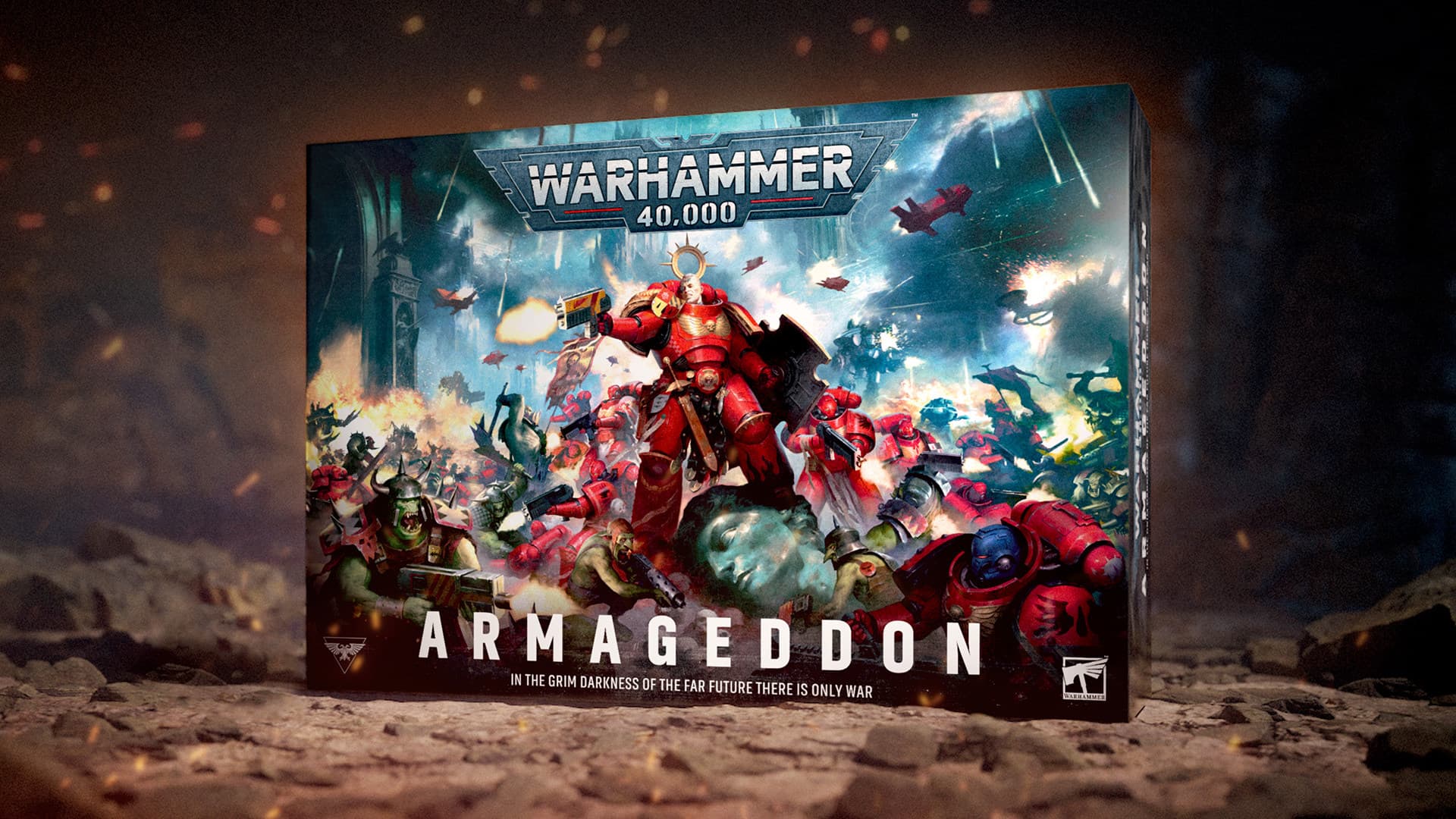
The Armageddon box is the flashy bit, but the smarter news is everything Games Workshop is bundling around it to make 11th edition actually work on a table. If you already know you are buying into Warhammer 40,000 now, the real question is not whether the launch box looks good. It is which pieces you need for games, which pieces you can skip, and which extras matter depending on whether you play competitively, paint for the shelf, or live for the lore.
What the Armageddon box really gives you
Warhammer 40,000: Armageddon is the headline release for the game’s 11th edition, and the box is not just a starter set with a few Marines and Orks tossed in. Warhammer Community says it contains 61 brand new miniatures split between Space Marines and Orks, plus the new Core Rulebook and Operation: Imperator, the lore book focused on the latest fighting on Armageddon. That means the box is doing double duty: it is both an entry point for new players and the cleanest way to get the launch-era narrative in one purchase.
If you are the kind of player who wants the full package on day one, this is the box that makes the most sense. If you are already deep in the hobby and only need rules and support products, the important part is that the Core Rulebook, the Chapter Approved Mission Deck, and the Dominatus Deck will also be sold separately after launch. That is the practical takeaway: the box is the bundle, but not the only doorway into the edition.
If you want the rules without the plastic
The standalone Core Rulebook is the first thing worth separating from the launch box. Warhammer Community has confirmed that the book will be available on its own, and the version shown in the pre-order coverage has a variant cover with an Ultramarine instead of the Blood Angel used on the Armageddon box edition. That matters less as a gameplay detail than as a collector signal: if you only want the core rules, you are not forced into the launch-box presentation.
For most established players, the Core Rulebook is the obvious buy if you are not chasing the full Armageddon set. It gives you the baseline rules in a portable format, and it cleanly supports pickup games, teaching games, and general reference use. If you are an army painter or a lore-first player, the launch box version is still the most complete physical package, but the standalone book is the better fit if your shelves are already full of miniatures you have not finished.
The products that make the edition playable
The most useful part of the pre-order wave is not the miniatures at all. It is the cluster of support items that turn a boxed launch into a functioning edition for casual nights, club play, and tournaments.
The Combat Patrol Companion is the clearest example. At 184 pages, it is not just a slim rules booklet. Warhammer Community describes it as split between a general overview of the Warhammer hobby and key concepts for new players, while also including material useful to veteran hobbyists. It is designed for new builders, painters, and players, and it can be used with the upgraded Warhammer 40,000 app to play Combat Patrol games. If you are starting fresh, this is the best value buy after the core rules, because it combines onboarding, army guidance, and a playable format in one place.
The Terrain Area Set is the other piece that sounds minor until you actually set up a table. It contains 16 double-sided card templates in 5 different sizes and shapes, and those templates recreate all of the official terrain maps for the new edition. That is the kind of product competitive and club players will appreciate immediately, because it removes arguments over terrain footprints and speeds up setup. If your local group is serious about consistency, this is not fluff. It is table infrastructure.
The mission deck is the real engine of 11th edition
The Chapter Approved Mission Deck 2026-27 is the product that tells you how Games Workshop wants this edition to be played. Warhammer Community says it includes cards for Deployment, Force Dispositions, Primary Missions, Secondary Missions, and optional Twists. That is a lot more structured than a loose pile of scenarios, and it suggests a more formal pre-game process than many players are used to.
For competitive players, that structure is the point. Warhammer Community’s earlier Chapter Approved 2025-26 coverage described the mission deck as supporting Incursion, Strike Force, and Asymmetric War, which shows that this system is not a one-note matched-play pack. It is an evolving framework for how games begin, how objectives are generated, and how different table sizes stay balanced. The new missions and objective-generation tools will also appear in the Warhammer 40,000 app, so the physical deck is not being treated as a standalone artifact. It is part of a wider rules ecosystem.
If you play events, this is the one to watch closely. The Chapter Approved Tournament Companion, also referred to as the Event Companion, is meant to support singles, doubles, and team events, and it gives more prescriptive terrain guidance than the looser maps used for casual play. In plain English: Chapter Approved gives you the framework, and the Event Companion tells tournament organizers how to standardize it without turning every table into a guessing game.
Where the Dominatus deck fits
The Dominatus Narrative Campaign Deck is the pick for players who want a weekend campaign that actually moves. Warhammer Community says it is themed around Armageddon, but it can be used for campaigns involving any factions, which makes it much more flexible than a one-world story pack. A standard Dominatus campaign uses 2,000-point Strike Force armies and the Chapter Approved Mission Deck, then divides players into two or three alliances: Liberators, Oppressors, and optionally Raiders.
That structure matters because it turns campaign play into something you can run over a weekend without needing a spreadsheet and a stack of house rules. The campaign runs through three phases, and players earn Battle Honour cards if they win or Battle Skill cards if they lose, so even a rough game feeds the wider story. If you run a club, store event, or narrative league, this is the buy that saves you time. If you just want a lore-rich excuse to play multiple linked games, it is the most focused option in the lot.
What to buy, depending on how you play
If you are a competitive player, the Chapter Approved Mission Deck and the Event Companion are the important buys, with the Terrain Area Set close behind. Those are the products that standardize games, clarify objective generation, and make terrain placement less of a mess.
If you are a collector or painter, the Armageddon box is the obvious centerpiece because it gives you the 61 new miniatures, the Core Rulebook, and Operation: Imperator in one hit. The standalone Core Rulebook is the next-best purchase if you only want the rules in a cleaner format.
If you are a lore fan, Operation: Imperator and the Dominatus Deck are the pieces that actually extend the story beyond the box art. Armageddon is the big narrative hook, but Dominatus is the product that lets that setting keep going at the table.
The important thing is that Games Workshop has finally made the launch look like an ecosystem instead of a single sale. Armageddon gets your attention, but the rules, cards, app support, and terrain tools are what make the edition live once the box is opened.
This article was produced by Prism’s automated news system from verified source data, official records, and press releases, then run through automated quality and moderation checks before publishing. The system is built and supervised by the people who set the standards it runs under. Read our full AI policy.
Know something we missed? Have a correction or additional information?
Submit a Tip