Ted Pelfrey’s Cherry Blossoms on Cherry Win AAW Turning Spotlight
Ted Pelfrey’s carved cherry blossoms on cherry kept its silhouette intact, with petals and a tiny red ladybug drawing a closer look.
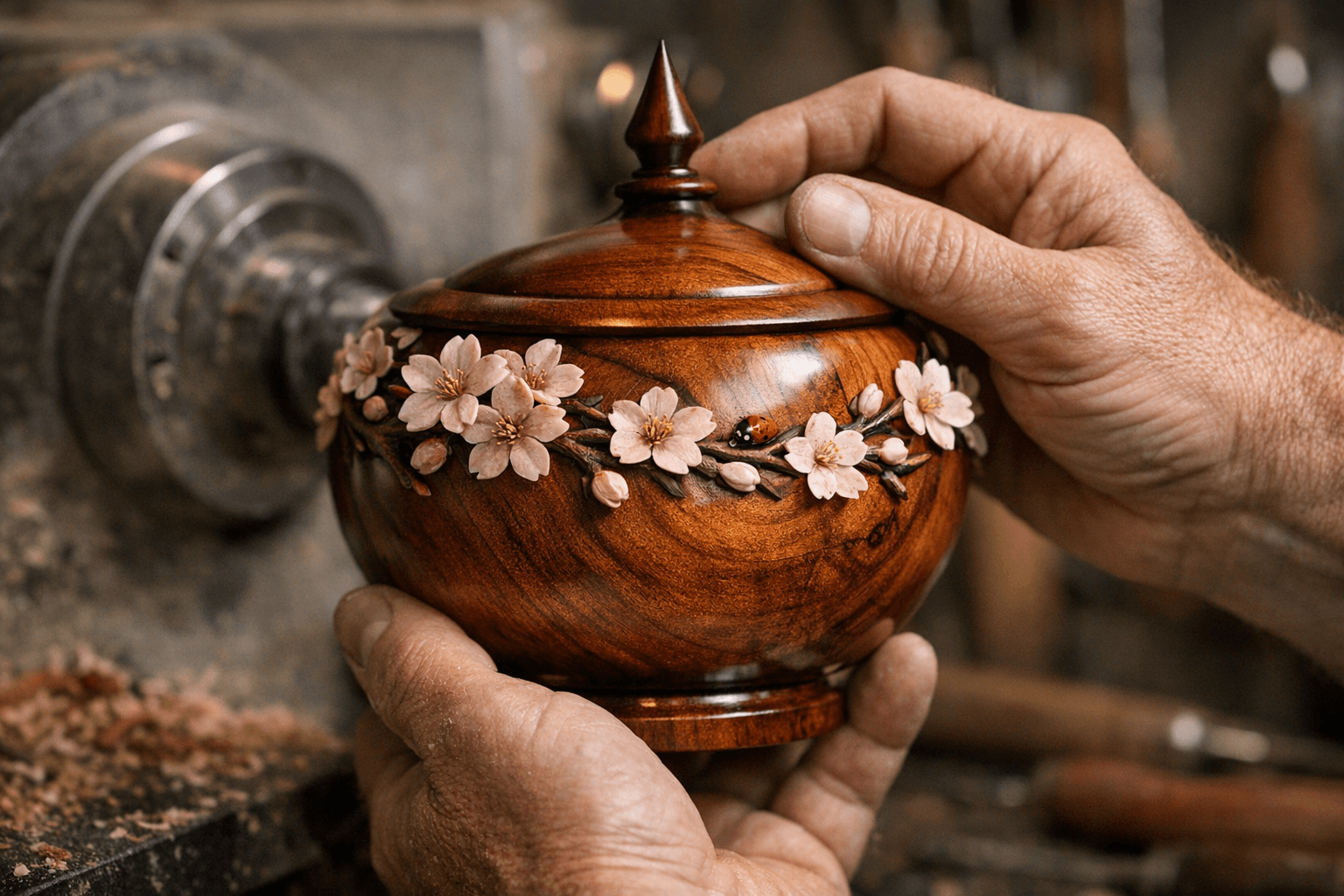
A vessel can survive a lot of carving, but Ted Pelfrey’s Cherry blossoms on cherry stood out because the surface work did not flatten the turning’s shape. Instead, the deeply carved petals seemed to lock into the silhouette, letting the form stay readable even as the piece moved toward sculpture. Tom Gall said it was the kind of work that needed to be held in person to be fully appreciated, and that instinct made sense immediately: this was not a bowl or vase carrying decoration on top. It was a turning built around the way carving and form could support each other.
That balance is the technical lesson here. Carved surface work often goes wrong when it starts competing with the vessel’s outline, but Pelfrey’s piece kept the profile visually intact. The cherry-on-cherry pairing mattered too. The wood-on-wood concept gave the piece a unified look, so the carved blossoms read as part of the object rather than as an applied idea pasted onto a finished form. That kind of material restraint is worth studying because it lets the texture do the heavy lifting without breaking the object’s identity as a turning.
The thread’s close-looking comments showed why pieces like this punch above their weight in a forum setting. One member picked out a small red ladybug near the foot and wondered whether it had been carved or painted. That tiny accent changed the read of the whole piece, adding a note of surprise and a bit of narrative without tipping the work into gimmick. Jaramiah Severns quickly echoed the praise, and the back-and-forth gave the discussion the feel of a small gallery critique, where everyone is circling the same question: what exactly makes this object work so well?
The answer is in the combination of discipline and play. Pelfrey used traditional lathe-shaped form as the base, then pushed into a hand-worked, almost sculptural finish that stayed controlled instead of busy. The result was a piece with enough detail to reward close inspection and enough clarity to hold together at a distance. For turners thinking about embellished surfaces, this is the lesson worth borrowing: keep the silhouette strong, let the carving reinforce the vessel, and use one small surprise, like that ladybug, to make the whole thing stick in the viewer’s mind.
This article was produced by Prism’s automated news system from verified source data, official records, and press releases, then run through automated quality and moderation checks before publishing. The system is built and supervised by the people who set the standards it runs under. Read our full AI policy.
Did this article answer your question?