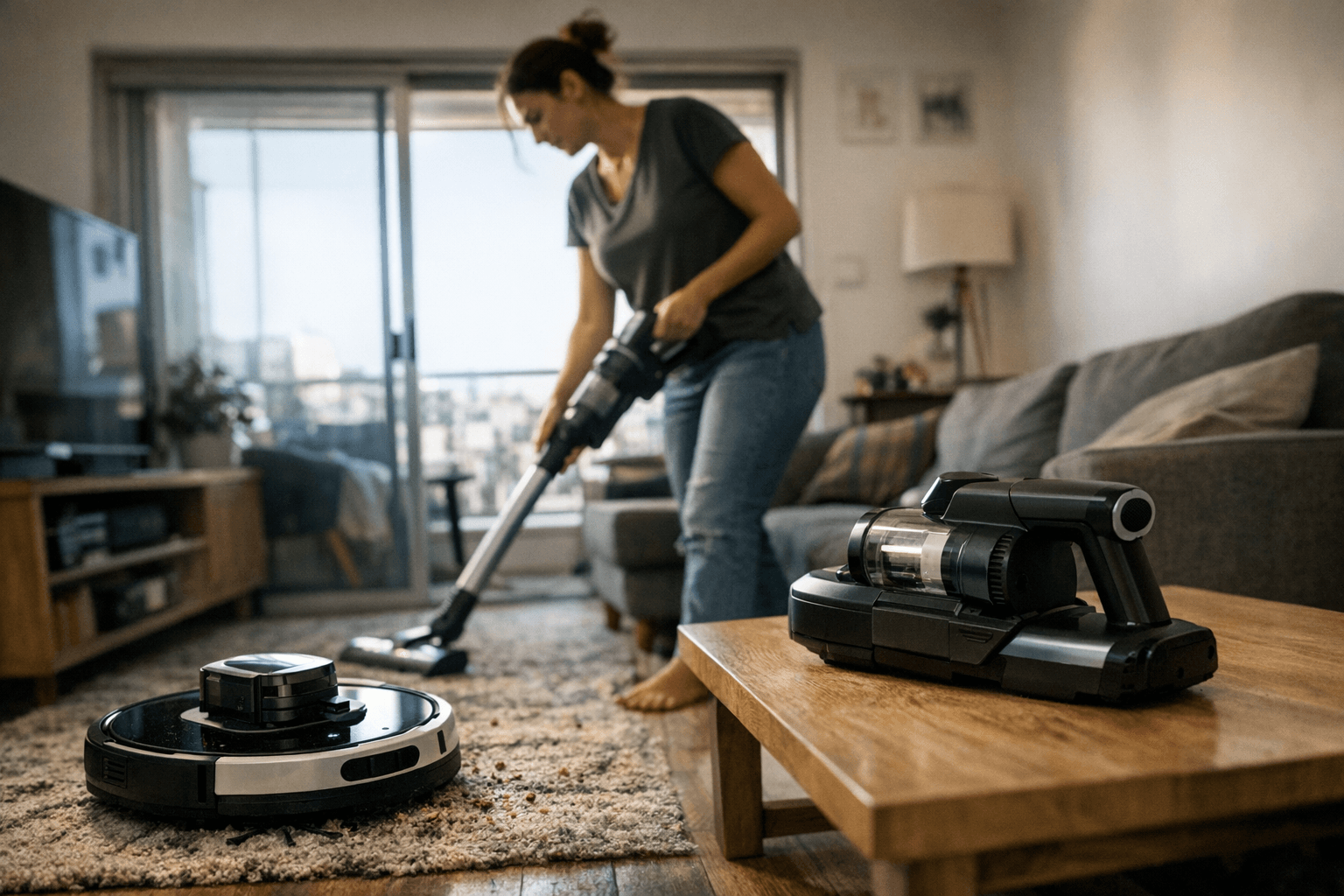
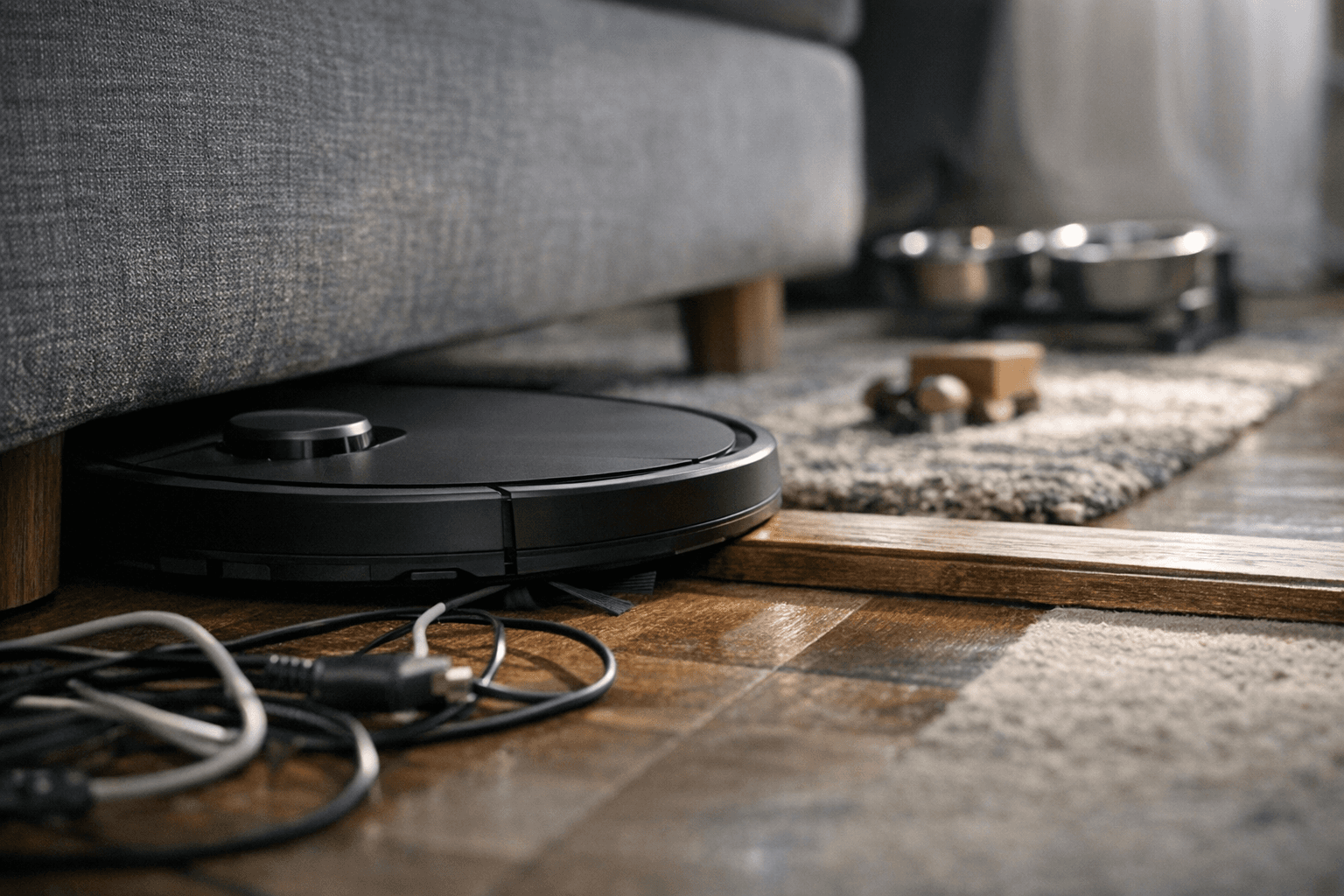
האם רולר מתנקה בזמן אמת מקרב שואב רובוטי לספונג'ה אמיתית?
A self-cleaning roller keeps the mop from dragging grime, which is why the new Omni C28 feels closer to real washing than most robot mops.
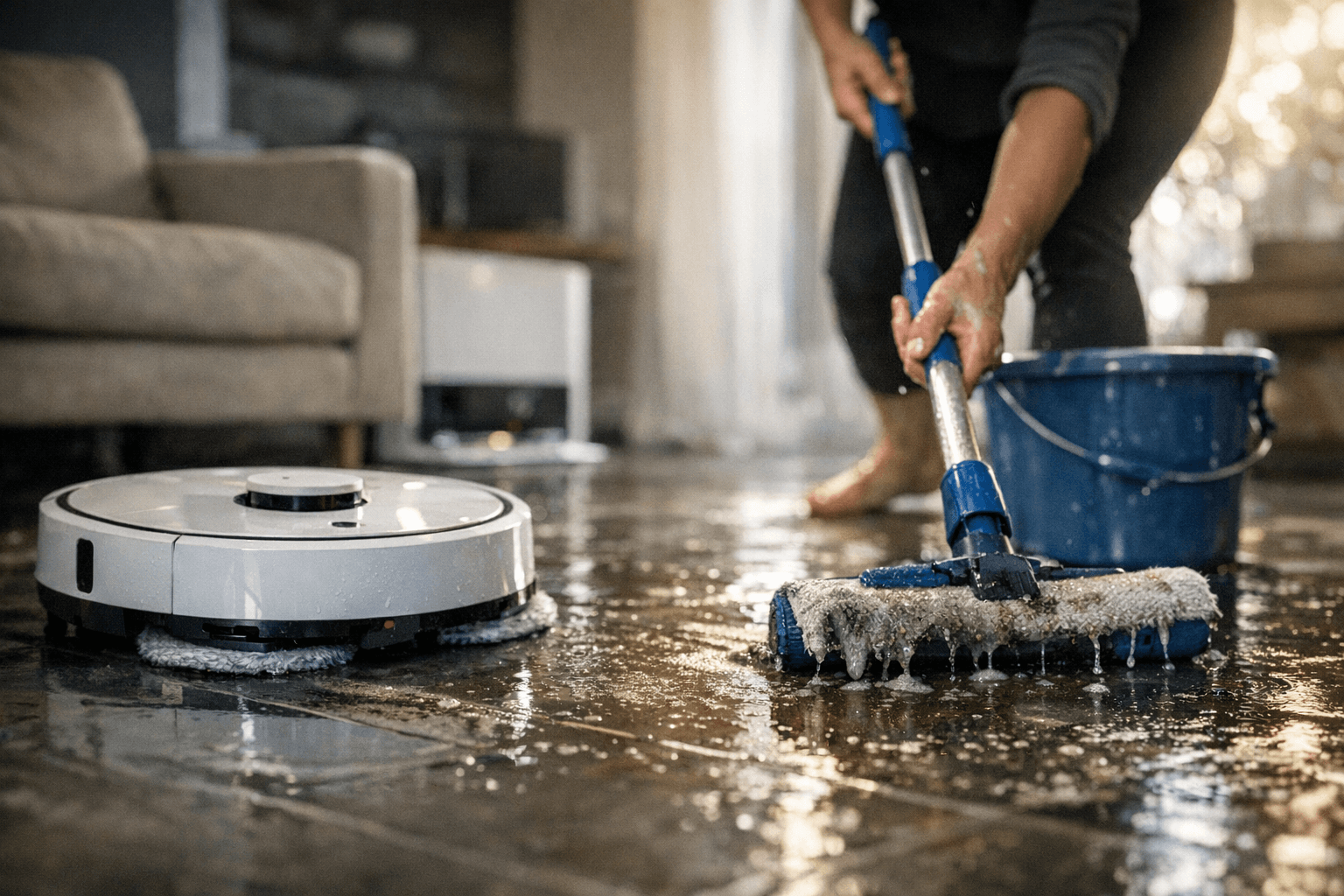
The new eufy Omni C28 shows where robot floor care is headed: less dragging, less smearing, and a lot more insistence that the mop stay clean while it works. With a HydroJet self-cleaning roller, 15,000Pa of suction, and a station that washes, dries, refills, and empties on its own, the pitch is simple: closer to a real wash, not just another wet pass over the floor.
In an Israeli kitchen, that difference is not academic. Tiles after dinner, fine dust from open windows, shoes that bring in sand, and long strands of hair all punish robot mops that keep reusing the same damp pad until the job is done. The real question is whether a roller that cleans itself in motion finally fixes the oldest flaw in the category.
Why most robot mops still smear dirt
The dirty-pad problem
Most robot mops clean with a pad or cloth that starts out wet and gets dirtier with every meter. Once that pad picks up oil, dust, and a few crumbs of sauce, it stops washing and starts spreading a thin film across the floor.
That is why so many homes get a surface that looks “mostly done” but still feels tacky underfoot. On smooth ceramic tile, which is common in Israeli apartments, the weakness shows up fast as streaks, dull patches, and the familiar line where the robot turned around and dragged yesterday’s mess into today’s path.
Where the flaw shows up in daily Israeli use
The gap is easiest to see after dinner, when the kitchen floor has a mix of dried sauce, oil spots, and crumbs around the table. Add a little sand from the street or the beach, and a standard wet pad can turn small messes into a bigger clean-up job.
That is also why pet hair and human hair matter so much. A robot that cannot keep its mop surface clean while it moves is not really washing the floor, it is negotiating with the dirt.
How a self-cleaning roller changes the job
Fresh water on the floor, dirty water off the floor
The HydroJet idea is straightforward: keep the roller in contact with the floor, but keep cleaning that roller as the robot moves. On the Omni C28, the roller is 27 centimeters long and presses down with about 1 kilogram of force, which gives it more contact and more scrubbing effect than a lazy glide over the surface.
That matters because a roller can pick up grime, release it, and get rinsed again during the same run. Instead of carrying dirt from the entryway to the hallway, it keeps renewing the cleaning surface as it goes.
The station does the ugly work
The Omni station is not just a charging base. It empties dust for up to 75 days, washes the roller, dries it with hot air at 50 degrees, refills clean water, and collects dirty water.
That changes the maintenance burden, but it does not erase it. The user still has to deal with wastewater, tanks, filters, and the occasional check on the robot itself, yet the hardest part of the mop cycle moves out of your hands and into the dock.
Who actually benefits enough to justify the jump in price
Homes with hard floors and daily spills
The self-cleaning roller makes the most sense in homes with a lot of hard flooring and a lot of foot traffic. If your living room, kitchen, and hallway are all tile or stone, and the floor gets dirty every day, the upgrade is easier to justify than in a home that only needs a light weekly pass.
For Israeli buyers, the launch price of $799.99 puts the Omni C28 squarely in the premium bracket. Once you translate that into the local market, the question is not whether it is expensive; the question is whether you are buying a convenience gadget or a machine that will genuinely replace repeated manual wiping.
Hair, carpets, and mixed-floor homes
The C28 also tries to solve two everyday headaches: hair and carpets. eufy says its DuoSpiral anti-tangle setup can handle hair up to 50 centimeters long, and the company’s internal testing claims no hair remained on the roller brush after seven cleaning cycles.
It also includes carpet detection and automatic mop lifting up to 10.8 millimeters, which matters in homes that mix rugs with hard floors. A robot that soaks a rug edge or drags a wet roller onto a carpet edge is not doing premium cleaning; it is creating another chore.
Why LiDAR and multi-map support matter
The navigation package is part of the value too. LiDAR gives the robot cleaner room mapping, and the ability to store multiple maps helps in multi-floor homes or homes where cleaning needs change from day to day.
That sounds like small stuff until the robot misses a narrow corridor, repeats a room, or leaves a strip along the cabinet line. In a busy Israeli apartment, especially one with an open kitchen and a crowded living area, those details decide whether the machine feels smart or just expensive.
How this compares with the rest of the market
Roller systems versus vibrating pads
The bigger shift is not one model. The category is moving away from simple pads and toward rollers that stay clean while they work. eufy’s own E28 pushes the same idea further with a system that cleans the roller 360 times per minute, uses 1.5 kilograms of downward pressure, and pairs that with 20,000Pa of suction.
That is also why other premium robots are leaning the same way. Dreame’s Aqua10 Ultra Roller uses continuous rinsing to improve cleaning on hard floors, while iRobot has moved into auto-wash docks and roller-based mopping in its newer combo models. Narwal has gone in the same direction with a real-time self-cleaning track mop.
Why this is becoming a real category shift
The larger market is clearly rewarding this approach. Global home cleaning robot shipments reached 32.72 million units in 2025, up 20.1 percent year over year, and the pace of product development shows that manufacturers are betting on more autonomy, less hands-on maintenance, and better wet cleaning.
That matters because the fight is no longer about whether a robot can vacuum dust. It is about whether it can handle the messy middle ground of modern homes: sticky drops, tracked-in sand, fine powder, pet hair, and the kitchen floor after a normal Tuesday night.
What Israeli buyers should check before paying
The real bill is bigger than the sticker
A $799.99 robot is already a serious purchase before shipping, local markup, and taxes enter the picture. In Israel, that puts the machine well beyond the casual upgrade category.
So the right buyer is not someone hoping for a mildly better shine. It is someone who wants daily floor care, especially in a home where the kitchen and hallway get hit constantly and a quick wipe is never enough.
The station is convenient, but not invisible
The whole promise of the self-cleaning roller is that it reduces friction. That is true, but it does not erase upkeep completely. The dirty-water tank still has to be emptied, consumables still wear out, and the robot still needs a home base with space around it.
That is the real trade-off in this new generation of machines. They are closer to automated floor washing than older robot mops, but they are still appliances, not housekeepers.
שאלות נפוצות
Is a self-cleaning roller really better than a standard mop pad?
Yes, for homes that need real wet cleaning. The key advantage is that the roller keeps renewing the contact surface while it works, so it is less likely to drag grime across the floor.
Does the Omni C28 replace manual mopping?
Not completely. It can handle the daily messes that usually make mopping annoying, but heavy dried stains, grout lines, and neglected corners still benefit from a human pass.
Who should pay premium money for this kind of robot?
Households with mostly hard floors, frequent kitchen messes, pets, long hair, or lots of sand and dust will get the most value. If the home is mostly carpeted or only needs occasional cleaning, the premium is harder to justify.
What matters more: suction or the roller system?
For wet cleaning, the roller system is the bigger story. Strong suction helps with dust, crumbs, and hair, but the ability to keep the mop clean in real time is what turns a robot from a floor duster into something much closer to a proper wash.
יודעים משהו שפספסנו? יש לכם תיקון או מידע נוסף?
שלחו טיפ