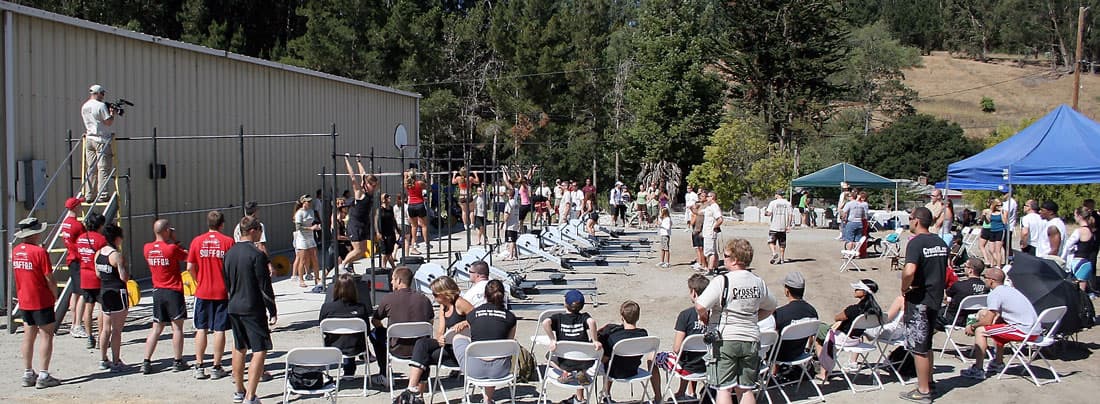
Trevor Paul Jones finds redemption through CrossFit after incarceration
Trevor Paul Jones turned a prison CrossFit class into a coaching career, showing how structure, accountability, and service can rewrite the recovery arc.

The classroom that changed the arc
Trevor Paul Jones is now a trainer at Mach 983 CrossFit, but the real turning point came long before he coached a class. In 2018, CrossFit brought two Seminar Staff members and a Level 1 Certificate Course to Limon Correctional Facility in Colorado, and Jones was among the inmates in the room. That session mattered because it was not a charity exhibition or a feel-good stopover. It was CrossFit’s first Level 1 Certificate Course held inside a prison, and it planted the seed for a path that would eventually carry Jones from incarceration into coaching.
The scale of that first step is easy to miss if you only look at the headline. A CrossFit Journal account says ten inmates took part in the first prison Level 1 course, while the prison workouts had already grown into Redemption Road Fitness, a program led by a core group of inmates in Limon’s Incentive Unit. In other words, the seminar did not create interest from nothing. It arrived after a training culture had already started to take root behind bars.
Why this model fit prison
CrossFit’s value here is not that it magically erased addiction, depression, or the damage of incarceration. Jones has been candid about all three, and that honesty gives this story its weight. The method worked as part of a larger recovery process because it gave structure to days that had previously been defined by instability, and because it offered an identity that was bigger than being an inmate.
That is the key to understanding why CrossFit’s coaching pipeline can function in a correctional setting. The model asks for consistency, attention, and ownership. It rewards people who learn to show up, to learn the movements, and eventually to teach them to someone else. In prison, that progression matters even more because leadership is often scarce, and accountability is usually imposed from the outside. CrossFit turns those same traits into earned status inside the group.
Limon Correctional Facility, a men’s maximum-security prison roughly 100 miles southeast of Denver, became the proving ground for that idea. The program there was not built around spectacle. It was built around repetition, standards, and a shared language of work. That is the sort of environment where a person like Jones can begin to see himself not only as someone recovering, but as someone responsible for others.
From inmate to coach
Jones’ move from prison classroom participant to gym trainer is the central story here, and it is what makes the episode stand out inside CrossFit’s broader storytelling. His life had already been shaped by the justice system in the harshest possible way. PBS FRONTLINE’s profile says Jones was sentenced to life without parole at age 17 after a 1996 case. A Colorado Radio for Justice podcast later said he was re-sentenced and released after 21 years served.
That history gives his current role a different kind of authority. He is not presenting recovery as theory. He lived the collapse, the confinement, and the long rebuild. Now he is on the other side of the glass, using the same discipline that helped stabilize him to serve other athletes in a gym setting. The shift from participant to trainer is the proof-of-method piece in plain sight: CrossFit did not just give him a workout. It gave him a transferable role.
The story also pushes back against the lazy idea that prison fitness is just about channeling aggression. CBS Colorado reported that each inmate participant had to raise $1,000 to attend the two-day seminar, which underscores how deliberate the commitment was. Colorado Department of Corrections Executive Director Dean Williams described the classes as positive and said they changed prison culture, while also noting that participants were getting stronger for health, not for fighting. That distinction matters. The point was not to build harder inmates. It was to build steadier people.
What the CrossFit pipeline actually does
The reason this story lands is that it shows how a coaching pipeline can operate inside a prison when the culture around it is serious. CrossFit’s model is not just about fitness metrics or elite performance. It creates a ladder: learn the movement, understand the standard, help someone else hit it, then carry that responsibility into the next environment. For someone in recovery, that ladder can be life-altering.

Several parts of the CrossFit system make that possible:
- A clear standard. The Level 1 course gives people a framework, not just a workout.
- A visible role path. Members can move from athlete to peer leader to coach.
- A shared community language. That matters in prison, where belonging is often fragile and conditional.
- Accountability built into training. You do not hide from the clock, the barbell, or the group.
- Service as a next step. Coaching turns personal change into something useful for others.
Redemption Road CrossFit later became the first CrossFit affiliate inside the walls of a prison, and CrossFit’s later media ecosystem has described it as a nonprofit focused on mentorship, accountability, and community. That framing is important because it makes the prison gym more than a place to sweat. It becomes an institution inside an institution, one that gives men a different way to measure themselves and a different way to matter to the people around them.
The bigger claim behind the story
CrossFit’s supporters have also pointed to a striking recidivism figure, describing Redemption Road CrossFit as having a 1.6 percent recidivism rate compared with a cited national average of 80 percent. That is a powerful number, but it belongs to CrossFit’s own media ecosystem and should be understood as an organizational claim rather than independent statistical proof. Still, even without leaning on that figure, the story makes a strong case on first principles.
What changes Jones is not just training volume. It is the combination of purpose, accountability, and support from other people. He found a structure that demanded more of him, then found a way to give that structure back. That is why his story resonates beyond prison walls. It shows that the right coaching environment can do more than improve fitness. It can help someone build an identity that survives the hardest chapters and makes room for responsibility on the other side.
In the end, Trevor Paul Jones is not a redemption cliché. He is the rare proof that a training system can become a social bridge, and that in the right hands, CrossFit can be more than a test of fitness. It can be a way to teach a person how to lead.
This article was produced by Prism’s automated news system from verified source data, official records, and press releases, then run through automated quality and moderation checks before publishing. The system is built and supervised by the people who set the standards it runs under. Read our full AI policy.
Did this article answer your question?