ChatGPT referral traffic surges, agencies build GA4 reporting workflows
ChatGPT is no longer a novelty referral source, and agencies that wire it into GA4 now can prove value before clients even ask.
ChatGPT referral traffic is becoming a real acquisition channel
Semrush’s latest clickstream data makes the case plainly: outbound referral traffic from ChatGPT to the rest of the web grew 206% in 2025. That is not a rounding error, and it is not a curiosity you leave out of a client deck. It is the kind of shift that deserves its own reporting workflow, especially now that Semrush says ChatGPT is “a standard part” of how people use the web.
The pattern is also lopsided in a way agencies should care about. More than 30% of ChatGPT referral traffic goes to just 10 domains, and more than 20% goes to Google. In other words, a lot of the action is concentrated, which makes benchmarking useful and makes blind spots expensive. ChatGPT’s web search feature was active on just 34.5% of queries in February 2026, down from 46% in late 2024, so not every answer sends traffic out the door. That matters when you are trying to explain why some pages are getting AI-assisted visits while others are not.
Why the traffic is worth more than the session count
The smartest agencies are not treating this as another traffic source to brag about. They are using it to understand intent. Visitors who come from ChatGPT often arrive further along in the research process, which means they can be better qualified than broad organic traffic that is still at the top of the funnel.
That is where the reporting gets useful. If a ChatGPT referral lands on a pricing page, a case-study page, or a contact form and converts at a higher rate than average, you have evidence that AI-assisted discovery is doing real work. The point is not just to count sessions. The point is to connect AI referrals to engaged sessions, conversions, and revenue, then use that to make the case for content, technical fixes, and ongoing optimization.
Build the GA4 view the right way
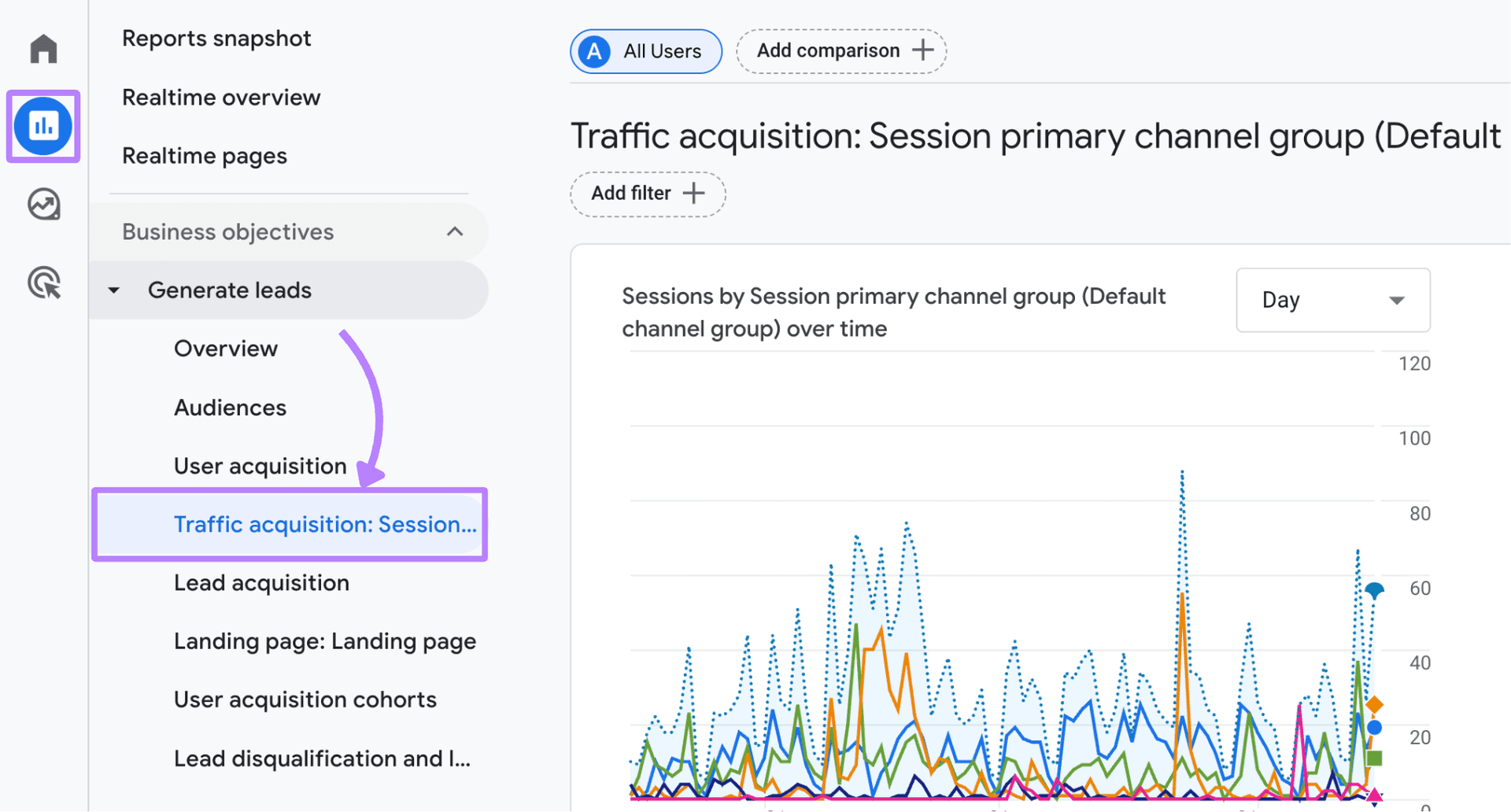
GA4 can already handle this, but only if you use the right report and the right dimension. Google Analytics says the Traffic acquisition report uses session-scoped dimensions such as Session source, which is why this works. In practice, that means you should look at Session source or Session source/medium and isolate the ChatGPT referral source, then compare the quality of that traffic against other channels.
A clean workflow usually looks like this:
- Open Traffic acquisition in GA4.
- Switch to Session source or Session source/medium.
- Filter for the ChatGPT referral source value.
- Review engaged sessions, conversions, and revenue, not just sessions.
- Compare those numbers against organic search, direct, and other referral sources.
If the traffic is valuable, the numbers will show it fast. If the traffic is weak, the same report will tell you that too. Either way, you are moving from guesswork to a repeatable client-facing view.
Do not trust GA4 to catch every click
There is a catch, and it is a big one: AI platforms do not always pass referrer data. Semrush’s guidance on AI referral tracking says many AI clicks show up as direct traffic in GA4 because the platform never receives a proper referral signal. That means ChatGPT traffic is probably undercounted in a lot of dashboards right now.
OpenAI’s Help Center adds an important piece of the puzzle. Publishers who allow OAI-SearchBot to access their content can track referral traffic from ChatGPT in analytics platforms, and ChatGPT automatically includes the UTM parameter for its search-result referrals. That gives agencies another clue to work with, but it does not solve every attribution gap. The practical answer is to use both traffic data and visibility data, then treat direct traffic spikes with some skepticism when AI discovery is in play.
That undercounting risk is exactly why this should be a standing report, not a one-off curiosity. If a client sees direct traffic rise while branded queries, content visibility, and assisted conversions are also moving, there is a good chance AI is part of the story.
Benchmark competitors before the client asks
This is where the reporting becomes a real service line. Semrush’s AI Traffic Dashboard, part of the Traffic & Market Toolkit, is designed to show how competitors gain traffic from AI-powered assistants like ChatGPT, Gemini, and Copilot. That turns AI referral work from a single-site exercise into a market map.
For agencies, that opens a few practical angles:
- Compare your site and a client’s site against named competitors.
- Watch which content themes attract AI-assisted visits.
- Connect AI visibility signals to referral volume and conversion quality.
- Use the gaps to shape content briefs, internal linking, and FAQ coverage.
Competitor benchmarking matters because it shifts the conversation from “Are we getting AI traffic?” to “Who is winning the AI-assisted discovery layer in our category?” That is a much easier retention conversation to have with a skeptical client, because it links measurement to strategy instead of just reporting a number.
Use the history to set expectations
The channel is growing fast, but it did not appear overnight. Semrush reported in February 2025 that ChatGPT had already sent traffic to more than 30,000 unique domains by November 2024. That is the clue agencies need when clients ask whether this is too small to matter. It is not. It is already broad, and the latest clickstream data shows it is still expanding.
That history also helps with pacing. You do not need to wait for a perfect attribution model before you start reporting on it. Start with a simple GA4 view, add competitor benchmarking, and fold the findings into monthly or quarterly client reporting. Once you can show which pages attract ChatGPT referrals, how those visitors behave, and how your competitors are doing, you have a durable way to prove value before anyone else on the account even notices the channel.
This article was produced by Prism’s automated news system from verified source data, official records, and press releases, then run through automated quality and moderation checks before publishing. The system is built and supervised by the people who set the standards it runs under. Read our full AI policy.
Did this article answer your question?