AI Search Visibility Benchmark Shows Top Influencer Platforms Dominate Mentions
Only Upfluence cleared the 60% default-recommendation bar as 50 influencer platforms fought for mentions across five AI search surfaces.
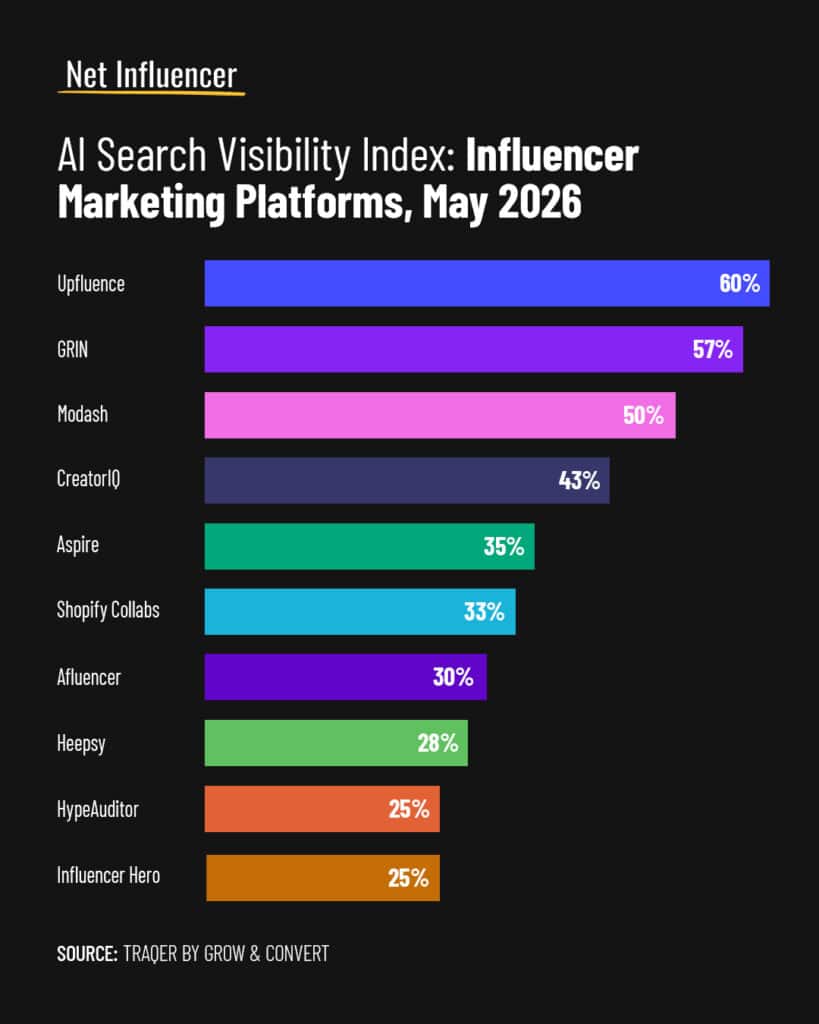
AI search is already drawing a hard line in influencer marketing, and the line is not flat. In a benchmark run across ChatGPT, Perplexity, Gemini, Google AI Overviews and Google AI Mode, 50 platforms surfaced at least once, but the answer space was heavily concentrated near the top, with only Upfluence clearing the article’s 60%-plus default recommendation threshold.
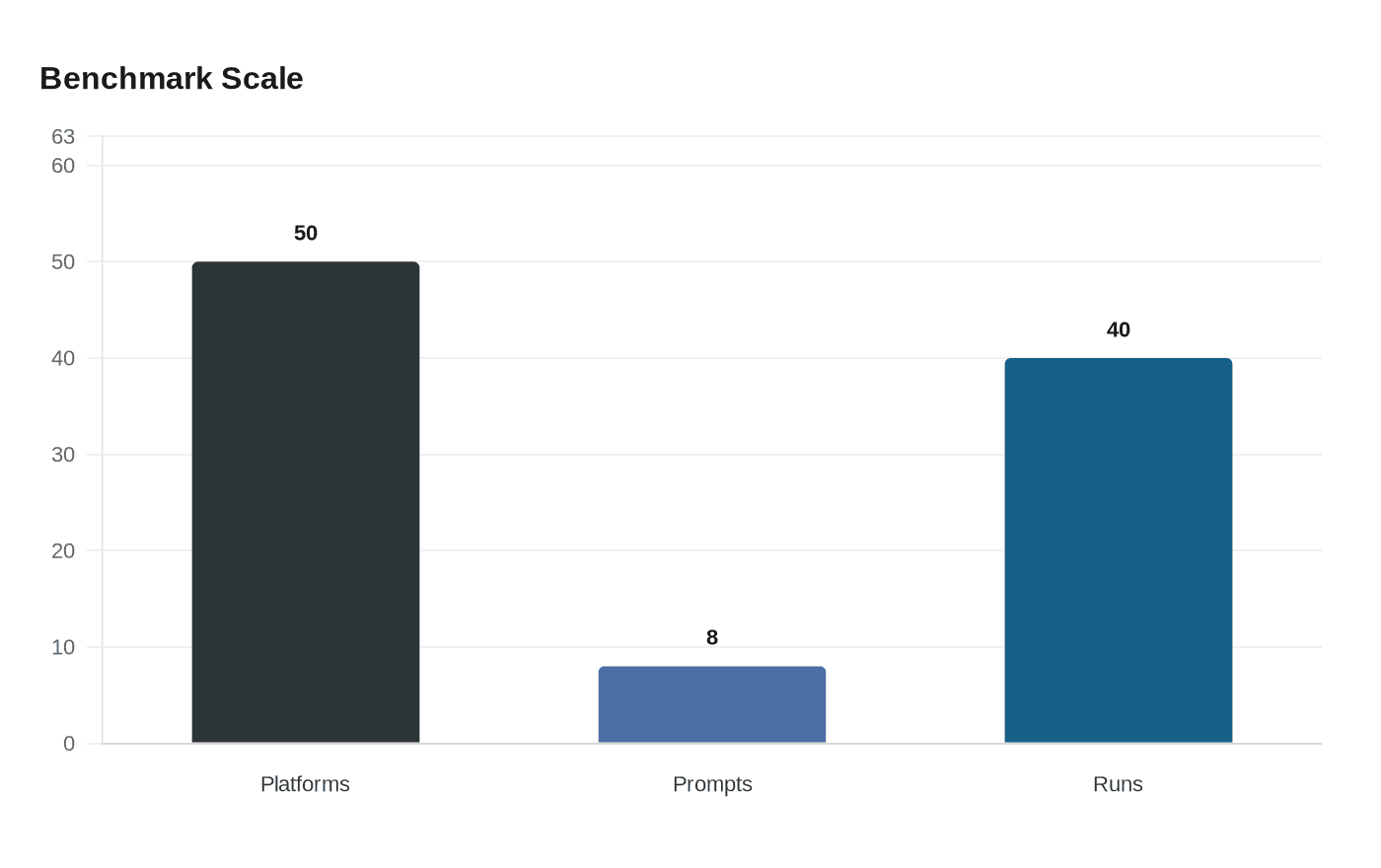
That concentration matters because the test was built to mimic real buying behavior, not vague brand awareness. The benchmark used eight prompts and 40 total query runs, with questions ranging from broad category requests to specific buyer triggers like budget, Shopify integration and creator partnership tracking. When buyers ask AI systems for a short list of tools, the results are not spreading evenly across the category. A relatively small group of names is doing most of the work.

The tier breakdown makes the competitive gap even clearer. Upfluence stood alone at the top. Six additional platforms landed in the strong consideration tier, while Heepsy, HypeAuditor and Influencer Hero were grouped into selective visibility. Collabstr and Influencity also sat in selective visibility outside the top 10, before the field fell into the long tail. That is less a popularity contest than a signal of which brands AI systems appear to treat as credible defaults when the query carries purchase intent.
The pattern suggests that AI visibility in this category depends on more than having a product in market. The platforms that show up consistently seem to have stronger signals around authority, relevance and utility, especially when prompts ask for specific commercial constraints. In other words, AI search is not just matching category labels. It is rewarding the brands whose content and entity footprint make them easier to recommend in a buyer conversation.
The timing raises the stakes. U.S. influencer marketing budgets were climbing 15% to $10.52 billion in 2025, and the category has become more performance-driven as brands look for measurable return. Upfluence, founded in 2012 and now serving more than 1,600 clients, has spent years positioning influencer marketing as a revenue channel, not a soft PR play. That kind of long-running, attribution-heavy positioning appears to translate into stronger legibility when AI systems assemble recommendations.
Semrush has also argued that AI visibility matters because AI search is becoming a discovery channel, and it cites research showing AI search visitors convert 4.4 times better than traditional organic search visitors. Put those dynamics together and the benchmark reads like a market map: in influencer marketing, the winners are not just the best-known platforms, but the ones AI can most confidently explain to a buyer who is ready to choose.
This article was produced by Prism’s automated news system from verified source data, official records, and press releases, then run through automated quality and moderation checks before publishing. The system is built and supervised by the people who set the standards it runs under. Read our full AI policy.
Know something we missed? Have a correction or additional information?
Submit a Tip