Branded searches with AI Overviews see CTR lift, study finds
Branded AI Overviews are bucking the click-loss story, with a 18.68% CTR lift on branded terms and Google tuning exposure to user behavior.
AI Overviews are not flattening every click path. On branded searches, the pattern flips: Amsive found keywords that triggered an AI Overview saw CTR rise 18.68% on average, even as keywords with AI Overviews overall fell 15.49% on average. That gap matters because only 4.79% of branded keywords in the study triggered an AI Overview at all, which means the benefit is concentrated in a narrow slice of high-intent queries.
The cleanest read is that branded intent can make AI surfaces work harder for, not against, a searcher. When someone is already looking for a specific company, product, or service, an AI Overview can add another trust signal instead of replacing the click. Google is also behaving like it knows this. Robby Stein said in a live panel that Google may pull back an AI Overview when users scroll past it without engaging, a sign that exposure is being adjusted based on what searchers actually do.
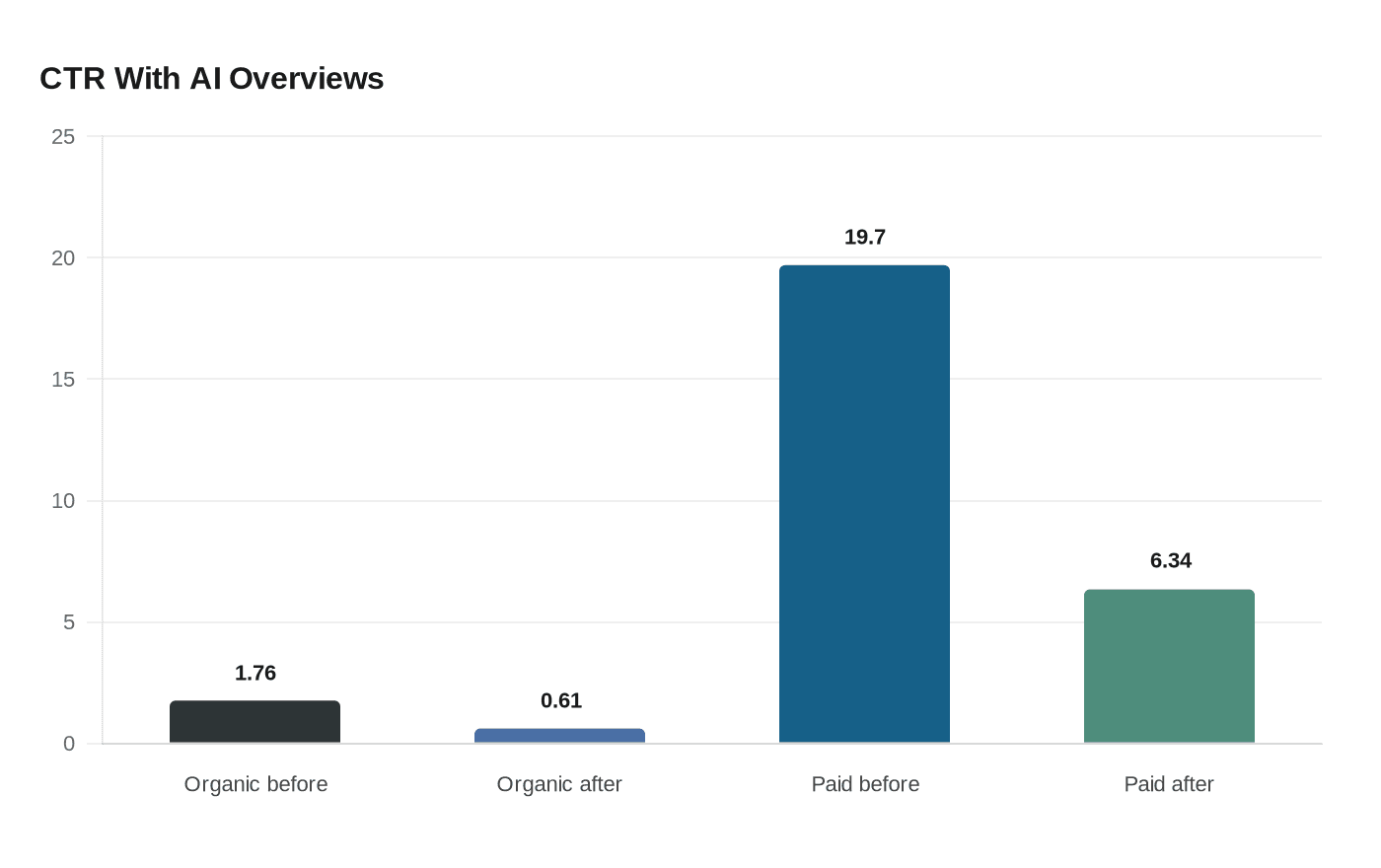
That is why the blanket story of AI search as pure traffic erosion does not hold up. The damage is still real for broad informational queries, but the brand side is turning into a different game. Seer Interactive’s September 2025 data showed organic CTR for queries with AI Overviews falling from 1.76% to 0.61%, while paid CTR dropped from 19.7% to 6.34%. Yet the same study found brands cited in AI Overviews earned 35% more organic clicks and 91% more paid clicks than brands that were not cited. Seer’s sample covered 3,119 informational queries across 42 organizations, with 25.1 million organic impressions and 1.1 million paid impressions from June 2024 through September 2025.
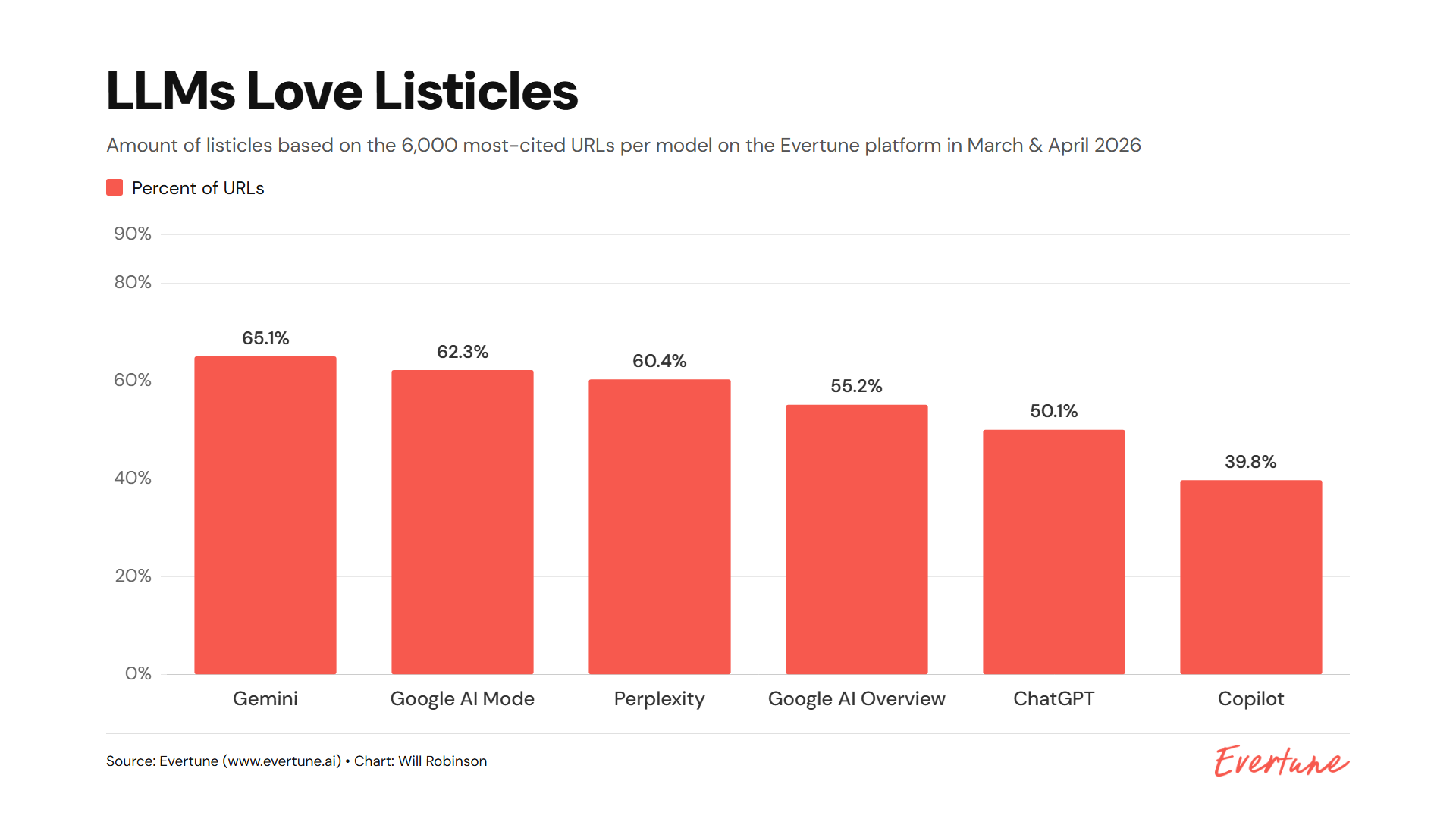
Yext’s 2025 visibility research points to the same split in a different way. Across more than 6.8 million citations and 1.6 million responses, Gemini leaned heavily on brand-owned websites, with 52.15% of citations coming from those properties. ChatGPT looked elsewhere, drawing 48.73% of its citations from third-party sources such as Yelp, TripAdvisor, and MapQuest. The platform behavior is different enough that marketers cannot treat AI search as one channel with one playbook.
The practical shift is obvious: stop assuming every AI surface is a net traffic loss and start optimizing for branded presence, structured brand entities, and citation-ready content. The economics are moving too. Google has expanded monetization in AI-powered search with Direct Offers in AI Mode, and OpenAI has begun testing ads in ChatGPT for logged-in adult users on Free and Go tiers. AI search is no longer just a visibility problem. It is becoming a branded discovery market.
Know something we missed? Have a correction or additional information?
Submit a Tip