MyRegistry pushes minimalist baby registry to cut clutter and overwhelm
MyRegistry is pushing a leaner baby registry that favors essentials over excess. The payoff is less clutter, better gifts, and fewer regrets.
Minimalism is the point, not the compromise
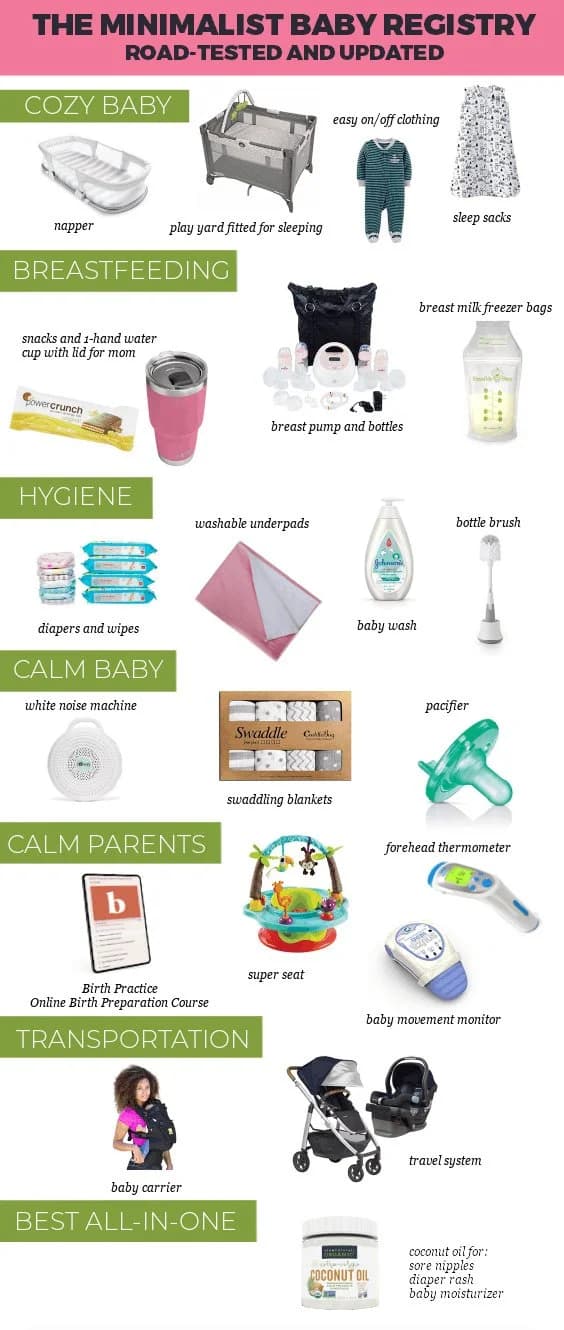
MyRegistry is taking aim at what it calls the Baby Gear Industrial Complex, and the target is easy to spot: the endless creep of baby lists until they look more like warehouse inventory than a practical plan. Its minimalist guide argues that a registry works best when it stops trying to cover every imaginable scenario and starts curating a few durable, multifunctional essentials that actually earn their keep.
That matters because the pressure on new parents is real. Shopping lists, nursery must-haves, and social expectations can turn a registry into a stress test instead of a planning tool. MyRegistry’s pitch is blunt and useful: the best registry is not the one with the most products, it is the one that helps a family avoid duplicates, reduce clutter, and keep gifts from becoming unused extras in a closet.
A smaller registry is a smarter edit
The logic behind the guide is not austerity for its own sake. It is about choosing items that grow with the child, serve multiple purposes, and hold up long enough to justify the space they take. That is a practical answer to the way baby-shower culture often pushes “more” as a proxy for being prepared, even when more usually means more waste and more overwhelm.
MyRegistry has been making this case for a while. A separate minimalist checklist it published in 2025 tied the same idea to clutter, waste, limited space, and budget pressure. The newest guide follows that same line, but with a sharper edge: baby registries should function as curation, not accumulation.
The company’s own broader checklist, published on April 10, 2026, gives a useful frame for that curation. MyRegistry says the modern registry spans 10 categories and 60 to 80 items, which is already a reminder that a thoughtful list does not need to be encyclopedic. The minimalist version takes that further by stripping out the noise and keeping only what will see real use.
- durable basics over novelty gadgets
- multifunctional pieces over single-purpose extras
- items that fit real space constraints
- fewer duplicates, fewer returns, fewer regrets
A practical minimalist registry usually shares the same priorities:
That is where the guide becomes more than a style preference. It is a way to make gifts more useful for the family receiving them and more confident for the people buying them.
Why MyRegistry is built for curation
MyRegistry’s platform gives the company a natural opening to promote a smaller, better-edited list. It describes itself as a universal gift registry that can sync registries from multiple stores into one list and lets users add items from any store worldwide. In plain terms, that means the registry is not trapped inside one retailer’s catalog, which makes it easier to pull in only the items that actually fit the family’s needs.
That structure also helps explain why the company keeps emphasizing streamlining. Its retail software page says the platform is trusted by more than 1,800 brands, and its About Us page says the retailer solutions are designed to help capture a share of the $400 billion annual gifting market. A cleaner registry is good consumer advice, but it is also good platform strategy. Fewer duplicate items and fewer unnecessary purchases can mean fewer returns, which is exactly the kind of friction MyRegistry says its software is meant to reduce.
The result is a business model that lines up neatly with the minimalist message. If the registry is one consolidated list instead of a pile of store-specific wish lists, it becomes easier to edit, easier to share, and easier for guests to trust.
Safe sleep basics still set the floor
Minimalism does not mean making things up as you go. The clearest place that shows up is sleep, where the safest guidance stays remarkably focused. The American Academy of Pediatrics recommends that infants sleep on their backs in their own sleep space with a firm, flat mattress and a fitted sheet. The Centers for Disease Control and Prevention says it supports the AAP’s 2022 safe-sleep recommendations, and the National Institute of Child Health and Human Development says a safe infant sleep environment should be firm, flat, level, and covered only with a fitted sheet.
NICHD also says babies should sleep in the same room as parents, next to where parents sleep. That matters in the registry conversation because it strips away the fantasy that preparation means buying every sleep gadget on the market. The baseline is a safe sleep space, not a showroom of add-ons.
This is where minimalist registry thinking gets strongest. When safety guidance is this direct, the case for overbuying gets weaker. One well-chosen sleep setup will do more good than a stack of products promising convenience without changing the fundamentals.
What the shift says about baby-shower culture
Taken together, the April 29 guide, the April 10 checklist, and MyRegistry’s platform model point to a broader shift in baby-shower culture. The old instinct was to build the biggest possible wish list and let abundance signal readiness. The newer instinct is more disciplined: make the registry easier to navigate, cut the clutter, and let guests buy with confidence because the list itself has already done the hard editing.
That is an important change for both sides of the exchange. Parents get less mental load and fewer unused items. Guests get clearer direction and a better shot at buying something that will actually be used. In a market as large as gifting, and in a category as emotionally loaded as baby gear, that kind of restraint is not a downgrade. It is the upgrade.
This article was produced by Prism’s automated news system from verified source data, official records, and press releases, then run through automated quality and moderation checks before publishing. The system is built and supervised by the people who set the standards it runs under. Read our full AI policy.
Did this article answer your question?