Animal-free dairy shifts focus to scale, cost and manufacturing discipline
Animal-free dairy is learning the hard lesson first-wave startups skipped: build the supply chain and unit economics first, then the brand. That shift could finally make protein-rich dairy alternatives cheaper and more durable.
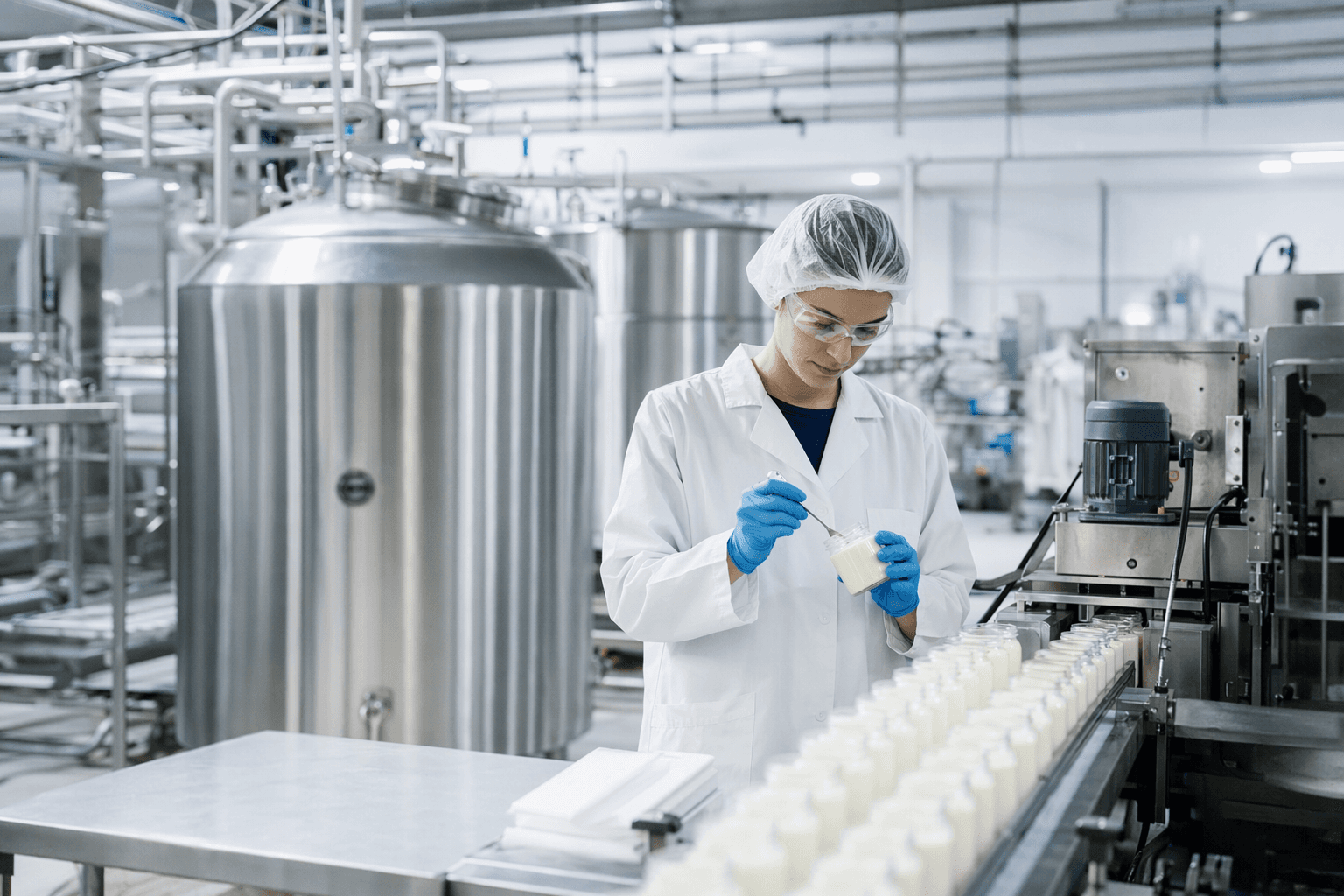
The real reset in animal-free dairy
Animal-free dairy is moving into a different playbook. The strongest companies are no longer pretending a clever product launch can outrun ugly manufacturing economics; they are building around scale, cost structure and repeatable production from the start.
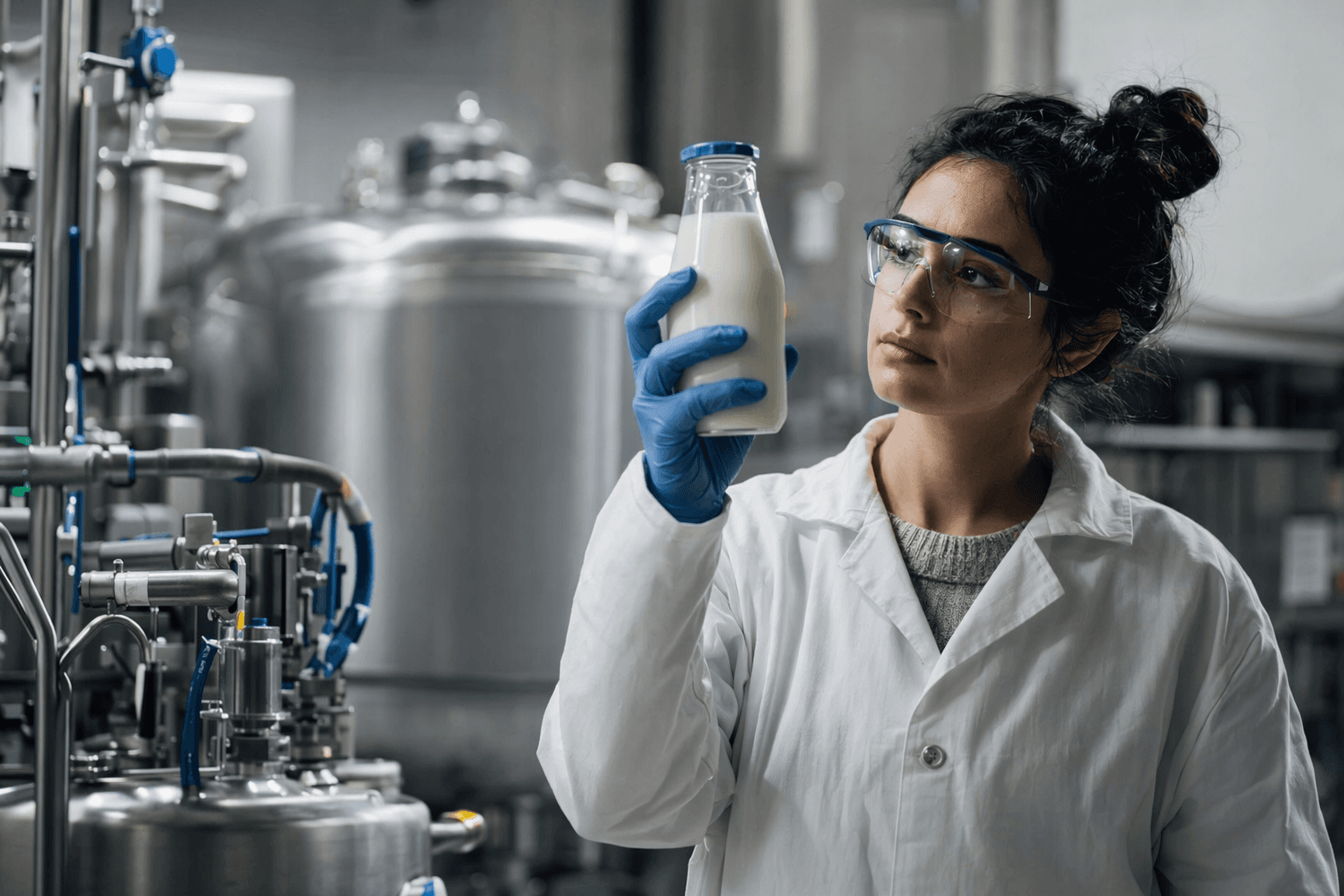
That matters because the category has spent years tripping over the same problem. The lab could make something impressive, but the factory could not make it cheaply enough, consistently enough or in enough volume to become a normal grocery item. The new thesis is simpler and harsher: if the unit economics do not work on day one, the product is a demo, not a business.
Build the supply chain before the branding
This “built backwards” model starts with production discipline, not with a flashy consumer story. Instead of launching a finished dairy alternative and then scrambling to invent the industrial system underneath it, startups are focusing on process engineering, contract manufacturing, ingredient optimization and upstream infrastructure first.
That is more than an operational tweak. It changes how capital gets used, how partnerships get structured and what success looks like. A company designed around realistic unit economics has a better shot at price parity, long-term shelf stability and dependable supply for retailers and foodservice buyers. It also reduces the chance of pouring money into proof-of-concept products that look great in a pilot run and fall apart when volume rises.
Why the first wave stalled
The underlying critique has been building for years. TechCrunch reported in April 2023 that industry commentary was already warning that precision fermentation had become too focused on adding capacity and not focused enough on the economics of large-volume commodity foods. The fix, in that view, was not just more tanks and more factory space. It was designing better production systems.
That same logic explains why many early animal-free dairy products struggled to escape the niche. Food-grade precision fermentation was still far from competing with commodity dairy or eggs on cost, and that gap did not vanish just because the science worked. In practice, the category ran into the classic commercialization trap: proof in the lab, pain in the plant.
The market is splitting into B2B and consumer bets
One sign that the sector has learned something is the way companies are choosing their business models. In October 2023, Bon Vivant said it was intentionally focused on a B2B model rather than chasing B2C or fuzzy B2B2C strategies. The point was blunt enough to matter: food companies want ingredients that help reduce footprint and improve formulations, not another brand fighting for shelf space and ad dollars.
That is a meaningful shift. A B2B ingredient company can win by solving manufacturing, texture and cost problems for other food makers, even if it never becomes a household name. It is a more industrial, less glossy route to scale, and it fits a category where the hardest work is upstream, not in packaging or launch campaigns.
Formo’s scale story shows the new logic
Formo is one of the clearest examples of this pivot. In September 2024, the company said it was producing 100 tons per month of Koji protein and plant-protein-based cheese, with a plan to scale to 1,000 tons per month. That is the kind of number that tells investors and buyers the company is thinking in industrial terms, not just product concepts.
Formo also said its Koji-based products could reach market without the same novel-food regulatory hurdle that some precision-fermented dairy proteins face. That matters because speed to market is not only about fermentation yield or factory throughput. Regulatory friction can slow commercialization just as effectively as a bad batch rate can.
Capital still follows credible scale-up plans
The money is still there for companies that can speak the language of manufacturing. In February 2025, Vivici said it had raised €32.5 million, about $34 million, to scale production of alternative dairy proteins. That kind of funding signals that investors are still willing to back the sector, but they want a story built around production capability, not only product novelty.
That lines up with broader food-tech coverage in early 2025, which continued to treat precision fermentation as a technology that could shape food production. The mood is not the free-flowing hype of an earlier cycle. It is more selective, more skeptical and far more interested in whether a company can actually make something at commercial scale.
Regulation keeps pushing companies toward realism
In Europe, the regulatory backdrop reinforces this manufacturing-first mindset. The EU treats foods not significantly consumed in the Union before May 15, 1997 as novel foods, which means they need pre-market approval. The European Food Safety Authority updated its novel-food guidance in March 2024, and administrative guidance applies to applications submitted as of February 1, 2025.
For animal-free dairy startups, that is a strong incentive to design around commercialization from the start. If a product has to clear a regulatory gate before it can scale, then every decision about strain selection, ingredient pathway, process design and output economics becomes more consequential. The companies that ignore that reality are not just betting on science. They are betting against time.
Why shelves are still the real test
The Good Food Institute’s 2024 fermentation state-of-the-industry report added a useful reality check: fermentation-enabled products kept reaching supermarket shelves, and the sector showed resilience even in a subdued funding environment. That is encouraging, but it should not be mistaken for a full commercial breakthrough.
Getting onto shelves is not the same as building a durable category. The real test is whether the product can stay there, at a price buyers can live with and at a volume suppliers can sustain. If the built-backwards model works, it should produce cheaper protein-rich dairy alternatives, more predictable supply and less of the hype-cycle fragility that marked the first wave.
The category is maturing in the way serious food businesses always do. Novelty still matters, but manufacturing discipline matters more. In animal-free dairy, the winners are likely to be the companies that can turn scale, cost and process control into the product, not the other way around.
This article was produced by Prism’s automated news system from verified source data, official records, and press releases, then run through automated quality and moderation checks before publishing. The system is built and supervised by the people who set the standards it runs under. Read our full AI policy.
Did this article answer your question?