AZTI creates dairy-free yoghurts with chickpea, oat and mealworm protein
AZTI's chickpea-oat yoghurts with hydrolysed mealworm protein beat commercial plant-based versions on texture and amino acids, pointing to insects as a functional fix.

AZTI has built dairy-free yoghurts with chickpea, oat and hydrolysed mealworm protein that outperformed commercial plant-based versions on texture and amino acid profile. The prototypes were benchmarked against commercial dairy and plant-based yogurts, and the work lands on a problem the category still has not solved: protein claims do not matter much if the spoonful feels thin, gritty or unstable.
The study, published online in Food and Bioprocess Technology in January 2026, is titled Statistical Modelling of Yogurt Alternatives with Chickpea, Oat, and Hydrolyzed Insect Proteins: Improving Texture, Protein Quality, and Sensory Performance. Its abstract says demand for plant-based yogurt alternatives is rising because of environmental, ethical and health concerns, but many commercial products still fall short in protein quality and sensory performance. The paper was authored by Clara Talens, Simone Villiot, Patricia Rioja, Saioa Alvarez-Sabatel, Iñaki Urzainki and Maria Paciulli.
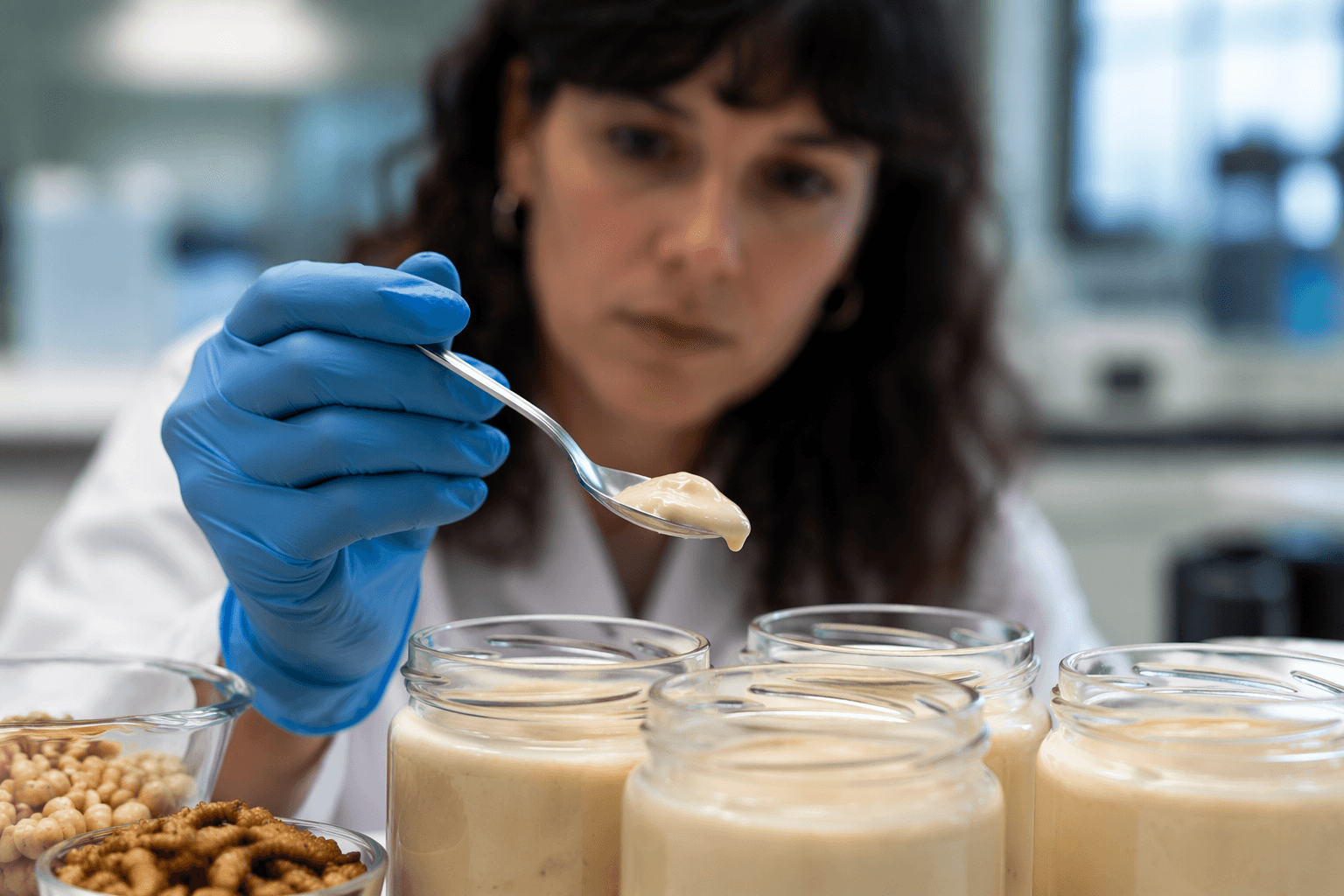
That focus on functionality matters because the category’s toughest gap is not just nutrition, but mouthfeel. AZTI’s formulation work suggests hydrolysed mealworm protein can do double duty, lifting amino acid quality while helping build a more convincing yogurt structure. In other words, insect protein is being tested not as a novelty add-in, but as a technical ingredient for fixing the weaknesses that still hold plant-based yogurts back.
The broader research trail points in the same direction. A 2016 PLOS ONE study found yellow mealworm larvae contained about 51% crude protein and 43% true protein on a dry-matter basis, and protein extraction could reach 70% under optimized conditions. A 2023 Frontiers in Nutrition study reported total protein in vitro digestibility of 91% to 99%, with an in vitro DIAAS of 89 for blanched mealworm larvae, compared with 113 for chicken breast under the young-child amino-acid reference pattern. A 2025 Foods review said mealworm larvae can be nutritionally comparable to meat, while warning that inclusions above 10% often bring technological and sensory deficiencies.
That warning makes AZTI’s yoghurt results especially relevant. A 2025 Food Chemistry study found that 5% mealworm protein improved soy yogurt gel performance, water-holding capacity and structural stability, alongside rheological, textural and flavor properties compared with soy yogurt and milk yogurt. AZTI has also argued that feeding nearly 10 billion people by 2050 will require much higher food production with lower environmental impact, which puts this yoghurt work squarely inside the sector’s sustainable-protein push.
This article was produced by Prism’s automated news system from verified source data, official records, and press releases, then run through automated quality and moderation checks before publishing. The system is built and supervised by the people who set the standards it runs under. Read our full AI policy.
Did this article answer your question?