Bryan Johnson backs enzymes that reverse sugar scars on proteins
Johnson said enzymes screened from 45,000 oxidases and 500 million variants could reverse protein sugar scars. The hard part is still delivery, durability and off-target risk.
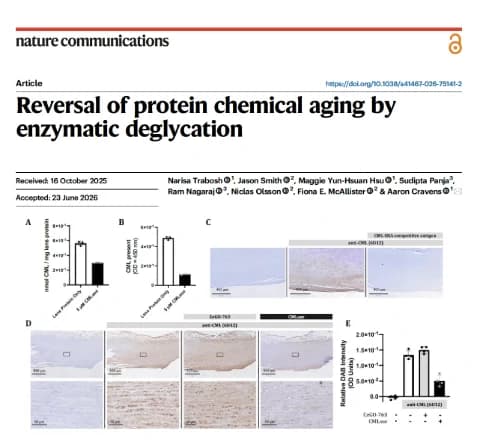
Bryan Johnson said he is backing enzyme research that used AlphaFold to screen 45,000 oxidases and directed evolution across 500 million variants to make proteins that can reverse sugar-binding scars on other proteins. He framed the target as damage that had been considered irreversible and said it could help restore healthy states in skin, arteries and eyes.
Johnson wrote on X: “This is great news. As you age, sugar binding to your proteins creates stiff, sticky chemical scars that affect skin, arteries, eyes and more. It was considered irreversible and now may be reversible, restoring to a healthy state.” The basic idea is straightforward enough: if sugar-driven chemical changes have jammed up a protein, an enzyme might be able to undo or trim that damage and give the protein back some of its original function.

That is a much narrower claim than curing aging, and it matters. Reversing glycation damage is not the same thing as turning back time on a tissue; it means rescuing individual proteins that have been modified by chronic sugar exposure before the changes accumulate into stiffer skin, less supple arteries or stressed eye tissue. The appeal is obvious because the chemistry is concrete, but the translation problem is just as concrete: the enzyme has to reach the right place, hit the right target and do it without making a mess elsewhere.
The notes around Johnson’s post make clear the work remained ex vivo, which is the point where optimism meets the lab bench. Outside the body, enzyme design is easier to control. Inside skin, arteries and eyes, delivery gets ugly fast. Large proteins are hard to move through tissue, hard to keep stable, and hard to aim with enough precision that they do not trigger off-target effects or get cleared before they do any useful work.
Durability is the other problem hiding behind the flashy headline. Even if an enzyme can reverse a sugar scar once, the body keeps making new protein damage as metabolism keeps running. That leaves a simple question: is it more practical to repair damaged proteins after the fact, or to prevent the damage in the first place by controlling the metabolic conditions that drive glycation? For now, the repair story is intriguing, but the prevention case still looks a lot closer to something people can actually use.
This article was produced by Prism’s automated news system from verified source data, official records, and press releases, then run through automated quality and moderation checks before publishing. The system is built and supervised by the people who set the standards it runs under. Read our full AI policy.
Did this article answer your question?